


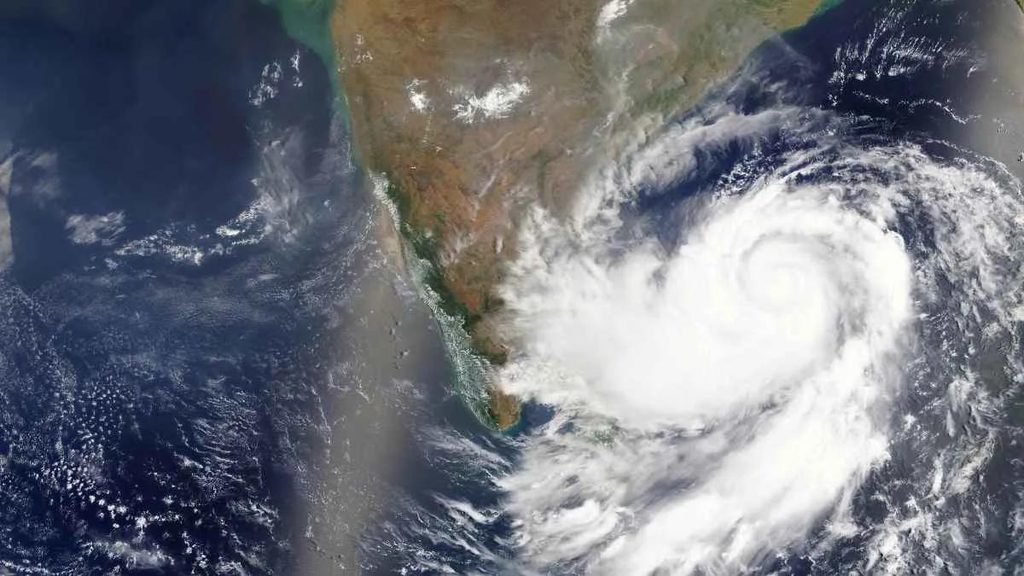
New Delhi, October 27, 2026: Authorities in Andhra Pradesh have evacuated approximately 89,000 people from vulnerable coastal areas as Cyclone Arnab intensified into a very severe cyclonic storm over the Bay of Bengal. The India Meteorological Department (IMD) has warned of powerful winds, heavy rainfall and possible flooding as the cyclone approaches the eastern coastline, with landfall expected on Wednesday, October 28.
The large-scale evacuation operation is underway across six vulnerable coastal belts, with 101 relief camps prepared to accommodate displaced residents. Emergency teams, police personnel and disaster management authorities have been placed on alert to minimise casualties and protect infrastructure.
Cyclone Arnab Expected to Hit Andhra Pradesh Coast
According to the IMD, Cyclone Arnab is expected to cross the Andhra Pradesh and Yanam coasts between Bapatla and Visakhapatnam by the forenoon of October 28. The storm is forecast to bring sustained wind speeds of 115–125 kilometres per hour, with gusts reaching approximately 140 kilometres per hour.
The cyclone was centred over the west-central Bay of Bengal on Tuesday and continued moving towards the eastern coastline. Authorities are particularly concerned about coastal flooding, damage to houses, fallen trees, power disruptions and interruptions to road and rail connectivity.
Red alerts have been issued for several districts of Andhra Pradesh, including Visakhapatnam, Anakapalli, Kakinada, Konaseema, Krishna, Eluru and parts of the Godavari region. Residents in low-lying locations have been advised to follow official warnings and relocate to safer areas when instructed.
Emergency Shelters and Rescue Teams Put on Alert
The Andhra Pradesh government has accelerated preparations to protect communities likely to be affected by the cyclone. The 101 relief camps are being equipped with essential supplies, including food and safe drinking water. Officials have also been instructed to coordinate evacuation efforts and ensure that emergency services remain accessible.
All 130 residents of Hope Island, located off the Kakinada coast, were moved to safer locations in Kakinada city. Fishing communities along vulnerable stretches of the coastline have also been advised to move away from exposed areas.
Disaster response personnel have been deployed at strategic locations, while additional rescue teams remain on standby. Authorities are preparing for possible flooding and damage to electrical infrastructure, roads and public buildings.
The government has released ₹27 crore to support relief and emergency operations across 20 districts. Medical teams and local administration officials are coordinating preparedness measures as the storm approaches.
Train Cancellations and School Closures Disrupt Daily Life
Cyclone-related precautions have begun affecting transport and education services across the region. Indian Railways has listed at least 53 train services for cancellation on October 27 and 28, affecting several routes connecting coastal Andhra Pradesh with other destinations.
Passengers have been advised to check their train status before travelling and follow announcements issued by railway authorities. Further changes to services may depend on rainfall, wind conditions and the cyclone’s movement.
Schools and educational institutions in vulnerable areas have also been ordered to close as a precaution. Fishing activities have been suspended along affected coastal stretches, while residents have been warned against venturing into the sea.
Neighbouring Odisha is preparing for heavy rainfall and strong winds, with authorities identifying vulnerable populations for evacuation and arranging temporary shelters. Other states may also experience rainfall as the weather system moves inland.
Residents Urged to Follow Official Advisories
The approaching cyclone highlights the importance of early evacuation and coordinated disaster management in densely populated coastal regions. Authorities have urged residents to avoid beaches, stay away from damaged electrical lines and refrain from travelling through flooded roads.
People living in temporary or structurally weak houses have been advised to move to designated shelters. Residents should also rely on official weather bulletins rather than unverified social media updates.
With landfall approaching, state administrations and emergency agencies remain focused on protecting lives and limiting damage. The cyclone’s precise impact will depend on its track, intensity and rainfall distribution, making continued monitoring and timely public cooperation essential.


