


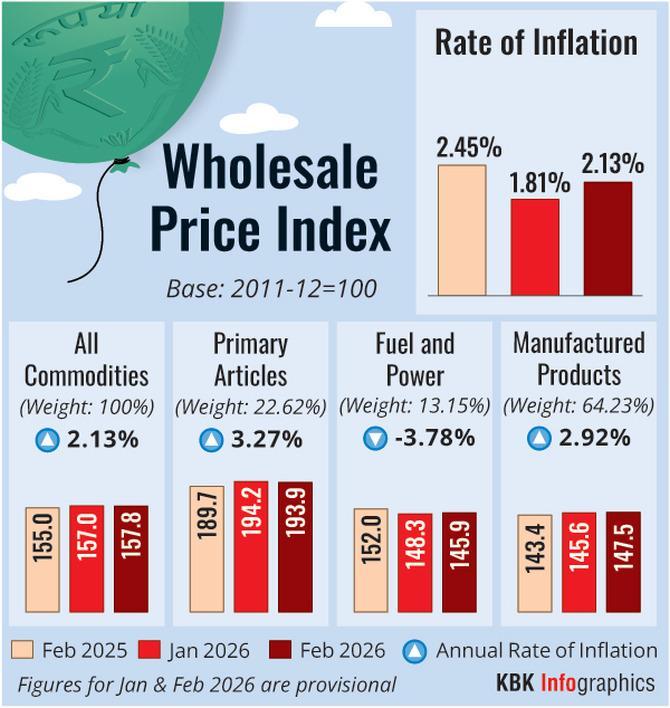
NEW DELHI, October 14, 2026: India’s wholesale price inflation accelerated sharply to 11.39% in September, rising from 9.92% in August as higher fuel, food and manufactured goods prices increased pressure across the economy. The provisional figures, released by the Ministry of Commerce and Industry on Wednesday, exceeded economists’ expectations and highlighted the growing challenges facing businesses and consumers.
The September reading was significantly higher than the 10.18% increase projected by economists in a Reuters poll. It also marked the highest inflation rate under the revised wholesale price index series, which uses 2022-23 as its base year.
Fuel and Energy Prices Drive Inflation
Rising energy costs emerged as one of the biggest contributors to the increase in wholesale inflation. Prices in the fuel and power category rose 25.85% year-on-year in September, compared with 22.93% in August.
Petroleum and natural gas prices recorded an even sharper increase, climbing 57.32% annually after rising 34.41% in the previous month. Higher international crude oil prices and continuing energy supply disruptions linked to the conflict involving Iran have added to the pressure.
India depends heavily on imported crude oil to meet its domestic energy requirements, leaving its economy exposed to fluctuations in global energy markets. When oil prices rise, transportation, logistics, manufacturing and other energy-intensive industries face higher operating expenses.
These additional costs can eventually affect the prices of goods and services sold to businesses and consumers. However, the extent and timing of the impact depend on how companies, distributors and retailers absorb or pass on the increases.
Food Inflation Adds to Economic Pressure
Food prices also contributed to the acceleration in wholesale inflation. The Wholesale Price Index food index, which includes food articles and manufactured food products, recorded inflation of 8.66% in September, compared with 7.05% in August.
The increase comes amid concerns about uneven monsoon conditions and their potential impact on agricultural production. Disruptions to crop supplies can push up prices of essential food items, affecting households as well as food-processing businesses.
Higher agricultural input, transportation and storage costs may add further pressure throughout the food supply chain. Businesses that depend on agricultural commodities could face tighter margins if they cannot transfer higher costs to customers.
The combination of rising food and energy prices presents a challenge for policymakers because both categories influence production expenses and household purchasing power.
Manufacturing Costs Rise Across Industries
Inflationary pressure was not limited to fuel and food. Wholesale prices of manufactured products increased 9.76% year-on-year in September, compared with 8.37% in August.
Higher prices across industrial inputs, including basic metals, chemicals, textiles, rubber and plastic products, and electrical equipment, contributed to the broader increase. These materials are essential to multiple sectors, including construction, consumer goods, automobiles and industrial manufacturing.
The wider rise suggests that businesses are facing cost pressures across several stages of production rather than in isolated commodity categories. Companies may respond by reducing margins, adjusting procurement strategies or increasing selling prices.
For small and medium-sized enterprises, sustained increases in raw material and energy expenses could create additional working-capital requirements.
Inflation Outlook and Policy Implications
The latest figures raise questions about the inflation outlook for the coming months. Economists have warned that wholesale inflation could remain elevated if international energy prices stay high and food supply conditions deteriorate.
The Reserve Bank of India primarily bases its monetary policy decisions on retail inflation, rather than wholesale inflation alone. Nevertheless, persistent increases in wholesale prices can eventually influence consumer prices if businesses pass on higher production and distribution costs.
For policymakers, the challenge will be to manage inflation without unnecessarily weakening economic activity. Businesses and consumers will closely watch developments in global oil markets, domestic agricultural supplies and the transmission of production costs into retail prices.
The September data underline the need to monitor whether the increase represents a temporary energy-driven shock or a broader and more persistent rise in prices across India’s economy.


