


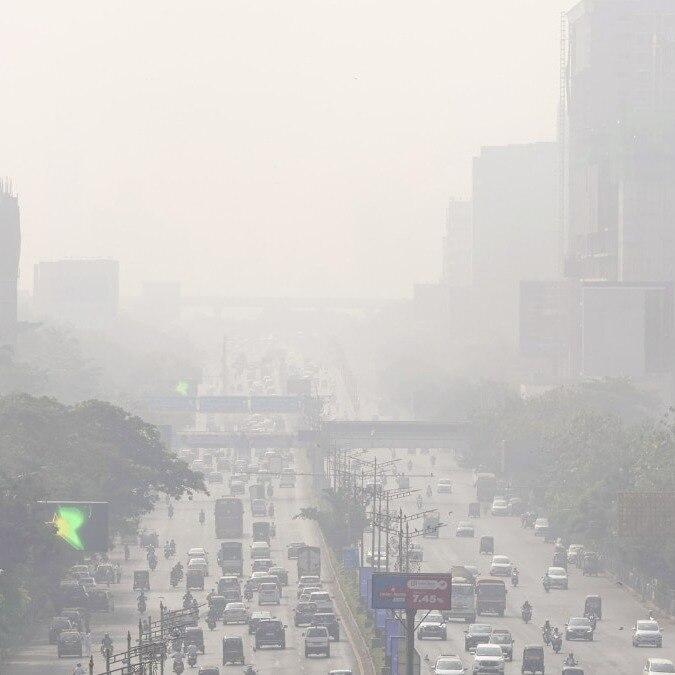
New Delhi, October 22, 2026: The Commission for Air Quality Management (CAQM) has intensified its efforts to tackle dust pollution in Delhi, directing government agencies to strengthen dust-control measures on roads, open areas and construction sites. The review comes as air quality in the national capital deteriorates, prompting authorities to implement the first stage of the Graded Response Action Plan (GRAP) across Delhi-NCR.
The commission held a meeting with concerned Delhi government agencies on Wednesday to assess existing dust-mitigation measures and improve coordination between departments. Officials were instructed to comply strictly with statutory directions and take prompt action against violations contributing to air pollution.
According to the commission, inadequate dust-control practices at construction sites and on roads remain a concern. The latest intervention aims to improve enforcement and prevent further deterioration in air quality as seasonal pollution pressures increase.
MCD Directed to Strengthen Dust Control
The Municipal Corporation of Delhi (MCD) has been specifically directed to strengthen dust-mitigation measures on roads and open areas under its jurisdiction. These efforts are expected to focus on reducing accumulated dust, improving road-cleaning operations and ensuring that exposed surfaces do not become major sources of airborne particles.
The commission also highlighted shortcomings at construction sites across the capital. Several agencies and departments involved in construction were reportedly failing to implement essential precautions, including installing wind barriers and dust screens.
Excavation and digging activities were also identified as potential contributors to dust accumulation when appropriate safeguards are not followed. The concerned departments have been instructed to address identified problems promptly and take strict action against officials, project proponents and implementing agencies responsible for violations.
The enforcement push is intended to ensure that pollution-control requirements are followed consistently rather than treated as temporary measures during periods of poor air quality.
GRAP Stage One Implemented Across Delhi-NCR
The CAQM’s review coincided with the implementation of Stage I of GRAP across Delhi-NCR on October 21. According to the Ministry of Environment, Forest and Climate Change, Delhi recorded a daily average Air Quality Index (AQI) of 244 at 2 p.m., which increased to 245 by 4 p.m. Both readings fell within the poor air-quality category.
Stage I applies when the AQI is between 201 and 300. The measures include intensified mechanised road sweeping, water sprinkling, dust suppression at construction sites, regular removal of municipal and construction waste, and restrictions on open waste burning.
The plan also restricts the use of coal and firewood in tandoors at hotels, restaurants and open eateries, while diesel generators are permitted only in specified emergency or essential circumstances under the applicable provisions.
These interventions are designed to reduce pollution sources before conditions deteriorate further. Authorities are expected to monitor compliance and assess whether additional restrictions become necessary.
Enforcement and Public Cooperation Remain Critical
Delhi’s pollution challenge involves several sources, including vehicle emissions, construction dust, industrial activity, waste burning and seasonal factors. Road dust becomes particularly problematic when accumulated material is repeatedly disturbed by traffic, construction work and dry weather.
The commission’s latest directions place responsibility on multiple agencies to improve implementation and accountability. Effective results will depend on regular inspections, timely removal of debris, adequate cleaning equipment and action against repeated violations.
Residents can also contribute by avoiding open waste burning, reporting visible construction-dust violations and following official pollution-control advisories.
The immediate priority is to ensure that the prescribed measures are implemented on the ground. With Stage I GRAP now in force, the effectiveness of agency coordination and dust suppression will be important in determining whether Delhi can prevent further deterioration in air quality during the coming weeks.


