


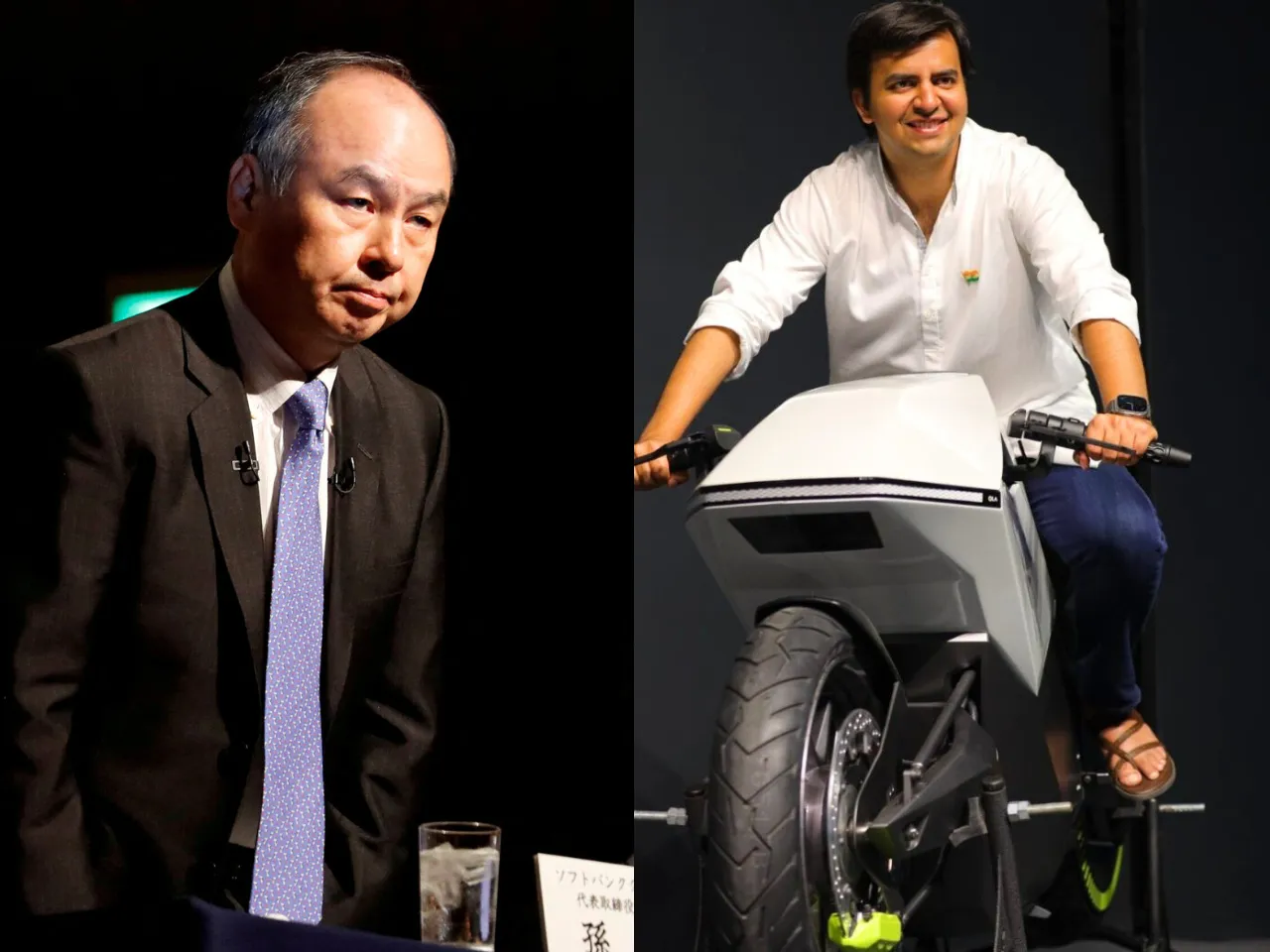
Japanese investment giant SoftBank Group has reduced its stake in Indian electric vehicle maker Ola Electric Mobility Ltd, selling a portion of its holdings through open-market transactions. While the move signals another round of portfolio reshuffling, SoftBank remains one of Ola Electric’s largest shareholders.
According to regulatory disclosures filed with Indian stock exchanges, SoftBank’s investment arm, SVF II Ostrich (DE) LLC, sold nearly 9.5 crore equity shares of Ola Electric over a four-month period, between September 3, 2025, and January 5, 2026. The sale represents approximately 2.15% of the company’s total equity.
The transaction triggered mandatory disclosure requirements under India’s takeover regulations after the stake sale crossed the 2% threshold.
SoftBank’s Current Holding in Ola Electric
Before the latest set of transactions, SVF II Ostrich held 69.16 crore shares in Ola Electric, translating to a 15.68% ownership stake.
Post-Sale Shareholding Details
After selling nearly 9.5 crore shares, SoftBank’s holding declined to:
- 59.7 crore equity shares
- 13.53% stake in Ola Electric
Despite the reduction, SoftBank continues to be a key institutional shareholder in the EV manufacturer.
Notably, the regulatory filings did not disclose the reasons behind the divestment, leaving room for market speculation around portfolio optimization or profit-booking.
Not the First Stake Sale by SoftBank
The latest move is not an isolated event. SoftBank has been gradually trimming its exposure to Ola Electric over the past year.
Earlier Reduction in 2025
Between July and September 2025, the same SoftBank entity sold a similar tranche of approximately 9.5 crore shares. That earlier sale reduced its stake from:
- 17.83% to 15.68%
With the most recent sale, SoftBank’s total stake reduction since mid-2025 now stands at over 4 percentage points.
This pattern suggests a phased approach rather than a complete exit, aligning with SoftBank’s broader strategy of rebalancing its portfolio across global technology and mobility investments.
SoftBank’s Long History With Ola Electric
SoftBank has been a long-term backer of Ola and its electric vehicle arm, supporting the company through multiple funding rounds as it expanded from ride-hailing into EV manufacturing.
Strategic Bet on Electric Mobility
Masayoshi Son-led SoftBank has consistently expressed confidence in electric mobility and clean energy as transformative global trends. Ola Electric was seen as a strategic bet on India’s EV transition, particularly in the two-wheeler segment.
While the stake sale reduces exposure, continued ownership suggests SoftBank has not fully walked away from that thesis.
Broader Changes in Ola Electric’s Shareholding
SoftBank’s partial exit comes amid wider changes in Ola Electric’s investor base, with several early and prominent backers adjusting or closing their positions.
Z47 (Formerly Matrix Partners India) Exits Completely
One of the most notable developments is the complete exit of Z47, previously known as Matrix Partners India.
Z47 was an early investor in Ola Electric and had co-led a major funding round in 2019 alongside Tiger Global. According to regulatory filings:
- Z47 began reducing its stake gradually from the quarter ended December 31, 2024
- By the first quarter of fiscal year 2026, its holding had declined to 1.93%
- The firm has now fully exited its investment
This marks the end of a long association between the venture capital firm and Ola Electric.
Founder Bhavish Aggarwal Also Sells Shares
Around the same period, Ola Electric’s founder and CEO, Bhavish Aggarwal, also sold a portion of his personal stake.
Details of the Promoter-Level Sale
Bhavish Aggarwal sold:
- 2.6 crore shares
- Roughly 0.6% of the company’s equity
The shares were sold through a bulk deal at an average price of Rs 34.99 per share, raising approximately Rs 91 crore.
Reason for the Sale
The company clarified that the sale was conducted to repay a promoter-level loan. Ola Electric emphasized that the transaction was not linked to operational performance or strategic shifts within the business.
What These Stake Sales Signal to the Market
Multiple stake reductions by large investors often raise questions, but they do not always indicate a lack of confidence.
Portfolio Rebalancing vs Loss of Faith
In SoftBank’s case, gradual stake trimming could reflect:
- Profit booking after years of investment
- Portfolio reallocation amid changing global market conditions
- Risk management rather than an exit signal
Similarly, venture capital firms like Z47 typically operate on fixed fund cycles, making exits a natural part of their investment strategy.
Ola Electric’s Position in India’s EV Market
Despite the investor reshuffling, Ola Electric remains a major player in India’s electric two-wheeler market.
Market Leadership and Challenges
The company has built strong brand recognition and manufacturing scale but also faces:
- Intense competition from legacy two-wheeler manufacturers
- Pricing pressure
- Regulatory scrutiny and quality concerns
How Ola Electric navigates these challenges will ultimately have a bigger impact on its valuation and investor confidence than short-term stake sales.
Why SoftBank Is Still Watching Closely
Even after the stake reduction, SoftBank’s continued ownership suggests it still sees long-term value in Ola Electric.
A Strategic, Not Sudden, Retreat
SoftBank’s approach contrasts with a sudden sell-off. The phased nature of the divestment points to a controlled strategy rather than a reaction to any immediate red flags.
For the market, this distinction is important.
Investor Sentiment and Future Outlook
As Ola Electric matures as a listed company, its shareholder base is naturally evolving. Early-stage investors are making way for public market participants, while promoters adjust holdings for personal and financial reasons.
What Investors Will Watch Next
Key factors likely to influence sentiment include:
- Sales growth and market share in the EV segment
- Progress on profitability
- Product quality and customer satisfaction
- Regulatory developments affecting EV subsidies and manufacturing
Stake sales alone are unlikely to define Ola Electric’s trajectory without these fundamentals shifting.
Final Thoughts
SoftBank’s decision to sell a 2.15% stake in Ola Electric through open-market transactions marks another step in the gradual reshaping of the company’s shareholding structure. While the Japanese investment giant has reduced its exposure, it remains a major shareholder, signaling continued interest in the EV maker’s long-term prospects.
Combined with Z47’s full exit and Bhavish Aggarwal’s promoter-level sale, the moves highlight a transition phase for Ola Electric as it balances investor churn with operational execution.
For now, the market appears to be reading these developments as strategic adjustments rather than signs of distress—placing the focus squarely back on how Ola Electric performs in India’s increasingly competitive electric vehicle landscape.


