


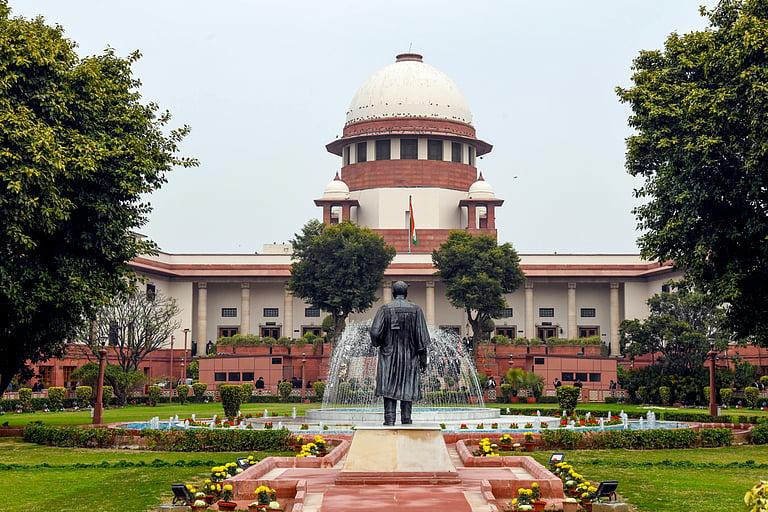
NEW DELHI, October 6, 2026: The Supreme Court has stepped into the growing controversy surrounding changes to Form 6, the statutory application used by citizens to seek inclusion in electoral rolls. The court has sought records from the Election Commission of India (ECI) to establish who authorised and implemented the disputed changes during the ongoing Special Intensive Revision (SIR) of voter lists.
A bench headed by Chief Justice of India Surya Kant, along with Justices Joymalya Bagchi and V. Mohana, made it clear that the Supreme Court had not approved any modified version of Form 6. The court said it wanted to examine the underlying records before reaching conclusions about how the changes were introduced.
Court Questions Changes to Form 6
The controversy centres on an additional declaration that appeared on the online version of Form 6 during the SIR exercise. The modified version reportedly required applicants to provide information about whether their own name, or the name of a parent or grandparent, appeared in an earlier SIR electoral roll.
Form 6 is important because it is the prescribed application for citizens seeking inclusion in electoral rolls. Any additional requirement attached to the process can therefore have significant implications for new voters and people seeking to register during an electoral-roll revision.
During the hearing, the Chief Justice stated that the court had not approved the modification and indicated that it wanted to determine who made the changes and under what authority. The court has consequently sought relevant records from the Election Commission.
Dispute Linked to Special Intensive Revision
The Form 6 controversy is connected to the Election Commission’s broader Special Intensive Revision of electoral rolls, an exercise intended to verify and update voter lists.
The Supreme Court had previously examined the ECI’s authority in relation to the Bihar SIR exercise. In its May 2026 judgment, the court recognised that the Commission has a degree of authority to establish a documentation framework suited to an SIR exercise. However, that authority was described as subject to legal limits and required a rational connection with the objective of maintaining accurate electoral rolls.
The current dispute focuses on whether the additional declaration was properly introduced and whether the distinction between an SIR-specific declaration and an actual modification of the statutory Form 6 was legally sufficient.
The Election Commission has maintained that Form 6 itself was not amended. According to the ECI, the additional declaration was attached specifically for the SIR process and was not intended to replace the statutory form used during normal electoral-roll procedures.
Political Opposition Intensifies
The Supreme Court’s intervention has also intensified an already heated political dispute. Opposition parties have accused the Election Commission of making important electoral-roll decisions without adequate transparency.
Congress leader Rahul Gandhi alleged that the changes to Form 6 were made illegally and unilaterally. The Election Commission rejected the allegation as misleading, pointing to its earlier explanation that the SIR-related declaration had been considered within the framework of the Supreme Court’s judgment on the Bihar revision exercise.
The controversy has also become a central issue in the opposition’s broader criticism of the Election Commission. On October 6, INDIA bloc leaders marched toward the Commission’s headquarters in New Delhi demanding accountability and the resignation of Chief Election Commissioner Gyanesh Kumar.
Why the Case Matters
The case goes beyond a dispute over an online application form. At its core is the question of how electoral rolls are prepared, who has authority to change registration procedures and whether those decisions follow the required legal process.
The issue is particularly significant because electoral-roll revisions directly affect citizens’ ability to register and participate in elections. Any uncertainty surrounding registration requirements can therefore have consequences for voter access and public confidence in the electoral system.
The Supreme Court’s decision to examine the records could provide clarity on the authority behind the disputed changes. For now, the court has not ruled that the changes were illegal; instead, it has sought evidence and explanations before determining the legal position.
As the ECI prepares its response, the Form 6 dispute is likely to remain an important part of India’s wider debate over electoral transparency, institutional accountability and the integrity of voter rolls.


