


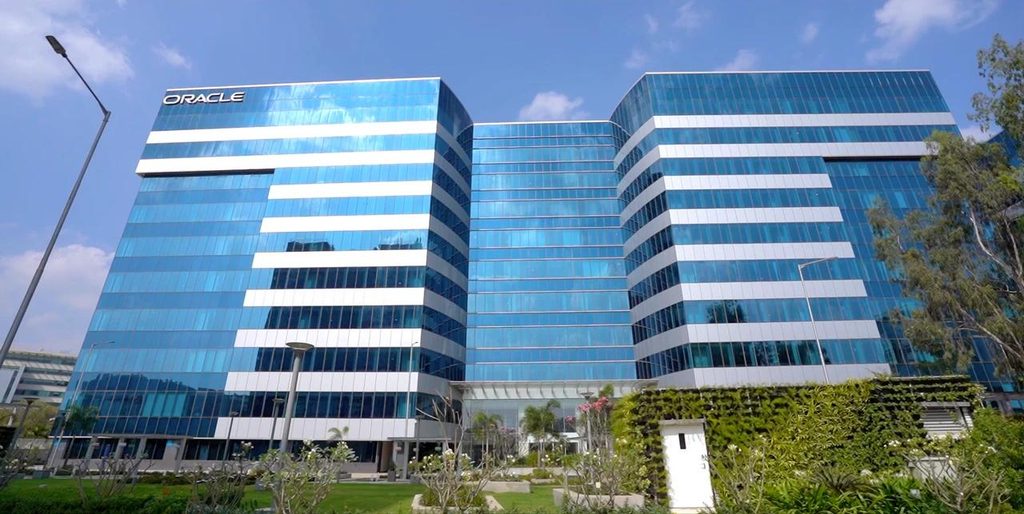
NEW DELHI, September 15, 2026: Fresh job cuts at Oracle Corporation have renewed concerns about employment prospects in India, as the technology giant continues a major restructuring while simultaneously increasing spending on artificial intelligence (AI) and data-centre infrastructure. Employees in the United States were notified of a new round of layoffs beginning September 14, while attention has increasingly turned toward Oracle’s large India workforce.
The latest restructuring comes after Oracle’s workforce declined by approximately 21,000 employees, or about 13%, during fiscal 2026, according to reports. The company had around 141,000 employees before the latest reductions. The exact number of employees affected in the newest round has not been publicly disclosed, making it difficult to determine the immediate impact on Oracle’s operations in India.
India Employees Watch Closely
India has become a major centre for Oracle’s global operations, including software development, cloud services, engineering and customer support. Reports earlier this month suggested that thousands of positions in India could potentially be affected by another restructuring exercise. However, Oracle has not publicly confirmed a specific number of India-based job cuts in the latest round.
This uncertainty has created anxiety among employees, particularly those working in functions that could be reorganised as Oracle redirects resources toward AI and cloud infrastructure. Earlier reports had estimated that India could account for a substantial share of the company’s workforce reductions, but those figures have not been independently confirmed by Oracle.
AI Investment Behind the Restructuring
Oracle’s workforce decisions are unfolding alongside an extraordinary increase in spending on data centres and AI infrastructure. The company’s capital expenditure reached $28.5 billion in the quarter ended August 31, compared with $8.5 billion during the same period a year earlier. Oracle also reported negative free cash flow of $5.4 billion for the quarter.
The restructuring programme has consequently become closely linked to Oracle’s attempt to balance rising infrastructure costs with its ambitions in the rapidly expanding AI market. The company recently expanded the estimated cost of its 2026 restructuring plan by approximately $700 million, taking the total projected cost to around $2.8 billion.
Concerns Over India’s Technology Jobs
The developments have broader implications for India’s technology sector. Oracle is among the world’s largest enterprise-software companies, and its India operations employ a large technology workforce. Any substantial reduction could add to concerns about job security across India’s IT industry, where companies are simultaneously investing in automation, AI and cloud technologies.
At the same time, the restructuring does not necessarily mean that Oracle is reducing its overall technology ambitions. Instead, the company appears to be shifting resources toward areas considered strategically important for future growth, particularly cloud infrastructure and AI. This could create demand for specialised skills even as some traditional roles are eliminated or consolidated.
What Happens Next?
For Oracle employees in India, the immediate question remains whether the latest US restructuring will be followed by additional changes at the company’s India Development Centre. Reports have indicated that India could face further workforce reductions, but the scale and timing remain uncertain.
The situation highlights a broader transformation taking place across the global technology industry: companies are reducing costs and reorganising teams while investing heavily in AI infrastructure. For India, the outcome could be mixed—fewer conventional technology roles in some functions, but stronger demand for professionals with expertise in AI, cloud computing, cybersecurity, data engineering and advanced software development.
For now, Oracle’s latest restructuring has placed its India workforce firmly under the spotlight, with employees and the wider technology sector watching closely for further announcements.


