


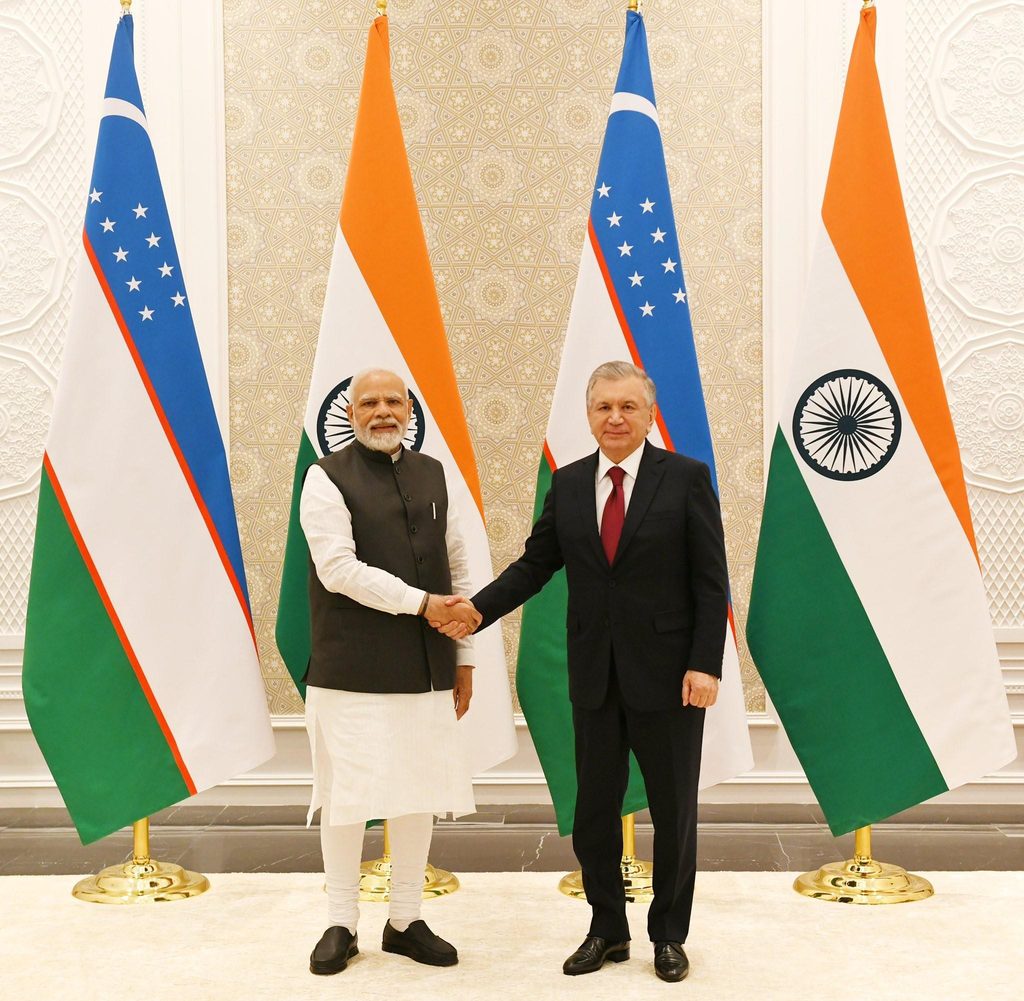
Prime Minister Narendra Modi began a four-day diplomatic visit to Uzbekistan and the Kyrgyz Republic on August 29, 2026, as India seeks to deepen its strategic, economic and security engagement with Central Asia. The tour will continue until September 1 and combines a bilateral state visit to Tashkent with India’s participation in the 26th Shanghai Cooperation Organisation (SCO) Summit) in Bishkek.
Modi’s first stop is Tashkent, where he will hold delegation-level discussions with Uzbek President Shavkat Mirziyoyev. According to the Ministry of External Affairs, the discussions are expected to review cooperation across trade and investment, defence, digital connectivity, energy, education and people-to-people relations. The two sides are also expected to discuss their respective long-term development visions, including Viksit Bharat 2047 and Uzbekistan-2030.
The visit is particularly significant because Uzbekistan is an important partner for India in Central Asia. New Delhi has been working to expand economic and strategic engagement with the region, including cooperation in connectivity, energy and emerging sectors. Strengthening ties with Tashkent could provide additional opportunities for Indian businesses while supporting wider regional cooperation.
During his time in Tashkent, Modi is also scheduled to visit the Shastri Memorial and the Mahatma Gandhi Centre at Tashkent State University of Oriental Studies. These engagements highlight the historical and cultural dimensions of India-Uzbekistan relations. Modi’s visit is also his fourth visit to Uzbekistan, underlining the importance New Delhi places on its relationship with the Central Asian country.
After completing his Uzbekistan programme, Modi will travel to Bishkek, Kyrgyzstan, on August 31 for the 26th SCO Summit. The summit will run through September 1 and will bring together leaders of the SCO member states for discussions on regional and international issues. India became a full member of the organisation in 2017 and has since used the platform to engage with major Eurasian powers on security, connectivity and economic cooperation.
Security and counter-terrorism are expected to remain important themes during the summit. Ahead of the meeting, Modi emphasised India’s vision of a region free from terrorism, separatism and extremism, while also highlighting the importance of connectivity and economic opportunities. For India, the SCO provides a platform to engage with Central Asian states as well as other major regional powers on issues affecting Eurasian stability.
The Kyrgyzstan leg will also include cultural diplomacy. Modi is scheduled to attend the opening ceremony of the 6th World Nomad Games, an event showcasing the cultural heritage and traditions of Central Asia. He is also expected to hold bilateral meetings with leaders attending the SCO Summit, creating opportunities for discussions on India’s wider diplomatic and economic priorities.
Central Asia holds growing strategic importance for India because of its location, natural resources, markets and role in regional security. Greater engagement with countries such as Uzbekistan and Kyrgyzstan can help India strengthen economic partnerships, improve regional connectivity and expand cooperation in areas such as energy, critical resources, education and technology.
The four-day tour therefore represents a broader diplomatic push by New Delhi to consolidate its presence in Central Asia. By combining high-level bilateral talks with participation in the SCO Summit, Modi’s visit seeks to advance India’s strategic interests while strengthening relationships with key regional partners. The outcomes of the meetings in Tashkent and Bishkek could shape India’s Central Asia engagement in the coming years.


