


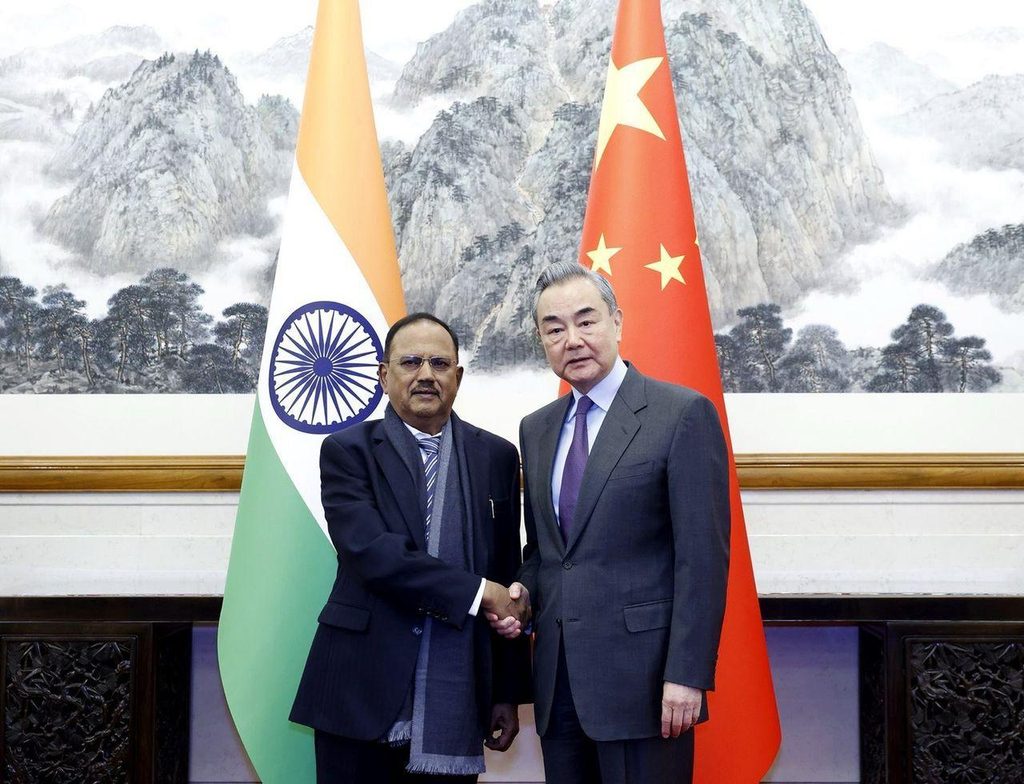
BEIJING, August 25, 2026: India and China are holding a fresh round of high-level discussions on their long-standing boundary dispute, with National Security Adviser Ajit Doval meeting Chinese Foreign Minister and Special Representative Wang Yi in Beijing on Tuesday. The meeting is the 25th round of Special Representatives’ talks on the India-China boundary question and comes at an important moment in bilateral relations.
Doval arrived in Beijing on Monday for a two-day visit. Before the main boundary discussions, he met Chinese Vice President Han Zheng, with both sides discussing the importance of maintaining peace and tranquillity along the disputed border. The meetings are part of broader diplomatic efforts to stabilize relations after years of military tensions along the Line of Actual Control (LAC).
Focus remains on the border
The primary issue before the two Special Representatives is the unresolved boundary question. India and China share a disputed Himalayan frontier, and disagreements over the LAC have periodically resulted in military confrontations and prolonged deployments.
The latest diplomatic engagement follows the gradual resumption of high-level dialogue after the tensions that followed the 2020 Galwan Valley clash and the wider Ladakh standoff. Military and diplomatic channels have since been used to reduce friction and maintain stability along sensitive areas of the frontier.
For New Delhi, maintaining peace at the border remains central to improving the overall relationship with Beijing. Indian officials have repeatedly emphasized that normal relations require continued peace and tranquillity along the frontier.
Wider India-China relationship
Although the boundary dispute remains the most sensitive issue, Tuesday’s discussions are also expected to touch on wider bilateral, regional and international matters. India and China have significant economic ties, while simultaneously competing strategically across Asia.
The timing of Doval’s visit is particularly significant because India is preparing to host the BRICS Summit in September. Chinese President Xi Jinping is expected to visit India for the summit, although his participation had not been officially confirmed at the time of reporting. A potential Xi visit would provide another opportunity for the two countries’ leadership to discuss bilateral relations.
A cautious diplomatic reset
The latest talks indicate that both countries are keeping diplomatic channels open despite unresolved strategic differences. The Special Representatives mechanism, established in 2003, was created to approach the boundary dispute from a broader political perspective and work toward a framework for settlement.
However, expectations for an immediate final settlement remain limited. The boundary dispute is complex, involving competing territorial claims, military infrastructure, patrol arrangements and security concerns across difficult Himalayan terrain.
For India, the immediate priority is likely to prevent fresh military friction while protecting its security interests. For China, maintaining stable relations with India can also help reduce tensions on another major Asian front.
The Beijing meeting therefore represents more than another round of border negotiations. It is a test of whether sustained diplomatic engagement can translate into greater predictability along the LAC and create conditions for broader improvement in India-China relations.
The talks are being closely watched as New Delhi and Beijing attempt to balance unresolved border concerns with growing diplomatic and economic engagement.


