


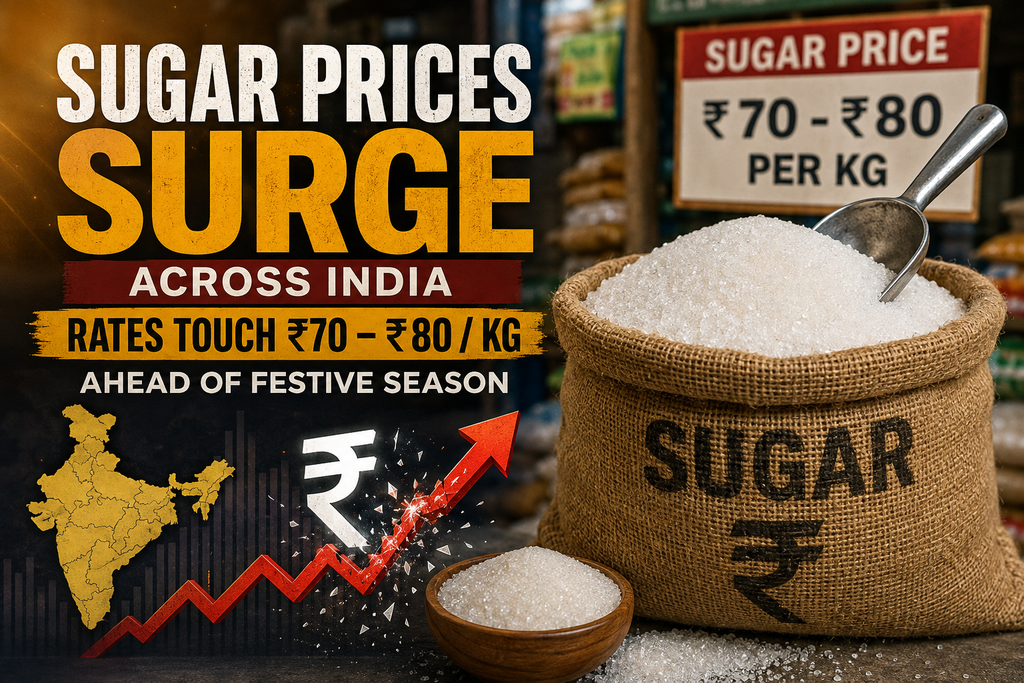
Sugar prices are rising sharply in parts of India putting strain on families, sweet shops, bakeries and food businesses as the country moves toward a busy festive season. In some markets retail prices have reportedly reached ₹65–₹70 per kilogram and even ₹70–₹80 per kilogram while the national average remains lower. The surge has led the government to step in with measures aimed at boosting supply.
Retail Prices Rise Sharply
Government data shows that the average retail price of sugar grew from ₹48.18 per kilogram on July 20 to ₹55.70 per kilogram on August 20 2026. That is an increase of over ₹7 per kilogram in one month. However prices differ widely by location with some markets experiencing steeper rises.
The highest increases are seen in consumption centres. In some markets retail rates have climbed to ₹70 per kilogram or more while reports from Mumbai show prices as high as ₹75–₹80 per kilogram. These local rates must not be mixed with the average, which stays near ₹56 per kilogram.
Why Are Sugar Prices Increasing?
The recent surge is linked to a mix of supplies lower-than-expected production, weather‑related crop concerns, stockpiling and rising demand. The government has also pointed out a global tightening of sugar supplies.
According to the Centre international sugar prices rose from $474 per tonne on June 30 to $552 per tonne on August 20 a jump of than 16 percent in less than two months. The government estimates a sugar deficit of about 33 lakh tonnes for 2026–27.
There has also been a debate about whether diverting sugarcane to ethanol production has pushed domestic prices up. The government has rejected that claim saying the share of sugar diverted to ethanol fell from 12 percent in 2022–23 to roughly 9 percent in 2025–26.
Government Opens Import Window
To cool the market India has allowed duty‑free imports of up to 1 million tonnes of raw sugar until October 31 2026. This move marks Indias major sugar import programme in nearly a decade and aims to increase domestic availability before peak festival demand.
The government monitors stocks. Takes steps to prevent excessive hoarding. The added imported supply could help ease prices if shipments reach the market in sufficient quantities before the festive demand peaks.
Impact on Consumers and Businesses
Higher sugar prices could directly affect mithai, bakery products, beverages, packaged foods and restaurant costs. Sweet manufacturers and traders may face input expenses possibly passing part of those costs, onto consumers during the festive season.
At the time the Indian Sugar Mills Association has said the country does not currently face an actual sugar shortage stressing that stocks and supplies remain fundamentally strong enough to meet festival demand.
The coming weeks will therefore be crucial. If imports and domestic stock releases improve availability the recent price surge could moderate. If supply remains tight while festive demand accelerates consumers could continue facing sugar prices through the festival season.


