


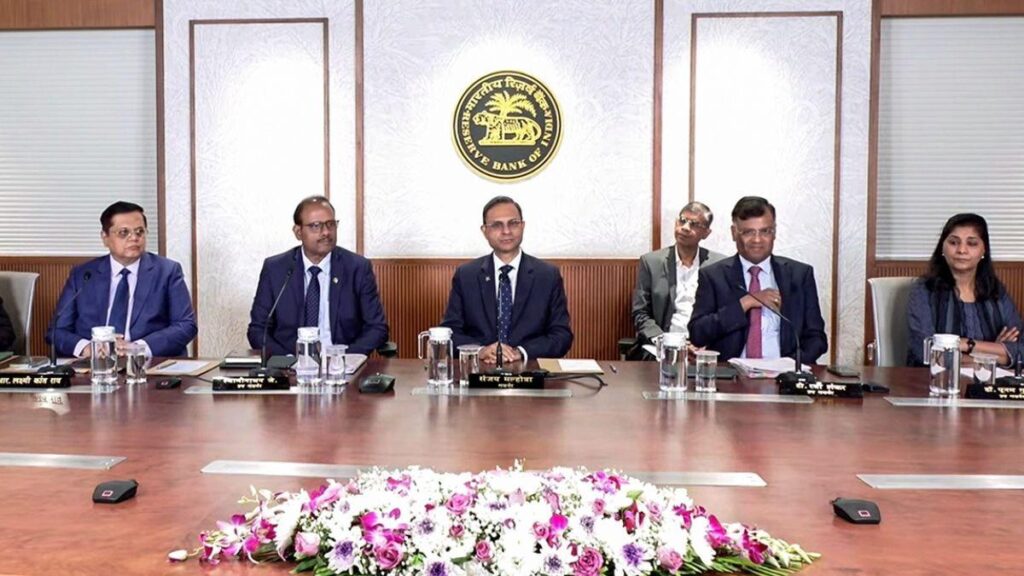
The Reserve Bank of India (RBI) has opened the door to possible interest-rate hikes later this year after policymakers warned that rising food and fuel costs could create broader inflationary pressures. The signal came from the minutes of the RBI’s August Monetary Policy Committee (MPC) meeting, released on August 19, and has shifted attention toward the possibility of tighter monetary policy in the months ahead.
Repo Rate Remains Unchanged at 5.25%
The RBI has kept the benchmark repo rate unchanged at 5.25%, continuing its wait-and-watch approach. The decision came at the August 5 policy meeting, when policymakers chose not to raise borrowing costs despite growing concerns about inflation and global economic uncertainty.
The current stance does not represent an immediate rate hike. Instead, the MPC has indicated that future decisions will depend heavily on incoming inflation and economic data. Governor Sanjay Malhotra stressed that policymakers need greater clarity on whether price pressures are temporary or likely to become persistent before recalibrating monetary policy.
Oil Prices Become a Major Concern
One of the biggest risks facing the Indian economy is the increase in global crude oil prices. Rising oil costs can directly increase India’s import bill and put pressure on the rupee. They can also raise transportation, manufacturing and logistics costs, potentially spreading inflation across several sectors.
The RBI has become particularly cautious about so-called second-round effects, where an initial increase in fuel or food prices begins influencing wages, services and other consumer prices. Policymakers warned that a broader and sustained increase in input costs could require monetary tightening.
The Indian rupee has also faced pressure from higher crude prices and strong dollar demand. On August 20, the rupee strengthened slightly after recent weakness, with RBI intervention and improving global sentiment supporting the currency.
Inflation Is Still Within the Target Band
Despite the concerns, India’s inflation situation is not currently outside the RBI’s formal tolerance range. Consumer inflation stood at 4.45% in July, remaining within the RBI’s target framework of 2% to 6%. The central bank has also lowered its FY27 inflation forecast to 5% from 5.1%, suggesting that policymakers are not yet predicting an uncontrolled price surge.
At the same time, the RBI has raised its economic growth forecast to 6.7%, indicating confidence that domestic economic activity remains relatively resilient. This gives policymakers some room to focus on price stability without immediately sacrificing growth.
What Could Trigger a Rate Hike?
The key question is whether higher food and fuel prices begin spreading into the wider economy. If inflation becomes broad-based and remains elevated, the MPC could consider raising the repo rate to prevent inflation expectations from becoming entrenched.
A rate hike would make borrowing more expensive for banks and, eventually, for consumers and businesses. Home loans, personal loans and corporate borrowing could become costlier, potentially slowing demand. However, higher rates can also help contain inflation and support financial stability.
For now, the RBI is maintaining flexibility rather than committing to a specific hike. The latest minutes show that rate increases are a possibility, not a certainty. Markets and businesses will therefore be closely watching upcoming inflation figures, crude oil prices, currency movements and other economic indicators for clues about the central bank’s next move.


