


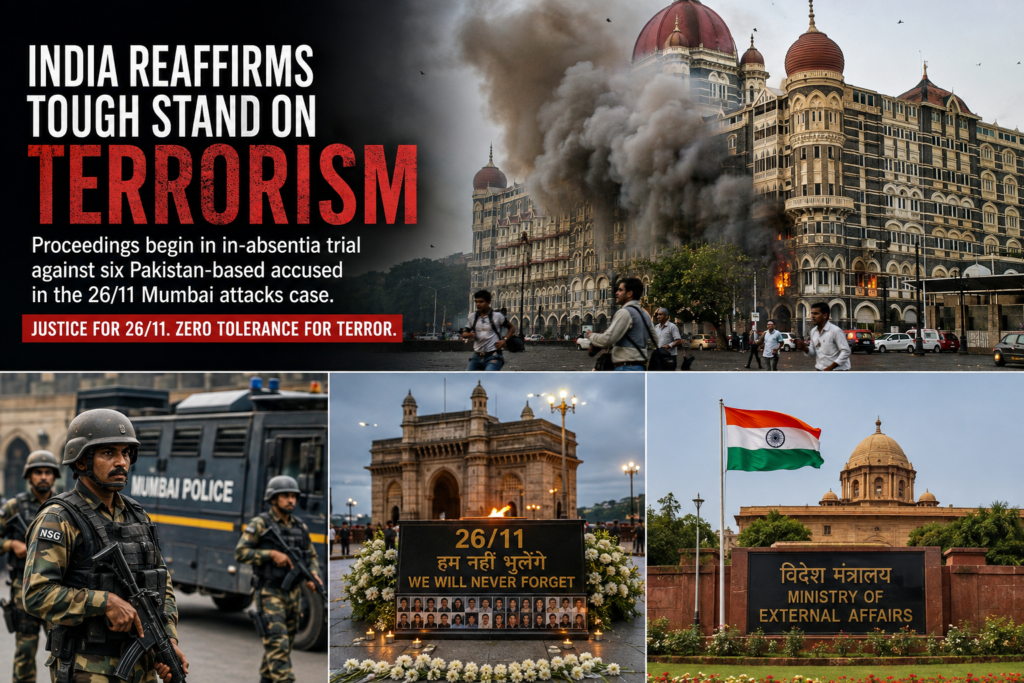
New Delhi, August 19, 2026: India has reaffirmed its uncompromising position on terrorism, stating that it will continue to take whatever action is required to defeat the threat. The Ministry of External Affairs (MEA) made the statement amid the beginning of proceedings for an in-absentia trial against six Pakistan-based accused in the 2008 Mumbai terror attacks case.
The development marks another significant step in India’s long-running effort to pursue accountability for the perpetrators and handlers of the 26/11 attacks. The attacks, which began on November 26, 2008, targeted several locations across Mumbai and resulted in the deaths of more than 160 people, leaving hundreds injured.
MEA Reiterates India’s Position
MEA spokesperson Randhir Jaiswal said India’s fight against terrorism would continue and that the country would take whatever measures were necessary to defeat terrorism. He also stressed the importance of the international community recognising the seriousness of terrorist activities, particularly cross-border terrorism.
The statement comes as India continues to press for accountability from individuals accused of planning and facilitating attacks against the country. According to the MEA, India has spent years working to strengthen international cooperation against terrorism and intends to maintain that effort.
The government has repeatedly argued that terrorism cannot be addressed effectively unless those responsible for attacks, including their planners, financiers and facilitators, are held accountable.
In-Absentia Proceedings Begin Against Six Accused
Mumbai Police has initiated the process for conducting an in-absentia trial against six Pakistani nationals accused in the 26/11 case. The accused include Lashkar-e-Taiba figures Hafiz Saeed and Zaki-ur-Rehman Lakhvi, along with Sajid Mir, Abu Alqama, Asim alias Abu Qahafa and Major Abdur Rehman Pasha.
An in-absentia trial allows judicial proceedings to continue even when an accused is not physically present before the court, subject to the applicable legal requirements. In this case, the accused remain outside India’s jurisdiction, making their physical appearance in an Indian courtroom difficult.
The proceedings are being pursued under provisions of the Bharatiya Nagarik Suraksha Sanhita (BNSS), India’s current criminal procedure framework. Reports describe this as an important use of the new legal mechanism in a major terrorism case.
Renewed Focus on Cross-Border Terrorism
The latest legal development has again placed cross-border terrorism at the centre of India’s diplomatic and security concerns. New Delhi has consistently maintained that terrorist networks operating from outside India’s borders pose a direct security threat and require coordinated international action.
The 26/11 investigation remains one of India’s most prominent counter-terrorism cases. Indian investigators have previously identified Lashkar-e-Taiba-linked operatives among those accused of facilitating the attacks, while several alleged planners and handlers have remained outside India’s legal reach.
India has also repeatedly called for credible action against individuals accused in connection with the attacks. The latest trial proceedings therefore represent an effort to advance the judicial process despite the absence of the accused.
India Signals Continued Global Cooperation
The government’s latest statement indicates that counter-terrorism will remain a major component of India’s foreign-policy and national-security agenda. New Delhi is seeking stronger international cooperation to prevent terrorist financing, dismantle extremist networks and ensure that individuals accused of terrorism cannot evade accountability simply by remaining outside the country.
The in-absentia proceedings are now expected to move forward according to the applicable legal process. Any eventual findings or convictions will remain subject to the court proceedings and evidence presented before the judiciary.
For India, however, the broader message is clear: the government intends to maintain pressure on terror networks and pursue accountability for attacks against Indian citizens, while continuing to seek international cooperation in the fight against terrorism.


