


Bharat Bandh called over India-US trade agreement: What you need to know
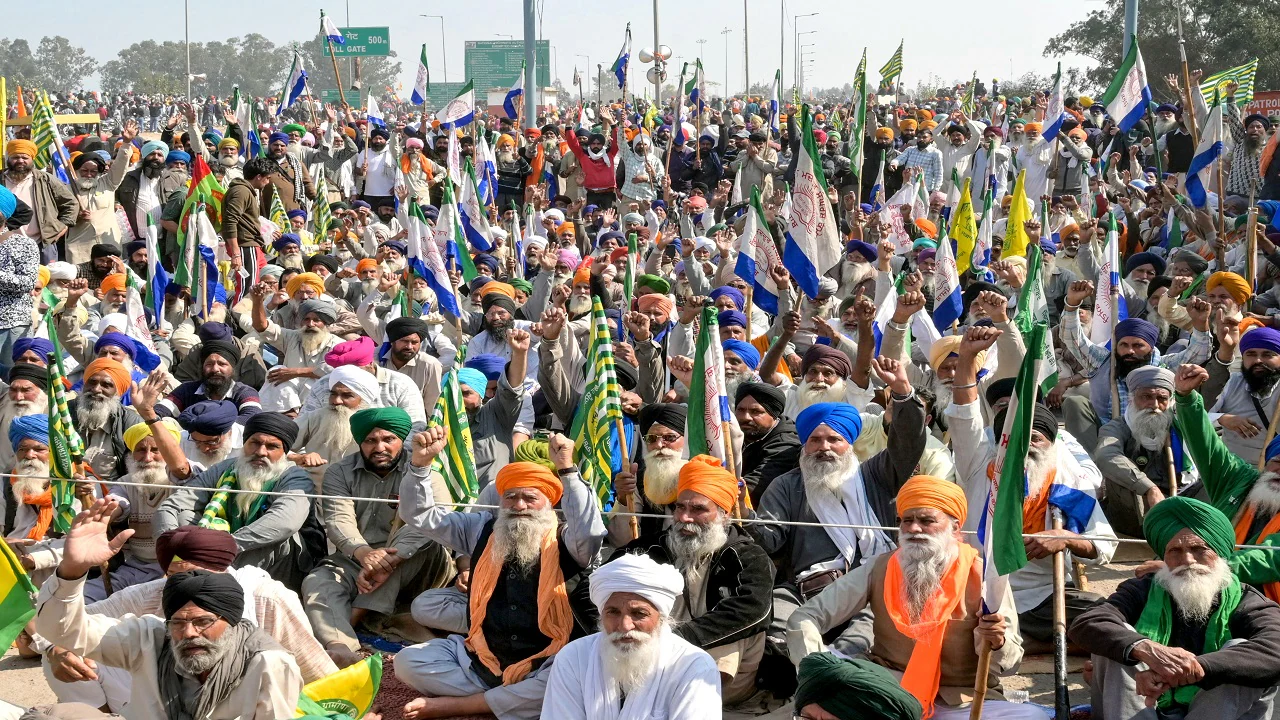
A nationwide strike, or Bharat Bandh, has been called by the Samyukt Kisan Morcha (SKM) on Thursday, February 12, in protest against the recently announced India-US trade agreement. The protest reflects growing concern among farmer groups and trade unions about how the deal could affect agriculture, local industries and employment.
While such nationwide strikes often create uncertainty, the actual impact varies from place to place. Some services may continue normally, while others could see disruptions depending on how many people participate.
Here is a simple and clear look at what the strike is about, who is supporting it, and what it could mean for everyday life.
Why farmers and unions are protesting
Concerns about the India-US trade agreement
The main reason behind the Bharat Bandh is opposition to the new trade arrangement between India and the United States. Farmer groups believe the deal could open Indian markets to cheaper foreign agricultural products.
According to leaders of the Samyukt Kisan Morcha, this could make it harder for Indian farmers to compete. Their fear is that large-scale imports from developed economies may push down prices for locally produced goods.
They argue that Indian agriculture already faces challenges such as rising input costs, climate risks and fluctuating market prices. Increased competition from imports, they say, may worsen the situation.
Fear of cheaper imports flooding the market
Farmer representatives have expressed concern that agricultural goods from countries like the US, European Union and New Zealand may enter Indian markets at lower prices.
Their argument is based on the idea that farmers in developed countries often benefit from advanced technology, subsidies and large-scale production. Because of this, their products may be cheaper or more competitive.
Some farmer leaders warn that if such imports increase significantly, domestic farmers could struggle to sell their produce profitably.
Who is supporting the Bharat Bandh
Trade unions join the protest
The strike is not limited to farmer organisations alone. A coalition of ten central trade unions has reportedly extended support to the protest.
These include:
- Indian National Trade Union Congress (INTUC)
- All India Trade Union Congress (AITUC)
- Hind Mazdoor Sabha (HMS)
- Centre of Indian Trade Unions (CITU)
- All India United Trade Union Centre (AIUTUC)
- Trade Union Coordination Centre (TUCC)
- Self Employed Women’s Association (SEWA)
- All India Central Council of Trade Unions (AICCTU)
- Labour Progressive Federation (LPF)
- United Trade Union Congress (UTUC)
Their involvement suggests that the protest is not only about agriculture but also broader economic and labour concerns.
Political and economic messaging
Beyond immediate economic worries, the protest carries political messaging. Some union leaders have criticised the trade deal, calling it unfavorable for India’s farmers and workers.
They argue that international trade agreements should protect local livelihoods while promoting growth. This debate is likely to continue as the agreement develops further.
Will banks be closed today?
Possible disruptions but no nationwide closure announced
One of the most common questions during a Bharat Bandh is whether banks will remain open. So far, there has been no official announcement of a nationwide bank closure.
However, disruptions are possible depending on local participation in the strike. Public sector bank branches in some areas may experience reduced staffing or limited operations if employees join the protest.
Private banks likely to function normally
Large private-sector banks such as HDFC Bank, ICICI Bank and Kotak Mahindra Bank are generally expected to continue normal operations. Still, customers should check with their local branches for updates.
Digital banking services including mobile apps, internet banking and ATMs are expected to operate as usual.
Tips for customers
If you have important banking work:
- Check with your local branch before visiting
- Use online banking wherever possible
- Plan transactions in advance to avoid inconvenience
Other services that may be affected
Transport and markets
Nationwide strikes often impact transport services, wholesale markets and retail businesses. Some areas may see road blockades, public transport disruptions or temporary market closures.
However, the extent of disruption typically varies widely across states and cities.
Schools, offices and public services
There is usually no uniform rule about schools or offices during a Bharat Bandh. Some institutions remain open, while others close as a precaution.
Government offices generally continue functioning, but attendance may vary.
Farmers’ larger concerns about global trade
Competition versus opportunity debate
The Bharat Bandh highlights a larger debate about global trade agreements. Supporters argue such deals can boost exports, attract investment and strengthen economic ties.
Critics, including many farmer groups, worry that small producers may struggle to compete with large international players.
Both perspectives reflect genuine economic concerns, making the discussion complex rather than one-sided.
Impact on rural livelihoods
Agriculture still supports a large portion of India’s population. Any change affecting farm incomes can have broader social and economic consequences.
Farmer organisations say policies must balance international trade goals with local agricultural sustainability.
Government’s likely perspective
While farmer groups have voiced strong opposition, policymakers typically see trade agreements as opportunities for economic growth.
Potential benefits often cited include:
- Increased exports of Indian goods
- Access to advanced technology
- Energy and industrial partnerships
- Job creation in certain sectors
The final impact usually depends on how agreements are implemented and whether support systems exist for affected groups.
What citizens should expect today
For most people, daily life may continue normally, especially in cities where participation in strikes tends to vary.
Still, it is wise to stay informed through local news updates and prepare for possible disruptions in transport, banking or markets.
If you have essential travel or financial work planned, keeping alternative options ready can help avoid last-minute stress.
The bigger picture: Ongoing debate over trade policy
The Bharat Bandh is part of a broader national conversation about globalization, agriculture and economic policy.
India is increasingly engaging in international trade partnerships as its economy grows. At the same time, ensuring that farmers, workers and small businesses are not negatively affected remains a key challenge.
The current protest reflects these tensions and highlights the need for dialogue between policymakers, farmers and industry groups.
Whether the trade agreement ultimately benefits or harms different sectors will depend on its detailed implementation, future policy adjustments and market dynamics.
For now, the Bharat Bandh serves as a reminder that economic decisions often have complex social implications, especially in a country where agriculture remains central to millions of livelihoods.


