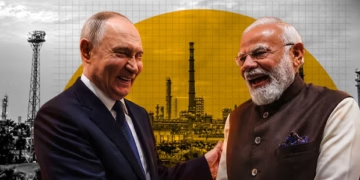


India–US Trade Deal Raises Big Question About Russian Oil
A recent trade agreement announcement between the United States and India has sparked global debate, mainly because of claims that India may stop buying oil from Russia. The statement came from US President Donald Trump, who suggested that India had agreed to shift its energy purchases away from Russia as part of the trade pact.
However, despite the strong claims, there is still no official confirmation from India that it has stopped or will completely stop buying Russian oil. Statements from Indian officials have remained cautious, while Russia has also said it has not received any clear message from India on the issue.
This situation has left many observers wondering what is actually happening behind the scenes and what it means for India’s energy future.
What Donald Trump Claimed About The Deal
Trade Agreement Announcement
Earlier this month, Donald Trump announced that he had spoken with Prime Minister Narendra Modi and that both countries had reached an important trade agreement. According to Trump:
- US tariffs on Indian goods would be reduced from 25 percent to 18 percent
- India would reduce reliance on Russian oil
- India would increase purchases of American energy, technology, agriculture products and coal
Trump also suggested that India might buy more energy from countries like the United States and possibly Venezuela.
Removal Of Tariffs
The US administration also withdrew a previously imposed 25 percent penalty tariff on Indian goods that had been linked to India’s continued purchase of Russian oil.
In an executive order, the US reiterated its position that India had committed to stopping direct or indirect imports of Russian energy. The order even included a monitoring mechanism that allows US authorities to review whether India continues buying Russian oil. If imports resume, tariffs could reportedly be reinstated.
However, a later joint statement from both countries about the interim trade deal did not mention Russian oil at all, adding to the uncertainty.
India’s Response: Focus On Energy Security
No Clear Confirmation
India has not confirmed any decision to stop buying Russian oil. Officials have instead stressed the country’s priority of ensuring energy security for its population of over 1.4 billion people.
India’s foreign ministry spokesperson explained that energy sourcing decisions are guided by market conditions, global developments and national interest rather than political pressure.
This response has been interpreted as India keeping its options open rather than committing to a complete shift away from Russian oil.
Commerce Ministry’s Position
Commerce Minister Piyush Goyal also avoided giving a direct yes-or-no answer when questioned about the issue. He emphasized that trade agreements typically focus on market access and tariffs, not on dictating where countries buy commodities like oil.
He added that diversifying energy sources, including buying from the United States, fits India’s broader strategy but does not necessarily mean abandoning existing suppliers.
Current Status Of India’s Russian Oil Imports
Imports Have Reduced But Not Stopped
Recent data suggests India has reduced imports of Russian crude oil slightly, but purchases have not stopped altogether.
Reports indicate:
- Around 1.2 million barrels per day of Russian crude were imported in January
- This was about 12 percent lower than December levels
- Imports had already declined by nearly 22 percent the previous month
At their peak in 2025, imports had reached close to 2 million barrels per day.
Future Projections
Some market analysts believe India may gradually reduce dependence on sanctioned suppliers but continue buying Russian oil at lower levels, possibly accounting for around 17 to 21 percent of total imports.
This suggests a strategy of diversification rather than complete disengagement.
Why Russian Oil Matters To India
Cost Advantages
Russian oil became attractive to India after Western sanctions led to discounted prices. Lower prices helped India:
- Control fuel inflation
- Reduce import costs
- Maintain stable energy supply
Given India’s heavy dependence on imported oil, affordability remains a major factor.
Energy Security Concerns
India consumes massive amounts of energy to power transportation, industry and households. Ensuring consistent supply is critical for economic stability.
This explains why Indian officials repeatedly stress energy security as the top priority rather than geopolitical considerations alone.
Russia’s Reaction To The Claims
Kremlin Says No Official Word From India
Russia has stated that it has not received any confirmation from India about stopping oil purchases.
Russian officials said they respect India’s independent foreign policy and expect energy cooperation to continue.
Emphasis On Long-Term Partnership
Russian representatives also highlighted that:
- India buys energy from multiple countries
- Energy trade between India and Russia benefits both sides
- Cooperation helps stabilize global energy markets
Russia has indicated it sees no immediate change in India’s approach.
Political Debate Around The Issue
Controversy In India
The issue has sparked political debate within India, particularly after claims that the government mishandled certain foreign policy matters. The topic even surfaced in parliamentary discussions, adding to its political sensitivity.
Global Strategic Implications
The situation reflects a broader geopolitical balancing act:
- The US wants allies to reduce reliance on Russian energy
- India wants affordable energy and strategic autonomy
- Russia aims to maintain its energy partnerships
Navigating these competing interests is not simple.
What The Trade Deal Actually Focuses On
Market Access And Tariffs
Trade agreements generally prioritize:
- Lower tariffs
- Increased market access
- Investment opportunities
- Technology and economic cooperation
They rarely dictate specific commodity purchases.
This is why some experts believe the oil issue may be more political messaging than a binding trade condition.
Growing Economic Ties
The US and India continue to deepen economic cooperation across sectors such as:
- Technology
- Defense
- Agriculture
- Energy
The latest agreement appears aimed at strengthening these ties.
What Could Happen Next
Possible Scenarios
Several outcomes are possible:
- India gradually diversifies oil imports without fully exiting Russian supplies
- Imports continue at reduced levels
- Future geopolitical developments influence decisions
Much depends on global oil prices, diplomatic relations and economic needs.
Continued Strategic Balancing
India has historically followed a balanced foreign policy, maintaining relationships with multiple global powers simultaneously. The current situation seems consistent with that approach.
Despite strong claims from the United States about India stopping Russian oil purchases, there is no official confirmation from New Delhi. Indian leaders continue to stress energy security and strategic independence, while Russia says it has heard nothing about a policy shift.
For now, the most realistic picture is that India is diversifying its energy sources rather than completely abandoning Russian oil. The situation remains fluid, and future developments will depend on economic needs, geopolitical dynamics and energy market conditions.


