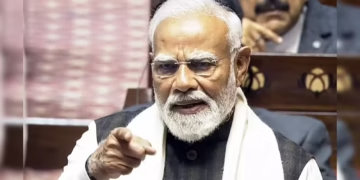


PM Modi’s Cancelled Speech Sparks Political Storm
A fresh political controversy erupted in Parliament after Prime Minister Narendra Modi’s scheduled reply to the Motion of Thanks on the President’s Address was abruptly cancelled. The government has strongly rejected opposition claims that there was no real security threat, insisting the decision was taken purely for safety reasons.
According to officials, the situation inside the Lok Sabha had become unusually tense and chaotic, prompting Speaker Om Birla to advise the Prime Minister not to enter the House. The move has triggered heated political debate, with both sides offering sharply different versions of what actually happened.
What Led To The Sudden Cancellation
Speaker’s Advisory Cited Security Concerns
The Prime Minister was expected to deliver an important speech responding to the Motion of Thanks, traditionally a significant parliamentary event. However, just before the session, Speaker Om Birla reportedly advised against his presence due to what were described as credible security risks inside the chamber.
Government sources later emphasized that this was not a political decision but a precautionary step taken after assessing the situation on the ground.
Opposition Questions The Decision
Opposition parties quickly challenged the explanation, suggesting there was no serious threat and accusing the government of exaggerating the situation. This disagreement has turned the issue into yet another flashpoint in the already tense political atmosphere.
What Happened Inside The Lok Sabha
Disorder And Protests Escalated Quickly
According to sources from the Lok Sabha secretariat, the disruption began early during proceedings when several opposition MPs entered the Well of the House, defying parliamentary norms.
The situation reportedly escalated rapidly. Officials described scenes where some MPs climbed onto tables, tore official papers, and threw them towards the Speaker’s chair. These actions, they said, created an atmosphere of chaos rarely seen in recent parliamentary sessions.
Allegations Of Threatening Remarks
Sources also claimed that certain members used strong language and made remarks that were perceived as threatening. One phrase cited was “dekhte hain PM ka kya karte hain,” which loosely translates to “let’s see what we do with the prime minister.”
While these claims have not been independently verified, they have been cited by government representatives as part of the reason for heightened security concerns.
Tension Around The Prime Minister’s Seat
MPs Allegedly Approached Treasury Benches
Another key point raised by parliamentary sources was that some MPs, including several women members, moved toward the Prime Minister’s designated seat carrying banners.
They reportedly crossed into the treasury benches, where ruling party ministers usually sit. Officials described this as an unusual and worrying breach of normal parliamentary boundaries.
Increased Sense Of Insecurity
According to the secretariat’s account, the crowding around senior ministers and the Prime Minister’s seat created a sense of insecurity inside the chamber. This, combined with the ongoing protests, reportedly contributed to the decision to avoid any potential confrontation.
Government officials have framed this as an unprecedented breakdown of discipline within the House.
Government’s Strong Rebuttal
Centre Rejects Opposition Claims
On Monday, the government issued a firm response dismissing opposition allegations that the threat was fabricated. Officials stressed that security assessments are taken seriously and decisions involving the Prime Minister’s safety cannot be influenced by politics.
They argued that ensuring safety must always come before parliamentary routine, especially when the environment appears unpredictable.
Emphasis On Parliamentary Decorum
Government representatives also used the opportunity to underline the importance of maintaining decorum inside Parliament. They said incidents like paper tearing, slogan shouting, and crossing designated seating areas damage the dignity of democratic institutions.
Opposition’s Counter Narrative
Political Motivation Alleged
Opposition leaders continue to maintain that the situation did not justify cancelling the Prime Minister’s speech. Some argue the government may have used the disruption as a pretext to avoid political confrontation.
They claim protests are part of democratic expression and should not automatically be viewed as security threats.
Demand For Transparency
Several opposition figures have called for clearer disclosure of the alleged security inputs that led to the Speaker’s advisory. They argue that transparency would help avoid speculation and restore trust.
Why This Issue Matters
Parliamentary Norms And Security Balance
This episode highlights the delicate balance between democratic protest and maintaining order in legislative bodies. Parliament often witnesses heated debates and demonstrations, but safety concerns introduce a more serious dimension.
Security experts generally agree that even symbolic threats or disorder can complicate risk assessments when high-profile leaders are involved.
Political Impact Ahead
The controversy may also carry political implications. Parliamentary disruptions, security concerns, and high-profile cancellations often shape public perception and political narratives.
Both the government and opposition appear keen to frame the incident in ways that support their broader political messaging.
Broader Context Of Parliamentary Disruptions
Increasing Polarisation
Indian parliamentary sessions in recent years have frequently seen intense protests, walkouts, and adjournments. Rising political polarisation has contributed to more confrontational exchanges.
This latest incident fits into that larger pattern, though the security angle has made it more sensitive.
Importance Of Constructive Debate
Many political observers stress that while protest is an essential democratic right, productive debate ultimately benefits governance and public trust.
Incidents perceived as chaotic or threatening can undermine confidence in democratic institutions.
What Happens Next
Possible Political Fallout
The issue is likely to continue generating debate inside and outside Parliament. Questions about security, parliamentary conduct, and political accountability are expected to remain in focus.
Calls For Improved Protocols
Some analysts suggest clearer guidelines may be needed to handle disruptive situations without escalating tensions or compromising safety.
Such discussions could influence future parliamentary procedures.
The cancellation of Prime Minister Narendra Modi’s scheduled Lok Sabha speech has sparked intense political debate. The government insists credible security concerns justified the decision, while the opposition questions whether the threat was overstated.
What is clear is that the incident reflects growing tensions within Parliament and raises important questions about balancing protest, security, and democratic functioning. As the political discourse continues, the focus will likely remain on ensuring both safety and healthy parliamentary debate.


