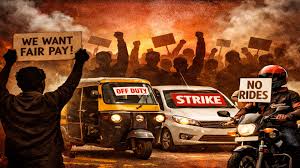


On February 7 2026 gig workers in India went on a strike. This strike caused a lot of problems for ride-hailing and delivery services over the country. The gig workers did this together. Unions called it an “All-India Breakdown”. Thousands of drivers and delivery partners who work for companies like Ola, Uber, Rapido, Swiggy, Zomato, Blinkit and others stopped working. They did this to protest because their incomes are going down prices are not fair. They do not have protection, from the government. The gig workers want things to change.
So I was wondering what happened today. It is really important for me to know what happened today. I want to find out what happened today and understand the situation. What happened today is still a question, for me. I need to know what happened today.
Gig workers who work for ride hailing and delivery apps turned off their apps. Did not work for a few hours in big cities like New Delhi, Mumbai, Bengaluru, Pune and other places. This caused a lot of problems for people who use cabs, bike taxis and delivery services. People had to wait a time, for rides and it took a long time to get food and groceries delivered in many cities. Gig workers and delivery apps were. People felt the impact of gig workers not working.
Unions like the Telangana Gig and Platform Workers Union and the Indian Federation of App-Based Transport Workers decided to go on strike. They want gig workers to have stable earnings. They also want gig workers to be treated fairly. The number of gig workers has grown quickly in the last few years. The unions are fighting for the rights of gig workers. Gig workers need to be paid and treated with respect. The strike is, about the rights of gig workers.
Workers’ Core Demands
The protest is about a few main things that people want:
The government has set minimum base fares for rides and deliveries. These fares are part of the Motor Vehicle Aggregator Guidelines from 2025.. Workers say the government is not making sure these minimum base fares, for rides and deliveries are actually followed.
Transparent fare calculation processes and mandatory consultation with worker unions on pricing changes.
Social security benefits for gig workers, including protections similar to organised employment.
Stricter regulation of private vehicle use for commercial gig work to prevent unfair competition.
Union leaders say that the people who run these platforms are still in charge of setting the fares even though there are guidelines. This means that many workers have to work a lot of hours for less money. The cost of fuel and keeping their vehicles in condition is going up and this is taking away, from what the workers earn. Union leaders are talking about the platforms. How they affect the workers. The workers are having a time because the platforms are setting the fares and this is affecting their income.
Voices from the Movement
Shaik Salauddin, the founder and president of the Telangana Gig and Platform Workers Union is a person who helps organize these protests. He wants treatment and more money for the people who drive cars for companies like Ola and Uber all over the country. The Telangana Gig and Platform Workers Union is very important, to Shaik Salauddin. He has been fighting for the rights of app-based transport workers for a long time.
The Indian Federation of App-Based Transport Workers which is a group that was formed to help workers and make sure they get paid fairly also thinks this is an idea. They point out that people who work with apps have a time because they do not know how much money they will make and they do not have good protection at work. The Indian Federation of App-Based Transport Workers is worried, about this. That is why they support the action.
Impact on Commuters and Services
The strike’s impact varied by city and platform:
Ride-hailing services like Ola and Uber and also Rapido were not available much as people needed them because a lot of drivers decided to stop working during the busiest times of the day. This made it really tough, for people who rely on Ola and Uber and Rapido to get around.
Delivery services are really slow now. This is because the people who deliver food and other things from companies like Swiggy, Zomato and Blinkit are not working. They are doing a walkout so deliveries of food and quick things are not happening fast as they usually do. The delivery partners, from Swiggy, Zomato and Blinkit are the ones who are walking out which is why this is happening to Swiggy, Zomato and Blinkit deliveries.
The authorities in states told people to find other ways to get around or plan their trips in advance. This is because there are not many aggregator services available, as usual. People who use these services to get to work or school may have to look for something. The authorities want everyone to be prepared and not get stuck without a way to get where they need to go. They are asking people to plan of time so they can figure out how to get around without using aggregator services. The main thing is that people should find another way to get around because aggregator services are not available like they usually are.
Why This Matters
India’s gig economy employs millions but often without the labour protections that traditional jobs provide. The February 7 strike underscores growing tensions between gig workers, platform companies, and regulators — with unions pushing for meaningful reforms that can ensure fair pay, transparency, and long-term stability for workers operating at the heart of digital urban services.


