

Trump-Modi Friendship Pays Off as India Secures Stronger Trade Deal Than China, Pakistan
The long and difficult negotiations between India and the United States have finally resulted in a major breakthrough. After nearly a year of intense discussions, US President Donald Trump has officially announced a new India-US trade deal that significantly lowers tariffs on Indian goods.
Under the agreement, the United States has reduced tariffs on Indian exports to 18 per cent, giving India a stronger trade position than several key regional competitors, including China, Pakistan, Bangladesh, and Vietnam.
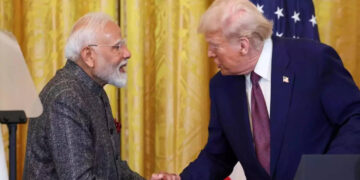
The announcement has been widely seen as a diplomatic and economic win for New Delhi, and it also highlights the personal rapport between Prime Minister Narendra Modi and President Donald Trump.
Tariff Cut Gives India a Competitive Edge
The revised tariff structure places India among the most favorably treated export economies in the region.
India Now Ahead of China and Bangladesh
With tariffs reduced to 18 per cent, Indian exporters will now enjoy lower duties compared to China, which continues to face tariffs as high as 34 per cent. Bangladesh and Vietnam are subject to tariffs of 20 per cent each, while Indonesia faces a slightly higher rate of 19 per cent.
This difference, though seemingly small on paper, can significantly impact pricing, demand, and long-term contracts in global markets, especially in sectors where margins are tight.
Pakistan Also Left Behind
India has also edged past Pakistan, which remains subject to a 19 per cent tariff despite recent efforts by Islamabad to improve relations with Washington. These efforts included high-profile diplomatic engagements and symbolic gestures, but they have not translated into better trade terms.
The outcome reinforces India’s growing economic leverage and its importance in US trade strategy.
A Boost for Indian Exporters and Manufacturing
The tariff reduction is expected to have a direct and positive impact on Indian exporters across multiple industries.
Relief for the Textile Sector
One of the biggest beneficiaries of the deal is India’s textile and apparel sector, which employs millions of workers and relies heavily on the US market. Until now, Indian textile exporters faced stiff competition from countries like Bangladesh, Vietnam, and China, which enjoyed relatively favorable tariff treatment.
With duties now lowered, Indian manufacturers are better positioned to win contracts, expand production, and protect jobs at a time when global supply chains are being restructured.
Strengthening India’s Role in Global Supply Chains
As companies worldwide look to reduce dependence on a single manufacturing hub, India’s improved trade terms make it an increasingly attractive alternative. Lower tariffs improve cost competitiveness and encourage long-term partnerships with US buyers.
Modi Welcomes the Announcement
Prime Minister Narendra Modi responded swiftly to the announcement, expressing gratitude and underlining the significance of the decision for India’s economy.
“A Wonderful Announcement for Made in India Products”
In a post on X, PM Modi referred to President Trump as a dear friend and thanked him on behalf of India’s 1.4 billion people. He highlighted that the immediate reduction in tariffs would directly benefit Indian exporters and strengthen bilateral trade ties.
The message reflected both diplomatic warmth and confidence in India’s growing economic footprint.
Trump Says Decision Driven by Friendship and Respect
President Donald Trump made it clear that the tariff cut was not just a commercial decision but also a reflection of his personal relationship with Prime Minister Modi.
Trump Calls Modi One of His Closest Friends
Announcing the deal, Trump said the two countries had agreed to reduce the reciprocal tariff on India from 25 per cent to 18 per cent, effective immediately. He described the move as one taken out of friendship and respect for the Indian Prime Minister.
In a detailed post on Truth Social, Trump spoke about his conversation with Modi earlier in the day, calling him a powerful and respected global leader.
What Else Was Discussed Between Trump and Modi
Beyond trade, Trump revealed that his discussion with Modi covered a range of global and strategic issues.
Talks on Energy and Global Conflicts
According to Trump, the leaders spoke about trade, global peace efforts, and the ongoing conflict between Russia and Ukraine. He also stated that India agreed to reduce purchases of Russian oil and increase energy imports from the United States, and potentially Venezuela.
These discussions indicate a broader strategic alignment that goes beyond tariffs and trade numbers.
India to Lower Barriers for US Goods
As part of the agreement, India has also committed to reducing tariffs and non-tariff barriers on US products.
A Two-Way Trade Adjustment
Trump said the deal was reciprocal in nature, with both sides making concessions to strengthen trade ties. Lower barriers are expected to improve market access for American companies while maintaining balance in bilateral trade.
This approach reflects a shift toward pragmatic trade diplomacy rather than confrontational tariff battles.
White House Confirms Additional Relief Measures
A White House official later confirmed that Washington will also withdraw an additional 25 per cent tariff that had been imposed earlier, further easing pressure on Indian exporters.
This move reinforces the idea that the deal is designed to deliver immediate and tangible benefits rather than symbolic commitments.
Why This Deal Matters for India
The significance of the agreement extends beyond numbers and percentages.
Economic Confidence and Global Standing
Securing better trade terms than major competitors sends a strong signal to global markets about India’s economic credibility. It reinforces the country’s position as a reliable trade partner and a rising manufacturing hub.
Diplomatic Payoff
The deal also highlights the importance of sustained diplomacy and personal leadership ties. The rapport between Modi and Trump appears to have translated into real economic outcomes, something few countries have managed to achieve during a period of global trade uncertainty.
A Turning Point in India-US Trade Relations
After months of negotiation and uncertainty, the India-US trade deal marks a turning point in bilateral economic relations.
For India, the agreement offers immediate relief to exporters, long-term strategic advantages, and improved access to the world’s largest consumer market. For the United States, it strengthens ties with a key global partner at a time of shifting geopolitical and economic alliances.
As the deal comes into effect immediately, its impact will soon be visible across industries, supply chains, and export figures.


