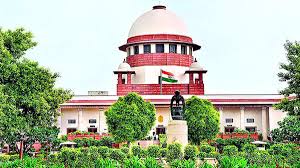


The Supreme Court of India is really worried about the number of cases waiting to be heard in Indias criminal justice system. The Supreme Court of India thinks that if cases take long to be decided it can hurt peoples rights and make them lose faith in the law. The Supreme Court of India recently looked at why trialsre taking so long and said that the courts have too much work. This means that many people who are waiting for their trials to finish are stuck in jail for a long time without knowing what will happen to them. The Supreme Court of India is talking about the criminal justice system, in India. How it affects people who are waiting for their cases to be heard.
The court saw that the problem of cases taking too long to be decided is not just about how the system is run but it is also about making sure people get fair treatment. This is a deal because it affects people, society and the economy. The court said that when cases take long it hurts people who are already struggling and do not have good lawyers to help them. These people also have a time getting out of jail before their trial. In some places most of the people in jail are waiting for their trial, which shows that something is wrong with how justice’s being handled. The criminal case issue is a problem and it is, about making sure people get fair treatment and justice on time.
The court said that the main reasons for delays are that there are not judges and court staff the courtrooms are not good enough and the way things are done is not efficient. They also said that cases are often put off and that the way cases are managed is not very good. The court thinks that using technology is getting better. It is not the same in all areas so things like filing papers online having hearings online and tracking cases digitally are not working as well as they could. The court is talking about the delays in the court system and the main problems are with the judges and court staff the courtrooms and the way things are done. The court wants to make sure that technology is used in a way that helps to make things more efficient like, with e-filing, virtual hearings and digital tracking of court cases.
The highest court, in the land wants the judiciary, the government and the state governments to work together to make some changes. They need to do this in a manner. The court pointed out a things that need to be done. For example they need to pick judges. The court also wants special courts that can handle serious crimes quickly.. They want a better system to manage all the cases digitally. The judges said we need to keep track of how thingsre going by looking at the numbers. They think we should check regularly to see how many cases are still pending and how many have been dealt with. This will help make sure everyone is doing their job properly. The judiciary and the government need to work on these reforms.
The court said something important. The right to a trial is a big part of Article 21 of the Constitution. If someone is in jail for a time without a verdict that is not right. It is a violation of liberty. It also does not help to stop people from committing crimes or to help people who have committed crimes become better.
The court told the people in charge that they should take care of cases where the victimsre vulnerable and the people in jail have been waiting for a long time for a trial. They should also think about ways to handle minor crimes, such as plea bargaining and compounding of minor offences when it is appropriate. The court wants the right to a trial to be a reality for the people especially for those who are vulnerable like the victims and the undertrials who have been in jail, for a long time.
Legal experts view the court’s remarks as a renewed push for comprehensive criminal justice reform rather than piecemeal solutions. While previous initiatives have shown localized success, the court cautioned that sustained political will and institutional coordination are essential to achieve nationwide impact. The matter has been listed for follow-up, with directions sought from states and high courts on concrete steps to reduce pendency within defined timelines.


