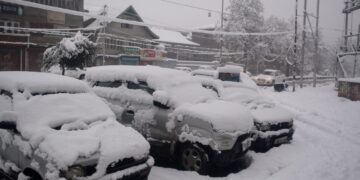


Heavy snowfall across several hill states in North India has severely disrupted road connectivity, leaving hundreds of tourists stranded and bringing daily life to a standstill in many mountainous regions. States including Jammu and Kashmir, Himachal Pradesh, and Uttarakhand witnessed intense snowfall over the past 24 hours, leading to the closure of key highways, suspension of public transport, and widespread power outages in remote areas.
Authorities confirmed that continuous snowfall resulted in the blockage of several national and state highways, including critical mountain passes that connect hill towns to the plains. Snow accumulation made roads slippery and unsafe, forcing officials to halt vehicular movement as a precautionary measure. Popular tourist destinations such as hill stations and pilgrimage routes were among the worst affected, with visitors stuck in hotels, roadside shelters, and vehicles for extended periods.
The India Meteorological Department stated that the region is experiencing an active western disturbance, which has brought persistent snowfall and sub-zero temperatures to higher altitudes. The department has issued fresh alerts, warning of continued snowfall and cold wave conditions over the next few days. Residents and tourists have been advised to avoid unnecessary travel and remain indoors wherever possible.
In Jammu and Kashmir, snowfall led to the closure of major highways connecting the valley to the rest of the country. Officials reported that snow clearance operations are underway, but progress has been slow due to ongoing snowfall and strong winds. Several areas also reported disruptions in electricity and mobile connectivity, compounding the difficulties faced by local residents.
Himachal Pradesh saw some of its busiest tourist belts affected as roads to hill resorts and interior villages became inaccessible. Local administrations arranged temporary shelters and food supplies for stranded tourists, while emergency services remained on high alert. Schools in several districts were ordered to remain closed as a safety measure, and district authorities urged people to stay away from steep slopes prone to avalanches.
In Uttarakhand, heavy snowfall in higher reaches caused landslides and road blockages, particularly along routes leading to pilgrimage towns. Rescue teams were deployed to assist stranded travelers, while officials coordinated efforts to clear snow and restore connectivity. Medical teams were also kept on standby to respond to cases of hypothermia and weather-related health issues.
The Border Roads Organisation has intensified snow-clearing operations using heavy machinery to reopen strategic and civilian roads. Officials said priority is being given to highways and routes essential for emergency services, medical access, and supply of essential commodities.
Tourism operators expressed concern over cancellations and disruptions, noting that winter tourism is a major source of income for hill states. However, authorities stressed that safety remains the top priority, and no risks would be taken until weather conditions improve.
Experts have warned that extreme winter events are becoming more frequent and intense, calling for better infrastructure planning and disaster preparedness in vulnerable mountain regions. They emphasized the need for improved early-warning systems, weather-resilient roads, and stronger coordination between agencies to manage such crises effectively.
As snowfall continues, authorities have appealed to tourists to follow official advisories, cooperate with local administrations, and avoid spreading panic. While efforts to restore normalcy are ongoing, the situation remains challenging, highlighting the fragile balance between tourism, infrastructure, and nature in India’s hill states.


