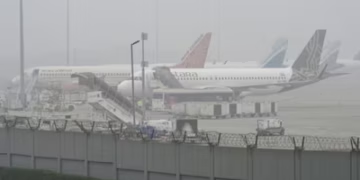


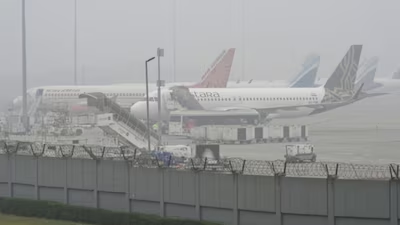
Dense fog affected morning air traffic at airports in North India and led to delays and cancellations. Airports in Delhi, Lucknow, Amritsar, Jaipur, and Varanasi were some of the most-hit airports. The onset of winter has seen a massive impact on air traffic with reduced visibility during the wee hours.
The effect of reduced visibility was also witnessed at the Indira Gandhi International Airport, Delhi, a major air hub, with flights affected for a few hours. Though some flights could land with reduced visibility because of the installation of CAT III landing equipment, some flights were delayed, especially during the peak hours of arrival and departures. According to reports, there were instances of long waiting times and delayed flights.
It has been confirmed by the airport management that the airlines followed the normal procedure in order to ensure the utmost safety. A number of flights were diverted to other airports in the vicinity, which had relatively clearer skies. Other planes were held in holding patterns until it was safe for them to land.
Such incidents were also reported from airports in the states of Uttar Pradesh and Punjab, where the reduced visibility due to thick fog was less than 100 meters in some places. In the capital city of Lucknow and the religious city of Varanasi, some flights scheduled to operate in the early morning hours were delayed by more than an hour. Similarly, Chandigarh and Amritsar airports also witnessed delays.
Airline Travel Advisories were also issued, advising passengers to check flight status before going to the airport and to factor in extra time for security and flight processing. Airline flexibility was also provided to reseat passengers, and customer service representatives were also stationed at the airport to help passengers with flight and hotel changes that needed to be made.
According to the India Meteorological Department, the major reasons for the occurrence of fog are low wind speed, high moisture content, and decreasing night temperatures in the Indo-Gangetic plains. The India Meteorological Department has also warned that such conditions are also possible in the coming days. The main reasons for such conditions are the onset of winters. The cold wave in some areas of North India may also add to this effect.
According to aviation officials, another factor that continues to remain an operational concern in North India is this winter fog, which is still one of the most difficult situations they have to deal with in their region. Although technology has improved navigation systems, low visibility conditions can result in rescheduling flights, which has a cascading effect during the course of the entire day.
Reactions among the passenger population ranged, as people recognized the concerns for safety, while others felt disgruntled about not receiving updates on time. Regular air travelers felt the importance of having better communication on delays and estimated times of departure, especially in the early morning hours when connectivity is restricted.
In addition to the impact on air travel, the dense fog has also hampered road and train traffic in various areas throughout North India. The reduced visibility has led to a slowdown in traffic flow on roads, with traffic police issuing warnings to motorists to use their fog lights and to drive slowly. Train operations have been affected by minor delays as a precaution.
The airport authorities have acknowledged that flights are gradually returning to normal operations due to improved visibility in the latter part of the morning. Nonetheless, authorities warned that travelers should be prepared for potential flight interruptions to persist during the winter months. Regular observation of meteorological conditions and collective planning efforts are being implemented to avoid inconveniences. Experts in the travel industry advised flying at midday, maintaining buffer times in case of connection flights, and making use of airline alerts to stay updated. As fog affects flight operations in North India, it has been seen that safety will remain the main concern of authorities amid such situations.


