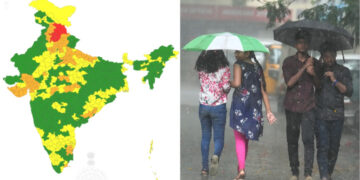


The weather advisory issued for the next 48 hours by the India Meteorological Department has foretold variable weather conditions across the breadth and length of the country. The advisory characteristically warns about dense fog, cold wave conditions, rainfall in patches, and rough sea conditions out at sea, while asking the people and administration to be vigilant and prepared for any emergency.
The IMD forecasted that northern India will see dense to very dense fog in isolated pockets during early morning and late-night hours, including in Delhi, Uttar Pradesh, Punjab, Haryana, Rajasthan, and parts of Bihar. Consequently, road, rail, and air travel will be impacted owing to poor visibility, for which the authorities have asked commuters to plan their journeys carefully and adhere to the safety advisories being issued by the local administrations. The airports have been told to remain prepared for delays and railway authorities to keep a close watch on train operations to manage disruption to the minimum.
Cold wave conditions are most likely to further strengthen over parts of northwest and central India. Minimum temperatures would further decline over many places, especially in rural and open areas. The IMD cautioned vulnerable populations against exposure to cold weather during this period, including the elderly, children, and those suffering from respiratory diseases. The state governments have also been advised for strengthening winter relief measures related to night shelters, distribution of blankets, and medical outreach among the homeless and economically weaker sections.
Light to moderate rainfall is expected over West Bengal, Odisha, Assam, Arunachal Pradesh, and Meghalaya in eastern and northeastern India. Isolated thunderstorms are also likely in some areas. The advisory further suggested that farmers take necessary precautionary measures as excessive moisture may damage standing crops and harvested produce. It has suggested timely drainage of water in the agricultural field and proper storage of grains to reduce losses.
Southern India, however, will have mixed weather: expect sparse rain across parts of Tamil Nadu, Kerala and coastal Andhra Pradesh due to easterly wind conditions. The interior parts, however, will remain dry almost entirely. A caution note has been issued by the Met Department for fishermen along the eastern and western coasts. Sea conditions may turn rough in some areas and fishing may be partially banned. Coastal authorities have been asked to spread the word through local channels.
The advisory also predicted that there is a possibility of moderate snowfall over higher reaches of Himalayan states of Himachal Pradesh and Uttarakhand. It advised tourists visiting hill stations to remain updated about local weather and avoid any unnecessary travel during adverse weather conditions. Besides, instructions given by district administrations must be followed. Road closures and diversions of traffic are likely to be carried out in snow-prone areas as part of public safety measures.
The urban local bodies and disaster management agencies have been ordered to stay on standby over the next two days. Emergency response teams are being kept on standby for cold-related incidents, including accidents on foggy roads, disruption of electricity services, waterlogging in areas receiving rain, and health ailments due to cold exposure. Hospitals have also been instructed to make preparations for a potential increase in seasonal diseases.
IMD has, therefore, urged the public to keep themselves updated through official weather bulletins and avoid giving heed to unofficial sources. Citizens have been advised to watch the daily forecasts, follow the advisories, and extend cooperation with authorities. Making available precautionary measures-such as driving with fog lights, adequate clothes in winter, and avoiding going outdoors during severe conditions-can help a lot to mitigate damages. With weather patterns becoming increasingly unpredictable, timely advisories and public awareness are important in minimising disruptions and ensuring safety, experts say. The IMD will continue to closely monitor the situation and issue updates as necessary when conditions change significantly over the next 48 hours.


