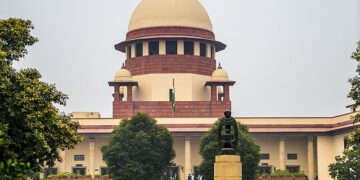


The Supreme Court of India has called for a detailed reply from the Central Government regarding the concerns associated with the revisions of the electoral rolls, as a result of petitions that have raised several concerns about the accuracy and transparency associated with the changes being carried out into the voter lists of several states. This action has been taken because of the rising public debate associated with the discrepancies in the electoral rolls.
A bench of the Supreme Court held that “The Electoral Rolls are the backbone of the democratic process in this country. It must be error-free, inclusive, and not prone to manipulation.” The Apex Court was of the opinion that any weakness in the maintenance of voters’ lists may lead to a loss of faith in the concept of elections, which are the hallmark of a constitutional democracy. The Court ordered the Centre to be clear regarding the processes undertaken in recent revisions of the electoral rolls.
In the case before the courts through the petitions filed, the grievances of the citizens as well as the political parties had complained about the absence of eligible voters in the voters register, while others had the names of dead persons and/or duplicates remaining on the register. Such issues had the tendency to disenfranchise citizens and influence the credibility of general polls that had been scheduled to happen in the coming future of the country.
During the hearing, the Supreme Court also asked for an explanation about the role of the Election Commission of India (ECI) regarding the management of changes to the electoral rolls and the degree of the Centre’s intervention in this regard. The bench thus reaffirmed that, although the Election Commission is a constitutional body entrusted with conducting free and fair elections, its coordination with the Centre should never vitiate its independence.
The court has asked the government to submit details regarding how updates to electoral rolls are made, including technological applications, ground verification, and grievance redressal facilities provided to citizens. The court also expressed concerns regarding allegations that massive removals were made without sufficient prior notice to voters, giving them limited time to raise their disputes before elections.
In light of these allegations, government officials told the court that updating electoral rolls is done through set legal procedures laid down by the Representation of the People Act, and all these processes are done above board. These officials emphasized that it is important to update the list periodically, as there are inaccuracies that arise due to migration, deaths, and residential changes, and that there are procedures through which people can check and update their details both online and offline.
However, the Supreme Court also pointed out that accessibility is a problem, especially for senior voters, foreign workers, and those in remote areas, who may not necessarily have access to digital technology. The court made it clear that making it easy for voters and not excluding eligible voters because of difficulties in registration are essential.
The controversy has further led to a political response, with opposition political parties accusing the government of selective deletions and urging it to conduct an independent audit of the electoral lists. There are demands for greater transparency and public disclosure of the deletion data to ensure neutrality. The Centre has denied charges of selectiveness and stated that the deletion exercise is a normal procedure.
Lawyers have noted that the possible intervention by the courts may result in the formulation of guidelines regarding the management of electoral rolls, possibly making them less arbitrary in removing people’s names. It has also been proposed that the case may result in the formulation of guidelines regarding public awareness, extended timelines, and grievance redressal.
The Supreme Court has listed the matter for further hearing after the Centre’s response. The verdict is expected to have a huge impact on the future electoral process, emphasizing the right of every eligible citizen to vote. With the unfolding case, there is the underlying theme of the judiciary’s role as guarantors of democratic institutions and the maintenance of credible and transparent electoral processes.


