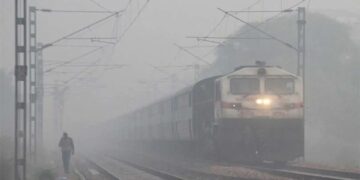


Dense fog and low visibility conditions prevailing in a large area of North India have also affected the railways, causing several delays. Areas including Delhi, Uttar Pradesh, Punjab, Haryana, Rajasthan, Bihar, and some other places in Madhya Pradesh have been experiencing fog, especially in the early morning and late night periods.
Visibility conditions in some stretches were reduced to as low as 20-50 meters, which made the drivers of some trains lower their speed to ensure the safety of commuters, sources with Indian Railways said. Dozens of long-distance trains plying routes between northern India and eastern, western, and southern states were delayed by several hours due to this phenomenon. Delhi-Kolkata, Delhi-Mumbai, Delhi-Patna, and Delhi-Lucknow routes were some of the busiest ones that were hit by the delay.
The railway officials said that fog delay is a regular issue in winters, particularly in December and January. To overcome this risk, Indian Railways operates on what is termed as a “fog safety protocol,” with speed restrictions, intensified signaling observation, and operation of extra loco pilots on critical routes. Although this safeguards against accidents, this system is bound to cause delays in train operations even in adverse weather conditions.
Passengers waiting at the major stations of New Delhi, Anand Vihar, Lucknow, Kanpur, Patna, and Amritsar also complained of overcrowding and delays in waiting times. Passengers, especially daily commuters and couples traveling for wedding ceremonies and holidaying schedules, also complained about the absence of accurate delay notifications. On the other hand, passenger safety during low visibility was the highest concern for railway officials.
To counter the effects, the Indian Railways launched a round-the-clock observation system from control rooms. Signaling technology and GPS tracking devices are being used to monitor the movement of trains in the areas prone to fog. Moreover, loco pilots are being supplied with devices that can work in dense fog situations and training to deal effectively with extreme winter conditions.
The spokespeople for the railways have also asked passengers to look towards official channels like NTES (National Train Enquiry System), railway phone numbers, and authenticated mobile applications for train updates rather than relying solely on announcements at the stations. Passengers were advised to calculate their travel plans, including a buffer, while considering connecting trains and time-bound travel.
The India Meteorological Department has issued an alert that dense fog conditions are likely to continue in many states of northern India over the coming days as a result of cold air currents and high levels of moisture. This implies that disruptions to train schedules are also likely to continue sporadically, especially during early morning hours when fog density is most likely to reach its peak levels.
Despite this, Indian Railways has officially stated that it has not received any major accident reports related to fog yet this season. Its officials attributed this to the fact that following all cautionary procedures in such kinds of weather is vital to avoid any unfortunate events, even with slower speeds.
With the intensifying winter, commuters are being advised to stay updated, exercise patience, and collaborate with the railway authorities. Authorities have again confirmed that although delays because of fog are unavoidable, work is in progress to avoid any inconvenience and make travel via the rail network a smooth process. The current situation is being closely tracked, and any further warnings may be issued depending on the development of the weather in the coming days.


