

AI Will Not Kill Jobs, But It Will Change Them Forever: Microsoft India Head
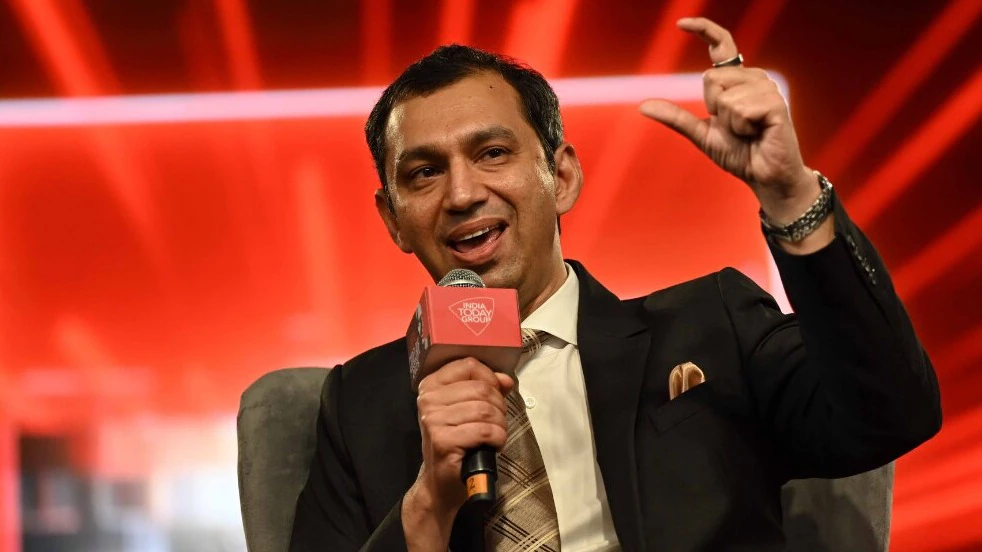
Artificial intelligence may not steal jobs, but it will completely reshape how people work, learn, and build careers. That was the clear message from Puneet Chandok, President of Microsoft India and South Asia, who warned that the biggest risk in the AI era is not automation, but the refusal to keep learning.
Speaking at the Microsoft AI Tour, Chandok delivered a reality check for professionals navigating rapid technological change. While fears around AI-driven job losses dominate public discourse, he argued that the real disruption lies in how roles are being redefined.
“AI Will Unbundle Jobs, Not Eliminate Them”
Why the Fear of Job Loss Is Misplaced
Addressing one of the most common anxieties about artificial intelligence, Chandok made it clear that AI is not here to replace humans outright.
According to him, jobs will not disappear overnight. Instead, AI will break them into smaller components, automating certain tasks while amplifying others.
He described this process as unbundling, where traditional roles are dissected into multiple skill-based functions. Some of these will be handled by machines, while others will require more human judgment, creativity, and decision-making.
This shift, he said, will fundamentally change how organisations structure work and how individuals define their careers.
The End of the Industrial-Age Career Model
Chandok pointed out that the long-standing model of learning once and relying on the same skills for decades is no longer sustainable.
For generations, people built careers by acquiring a fixed set of skills early in life and applying them until retirement. That model, he said, is breaking down rapidly in the AI era.
He described the current generation as standing at a historic inflection point.
“We Are the Last Generation With Stable, Long-Term Careers”
A Stark Warning for Today’s Workforce
In one of the most striking remarks of the event, Chandok said that today’s professionals may be the last to experience relatively stable, linear careers.
Future generations, he explained, are far more likely to build careers as portfolios rather than ladders. Instead of holding one job title for years, individuals will continuously move between roles, projects, and skill sets.
Careers will no longer be defined by a single profession, but by a constantly evolving mix of capabilities.
Portfolio Careers Will Become the New Normal
Chandok suggested that people will increasingly combine technical skills, domain expertise, and creative abilities across different fields.
This shift will reward adaptability over tenure and curiosity over comfort. Those who can learn quickly and reinvent themselves will thrive, while those who cling to static roles may struggle to stay relevant.
The Real Career Threat in the AI Era
“The Real Pink Slip Is Refusal to Learn”
Challenging the widespread fear of automation, Chandok said the real danger is not AI replacing humans, but humans choosing not to evolve.
He described refusal to learn as the true pink slip of the AI era. According to him, professionals today are engaged in a daily fight against irrelevance, whether they realise it or not.
In a rapidly changing environment, staying still is equivalent to falling behind.
Learning Is No Longer Optional
Chandok compared learning to an oxygen mask, something that becomes essential in a crisis rather than optional.
Using a relatable analogy, he referred to Delhi’s air pollution to highlight how people truly understand the value of oxygen masks only when air quality becomes dangerous.
In the same way, he suggested, continuous learning will soon be viewed not as a career advantage but as a basic survival requirement.
Satya Nadella on the Changing Nature of AI
Are AI Models Becoming a Commodity?
Microsoft Chairman and CEO Satya Nadella, who also addressed the event, offered a broader perspective on the evolution of artificial intelligence.
Nadella raised an important question about the future of AI models themselves, suggesting that they may eventually become commoditised as more players develop similar capabilities.
In such a scenario, differentiation will no longer come from access to AI alone.
Data Becomes the Real Competitive Advantage
According to Nadella, data will emerge as the most strategic asset in the AI-driven economy.
He emphasised that it is not just about having data, but about using it contextually and responsibly to create meaningful experiences.
Companies that can combine AI with deep, well-structured data will be best positioned to generate value at scale.
AI in Action: Real-World Impact in India
Maharashtra Police Using AI for Cyber Safety
Highlighting on-ground applications, Nadella shared an example of how AI is already delivering tangible benefits in India.
The Maharashtra government has partnered with Microsoft to deploy AI tools for cyber safety in Nagpur. According to the company, this initiative has reduced turnaround time in cybercrime investigations by nearly 80 percent.
The system is currently operational across 23 police stations in Nagpur, with plans to scale it to all 1,100 police stations across Maharashtra.
AI Adoption Across Indian Enterprises
Microsoft is also working with several major Indian companies to integrate AI into their operations.
These include Adani Cement, Yes Bank, the Aditya Birla Group, and LTIMindtree, among others. Nadella said these partnerships reflect the growing acceptance of AI across sectors such as manufacturing, banking, infrastructure, and technology services.
The focus, he noted, is on using AI to enhance productivity, improve decision-making, and create new forms of value rather than simply cutting costs.
What This Means for Professionals and Students
Skills Will Matter More Than Job Titles
The messages from Microsoft’s leadership carry important implications for India’s workforce, especially young professionals and students.
In an AI-driven future, skills will matter far more than job titles or degrees. The ability to learn, unlearn, and relearn will define career success.
Continuous Learning as a Lifelong Habit
Professionals will need to treat learning as an ongoing process rather than a phase that ends after formal education.
This includes staying updated on emerging technologies, developing complementary soft skills, and being open to career transitions.
Those who embrace this mindset, Chandok suggested, will find AI to be an enabler rather than a threat.
Artificial intelligence is not coming for jobs in the way many fear, but it is undeniably transforming the nature of work. As Puneet Chandok made clear, AI will unbundle roles, dismantle old career models, and reward those who adapt quickly.
With Satya Nadella reinforcing the importance of data-driven AI adoption, the message from Microsoft is consistent: the future belongs to learners.
In the AI era, stability will no longer come from holding on to one role, but from continuously building new capabilities. For professionals across industries, the choice is clear: evolve with AI or risk being left behind.


