

India Takes Pakistan Head-On at United Nations Security Council
India delivered a strong and uncompromising message to Pakistan at the United Nations Security Council, openly linking Islamabad’s internal political crisis to its long-standing support for cross-border terrorism. In a sharply worded address, India accused Pakistan of undermining democracy at home while exporting instability abroad.
The remarks were made during the UNSC Open Debate on “Leadership for Peace,” where India also pushed forcefully for urgent reforms to modernise the Security Council.
India Highlights Pakistan’s Political Crisis
Jailing of Imran Khan Raised at Global Forum
India’s Permanent Representative to the United Nations, Ambassador Harish Parvathaneni, drew global attention to the incarceration of former Pakistani Prime Minister Imran Khan. He pointed out that Khan has been in jail since August 2023 in connection with a corruption case worth around EUR 190 million.
The Indian envoy also referred to multiple cases filed against Khan under Pakistan’s Anti-Terrorism Act following the protests of May 9, 2023, raising concerns over the misuse of laws to silence political opposition.
Ban on Political Party and Military Influence
India highlighted the ban imposed on Imran Khan’s political party, calling it a direct assault on democratic choice. Ambassador Parvathaneni accused Pakistan’s powerful military establishment of engineering what he described as a constitutional coup through the controversial 27th amendment.
According to India, the amendment fundamentally altered Pakistan’s constitutional balance by expanding military control over civilian institutions.
Lifetime Immunity for Army Chief Sparks Criticism
Asim Munir Named in Indian Statement
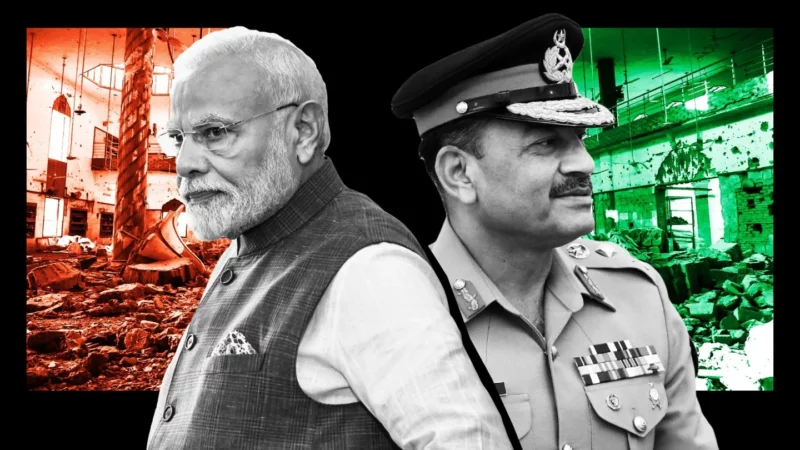
One of the strongest points raised by India was the lifetime legal immunity reportedly granted to Pakistan’s Chief of Defence Forces, General Asim Munir. Ambassador Parvathaneni said this move exposed Pakistan’s unique version of democracy, where elected leaders are jailed while military chiefs are shielded from accountability.
India argued that such actions raise serious questions about Pakistan’s commitment to democratic governance, rule of law, and civilian oversight.
Concerns Over Human Rights Violations
India also referred to concerns expressed by the United Nations Special Rapporteur on Torture, Alice Jill Edwards, regarding Imran Khan’s alleged inhuman treatment inside Adiala Jail.
By citing UN officials themselves, India sought to reinforce that the criticism was not political rhetoric but grounded in documented human rights concerns.
India Rejects Pakistan’s Claims on Jammu and Kashmir
Kashmir an Integral Part of India
India firmly rejected Pakistan’s repeated references to Jammu and Kashmir during UN meetings. Ambassador Parvathaneni called such statements unwarranted and described them as proof of Pakistan’s obsession with India.
He reiterated that Jammu and Kashmir and Ladakh are integral and inseparable parts of India, leaving no room for ambiguity on the matter.
Pakistan’s Conduct at UN Questioned
India questioned Pakistan’s suitability as a non-permanent member of the Security Council, stating that a country using global platforms to push divisive agendas cannot be expected to fulfil its international responsibilities.
The envoy noted that Pakistan repeatedly raises bilateral issues at multilateral forums instead of contributing constructively to global peace and security.
Pakistan Called Global Epicentre of Terrorism
Cross-Border Terrorism at the Core
India used the UNSC platform to remind the international community of Pakistan’s long record of sponsoring terrorism. Ambassador Parvathaneni pointed to decades of cross-border attacks that have claimed thousands of lives in India.
He said Pakistan’s support for extremist groups remains a major threat not just to India but to regional and global stability.
Reference to Pahalgam Terror Attack
India cited the April 2025 terror attack in Pahalgam, where 26 civilians were killed in what it described as a religion-based attack. The envoy said incidents like these underline why Pakistan’s claims of promoting peace lack credibility.
India stressed that terrorism emanating from Pakistan is not a historical issue but an ongoing reality.
Indus Waters Treaty Put in Context
India Explains Its Decision
Defending India’s decision to place the Indus Waters Treaty in abeyance, Ambassador Parvathaneni said New Delhi had entered the agreement 65 years ago in good faith.
He pointed out that despite the treaty, Pakistan has waged three wars and sponsored thousands of terror attacks against India, violating the spirit of cooperation that underpinned the agreement.
Conditional Path Forward
India made it clear that the treaty would remain suspended until Pakistan credibly and irrevocably ends its support for cross-border terrorism. The statement signalled that India’s patience has limits when faced with persistent security threats.
Call for Urgent UNSC Reforms
Existing Structure Called Outdated
Beyond Pakistan, India used the opportunity to call for comprehensive reforms of the United Nations Security Council. Ambassador Parvathaneni described the Council’s current structure as outdated and ill-equipped to address modern global challenges.
He said an institution designed eight decades ago cannot effectively respond to today’s complex geopolitical realities.
Quote from UN Secretary-General
Quoting UN Secretary-General Antonio Guterres, the Indian envoy said the world cannot build a future for coming generations using systems created for a different era.
India urged member states to move beyond discussions and begin time-bound, text-based negotiations to reform the Council.
India’s Vision for a Reformed Security Council
Greater Representation and Inclusion
India reiterated its long-standing demand for a more representative Security Council that reflects current global realities. It called for better representation of under-represented and unrepresented regions, particularly from the Global South.
India argued that legitimacy and effectiveness go hand in hand and that reform is essential to restore global faith in multilateral institutions.
Emphasis on Accountability and Transparency
India also stressed the need for transparency and accountability in the functioning of the Security Council. It highlighted its own contributions to UN peacekeeping missions as evidence of its commitment to global peace and security.
Global Message from India
India’s statement sent a clear message that domestic repression, military dominance, and support for terrorism cannot be ignored under the guise of diplomacy.
By combining criticism of Pakistan with a broader call for global reform, India positioned itself as both a responsible global actor and a vocal advocate for change.
India’s sharp intervention at the United Nations Security Council laid bare what it described as Pakistan’s contradictions: jailing an elected prime minister, shielding military leadership, suppressing democratic voices, and continuing support for cross-border terrorism.
At the same time, India pushed for urgent reforms to modernise the Security Council, arguing that global peace cannot be protected with outdated systems. The statement not only challenged Pakistan’s narrative but also reinforced India’s growing role as a confident and assertive voice on the global stage.


