


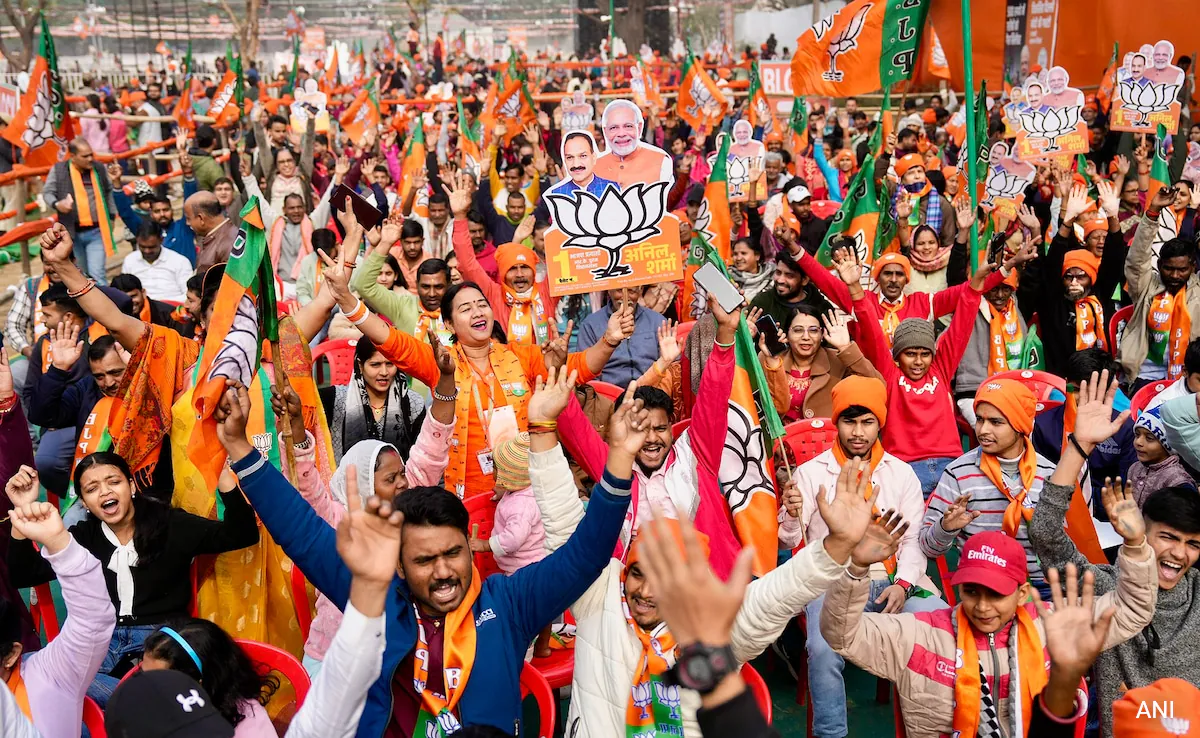
The outcome of Kerala’s local body elections was an important moment in its political history, with the NDA recording its best-ever performance at the grassroots level. Though the LDF and the Congress-led UDF continue to dominate the state’s political landscape, the NDA’s improved showing has drawn widespread attention, signaling a gradual but important shift in voter behavior.
Breaking a Long-Standing Political Pattern
Over the years, the local body elections in Kerala—covering gram panchayats, block panchayats, district panchayats, municipalities, and municipal corporations—have mostly been bipolar contests between the LDF and the UDF. The NDA, which has the BJP basically leading, was relegated to the sidelines in terms of representation. This time, in the recent polls, the alliance has gone up both on seat share count and the vote share percentage in many regions, opening what party leaders term a historic lead.
Though the NDA is nowhere near a majority in most of the local bodies, the fact that it has been able to win seats with regular consistency and emerge as a competitive third force has altered traditional electoral arithmetic.
Regions of Enhanced Performance
The gains of the NDA have been particularly visible in urban areas and semi-urban municipalities, where issues such as waste management, road infrastructure, property tax, and civic amenities played a major role. In certain coastal and central Kerala regions, even in rural panchayats, NDA-backed candidates fared better than expected, reflecting deeper organisational penetration.
Political analysts say that this is one area in which the alliance has finally managed to convert vote share growth into actual seats – a challenge in past elections.
Factors Behind the NDA’s Rise
Various factors have been thought to contribute to the improved performance of the NDA:
Grassroots organizational work: It seemed that the NDA concentrated on strengthening booth-level committees and finding locally influential candidates.
Issue-based campaigning: Instead of national ideological narratives, the making of the campaign emphasized local governance, transparency, and delivery of civic services.
Urban voter outreach: The coalition swept the middle class, young, and first-time voters in towns and cities.
Anti-incumbency at the local level: In some areas, disaffection due to poor performance by the existing LDF or UDF-controlled local bodies worked in NDA’s favour.
This result, many party leaders have hitherto claimed, is the affirmation of the long-term strategy of sustaining grassroots involvement rather than short-term electoral gains.
Impact on LDF and UDF
Despite the advances made by the NDA, the LDF remains the single largest force overall, retaining control of an enviable number of local bodies. The UDF retains its traditional vote base in several districts, but has suffered serious reversals in some urban pockets.
Both the major fronts have now recognised that the growing presence of NDA could no longer be overlooked. Across various wards and councils, NDA candidates ended up as runners-up, slicing victory margins and thereby impacting results. Analysts say all this could make for keen contests next time round, even as the established alliances sit up to take a relook at candidate selections and governance performance.
Political Significance on a Larger Scale
The implications of the local body results go beyond municipal governance. For the NDA, the performance is being projected as a foundation for future Assembly and Lok Sabha elections in Kerala, a state where it has traditionally struggled to make electoral breakthroughs.
The results reflect a broader national trend of incremental expansion into traditionally resistant states and, in so doing, point to a tendency toward fluidity of regional political strongholds over time.
Governance Challenges Ahead
Formation of councils and election of office-bearers, including presidents and chairpersons, will be an immediate challenge with fragmented mandates in some local bodies. Cooperation, negotiation, and issue-based alliances may become more common in councils where no single front has a clear majority.
Conclusion
The Kerala local body polls have repeated the state’s reputation for politically conscious and discerning voters while delivering a message that is loud and clear: the NDA is gaining steadily. The victories of the LDF and UDF keep them ahead, but the historic edge of the NDA is a turning point in Kerala politics. How this momentum will actually lead to larger electoral success depends on governance performance, organizational continuity, and the ability to reach out to Kerala’s diverse electorate over the coming years.


