


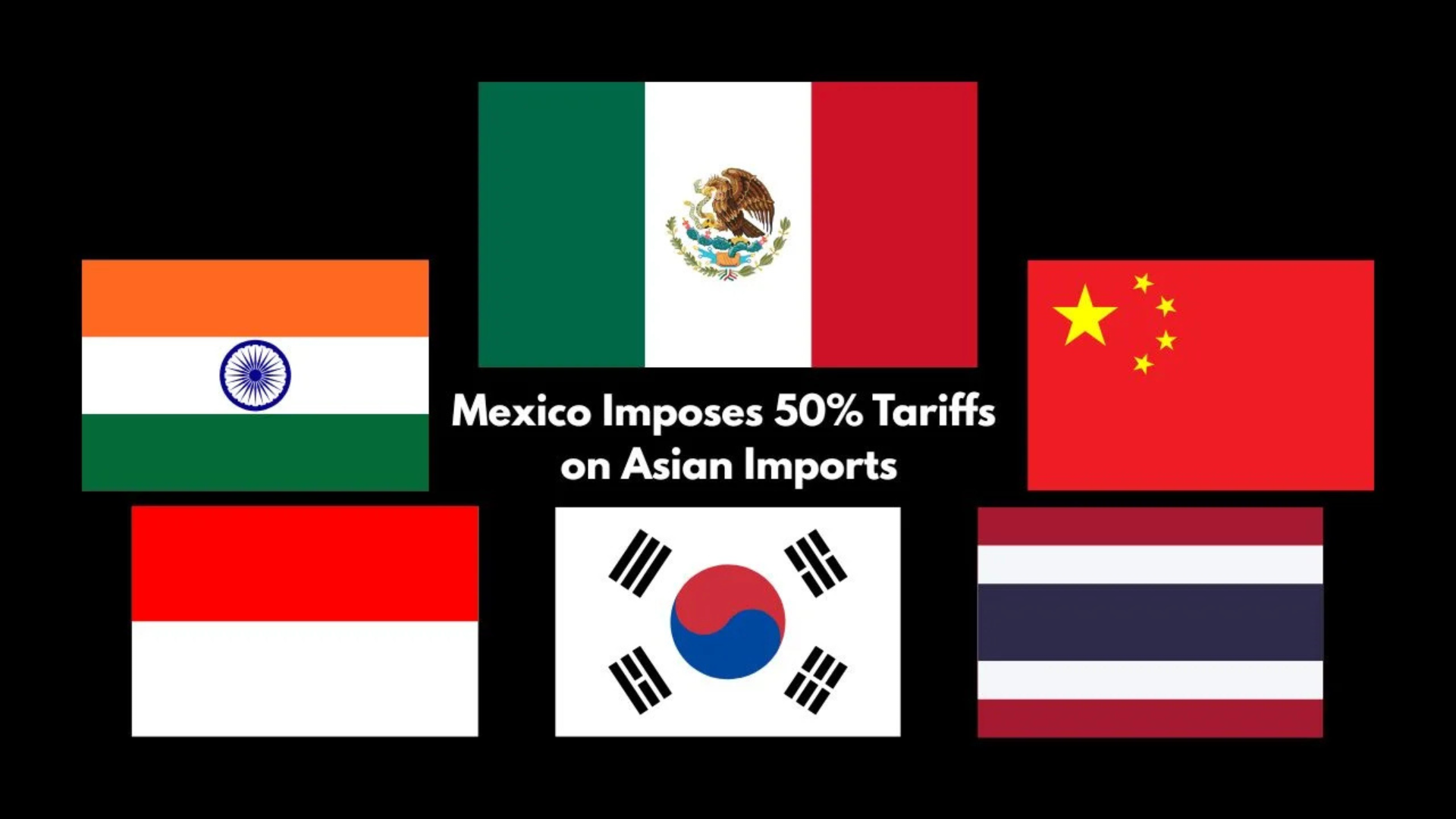
A recent decision by Mexico to impose steep tariffs on a range of Indian goods has caused ripples in the realm of trade and industry, particularly on supply chain stability, export competitiveness, and geopolitical undercurrents influencing global commerce. The move comes at a time when India is already reeling from trade pressures emanating from other major economies. The development has thus seen analysts attempt to look at the economic fallout and the diplomatic motivations behind Mexico’s decision.
The tariff action primarily hits Indian exports in sectors such as textiles, engineering goods, chemicals, auto components, and certain consumer products that have been building a strong presence in the Mexican market over the last decade and have often won against Chinese manufacturers in the marketplace. The sudden tariff hike thus threatens to erode India’s price advantage and disturb long-standing supply contracts. Exporters warn that the new duties may lead to decreased order volumes, renegotiation of contracts, and a shift in buyer preference toward alternative suppliers.
What makes the situation particularly remarkable is that these tariffs may not be targeted at India in isolation. Several analysts view the action as part of Mexico’s larger campaign to sort out the problem of Chinese products increasingly finding their way into its market through indirect routes via third countries. In sectors where Chinese manufacturers confront high tariffs or other barriers, parts of global supply chains have been routed through third-party countries, including India. Mexico seems determined to plug these apparent loopholes, even if the result is a wide-based tariff that hits multiple economies.
From the Indian point of view, the tariffs come at a very difficult time. New Delhi is fighting trade fights with the United States after the latter launched a series of tariff escalations against Indian products. These pressures have made India re-evaluate aspects of its export strategy and assess how global realignment of supply chains is affecting its foreign trade relationships. The decision taken by Mexico thus increases the degree of difficulty for the already testing environment for exporters in India.
Indian trade associations have voiced their apprehension that the new duties will undo years of efforts at increasing India’s presence in Latin America. Mexico had emerged as one of India’s fastest-growing export destinations, with complementary needs between the two industries apart from major Indian companies present in IT, pharmaceuticals, and automotive manufacturing. Industry leaders claim the new duties threaten to nullify such progress and may prompt companies to reevaluate their expansion plans in the region.
The problem is diplomatically a sensitive challenge because India and Mexico have shared traditionally warm relations through cooperation with multilateral forums, cultural exchanges, and growing business links. Economic interests, however, often override diplomatic goodwill, especially when domestic industries in partner countries feel vulnerable. Indian officials are thus likely to raise the issue through trade dialogues for either clarification or relief through negotiations. Yet experts caution that once tariff decisions are implemented, they are rarely reversed anytime soon.
The development also underlines the increasing interdependence of world trade decisions. As countries reassess their economic policies to a new geopolitical configuration—no less than an emerging US-China competition—third-country exporters like India are more often than not affected collaterally. Mexico’s decision can be considered within a framework of bilateral relations but also as part of a bigger effort to reorient its trade policy within the framework of giant partners such as the United States, with whom it has far-reaching economic integration via regional agreements. On the domestic front, Indian exporters are pressing the government for support measures to buffer this impact. These may range from export incentives and diversification of target markets to improved logistics support and fast-tracking trade negotiations with other Latin American countries.
According to most industry observers, India needs to accelerate its efforts toward making its products more competitive, reducing cost overheads, and investing in modernization of the supply chain to make its exports resilient to a turbulent global trade environment. While immediate challenges arise from the tariffs, they remind us that India’s export strategy needs to be constantly adjusted. Diversification, diplomatic engagement, and stronger economic partnerships hold the key to ensuring that Indian industries are resilient against sudden shocks in foreign markets. As Mexican authorities forge ahead with the new tariff architecture, Indian businesses and policymakers alike will closely watch developments of the situation and what it portends about the future of global trade dynamics.


