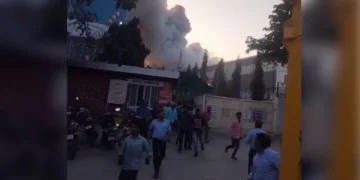


In a tragic industrial accident, a boiler explosion inside a private manufacturing unit in Rohtak killed one worker and injured two others on Wednesday. The incident, which happened in the wee hours of the morning, has raised serious questions about workplace safety standards and regulatory compliance in small- and medium-scale factories across Haryana.
According to preliminary reports, the blast occurred when workers were operating the boiler during routine production. The sudden explosion, which was reportedly due to excessive pressure buildup, sent fragments of metal flying across the workshop and also caused considerable structural damage to the unit. Local residents said they first heard a loud noise, which was followed by billows of smoke emanating from the factory. Panic quickly spread as workers rushed out while emergency services were called in.
The victim was a 32-year-old technician who had been working at the unit for several years; he died on the spot due to severe injuries. Two other workers sustained burns and multiple fractures and were immediately taken to Rohtak PGI hospital. The doctors have informed that both injured workers are stable but still kept under close observation. As soon as possible, the authorities notified the families of all three victims, and compensation details would be announced after the official inquiry.
Authorities later confirmed that a special forensic team was dispatched to investigate the exact cause of the explosion. Preliminary assessments showed that the boiler might not have been subjected to routine maintenance, thereby raising the suspicion of negligence on the part of the management. Officials from the Labour Department and the Industrial Safety Wing also arrived on the scene to inspect the damaged machinery, check compliance records, and assess potential lapses in safety protocols.
During the recent years, Rohtak, along with a few other districts of Haryana, has undergone rapid expansion of industry, especially in the manufacturing and processing sectors. As industrial growth has zoomed, concern for adhering to safety standards has time and again cropped up. According to experts, boilers are highly risky to operate unless they are timely serviced and monitored continuously because they operate at a very high pressure and temperature. Even minor technical faults can escalate into disastrous failures if not spotted in time.
Local union representatives termed the accident a tragedy that was avoidable. They say that many factories continue to overlook regular maintenance in an attempt to cut operational costs. Workers have also brought into light the fact that safety gear and safety training are still inadequate in several units. The unions have demanded stern action against the owners of the factory and called upon the state government to enforce mandatory safety audits across industries in the region.
The district administration assured that action would be taken based on its findings from the investigation. Officials said that in case of negligence, serious legal action may be initiated against the management of the factory under the Factories Act and the related industrial safety law. Besides, the administration is contemplating fresh directives to all the factories in the district, implementing the mandatory safety norms, especially about the high-risk equipment such as boilers.
The incident has also triggered a larger debate on worker safety across India’s fast-expanding industrial belt. While the laws already exist, the enforcement remains sporadic, especially at smaller units with lesser resources and oversight. Labour rights activists are once again calling for stronger penalties for violations and better training programs for workers who operate high-risk machinery. Meanwhile, the Rohtak community is rallying around the bereaved families for support. Neighbours, other local organizations, and workers from the factories expressed their condolences over the death, saying that he was a dedicated and hardworking worker; his death has sent shockwaves through the workforce. Many of them said they would restart full work only if their safety at work was guaranteed. As the investigation unfolds, a full report is in the offing to enumerate the technical cause of the blast and responsibilities resting with various stakeholders. The disaster should serve as a grim reminder that industrial safety can no longer be sacrificed to expediency and workers must not be subjected to avoidable risks at workplaces.


