


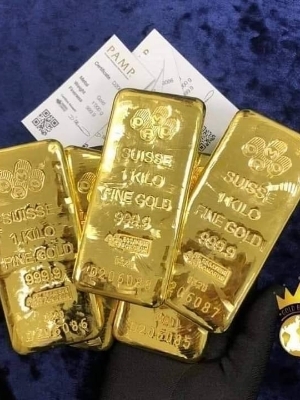
Global gold markets are gaining renewed momentum, with analysts predicting possible increases in their prices over the coming weeks. This shift is driven mainly by rising expectations of rate cuts globally, the weakening indicators of major economies, and increased demand from both central banks and retail investors desiring safe-haven assets.
Gold futures have started to inch upwards in the major exchanges after seeing a consolidation in recent months. Similarly, MCX gold prices moved firmly in tandem with currency fluctuations and geopolitical tensions, continuing to drive uncertainty in the global markets.
Rate-Cut Expectations Fueling Gold’s Appeal
Market expectations of monetary easing from the US Federal Reserve, the European Central Bank, and several Asian central banks are the strongest catalysts for the current bullish sentiment. With inflation cooling and economic growth slowing in key economies, global financial markets are betting on rate cuts starting early next year.
Lower interest rates usually diminish the yield attractiveness of more conventional fixed-income instruments and increase investment flow towards non-yielding assets such as gold. Gold prices historically rise during rate-cutting cycles because:
Reduced opportunity cost of holding gold
Lower government bond yields
A softer US dollar
Increased global liquidity
Analysts said the metal may enter into a strong uptrend with Fed policymakers hinting at a more accommodative stance, if rate cuts materialize as expected.
Central Bank Buying at Record Levels
A parallel factor supporting the potential rise of gold is unprecedented central bank demand. Over the last year, central banks have been accumulating gold, especially in emerging markets, in efforts to further diversify reserves and decrease dependency on the US dollar.
These are countries like China, India, Turkey, and Russia that have cited currency volatility, rising geopolitical tensions, and long-term reserve security for increasing their purchases of gold. Stronger central bank appetites have reduced overall market supply and placed a floor under global prices, even during periods of economic uncertainty.
Geopolitical Uncertainty Adds to Gold’s Momentum
Ongoing global tensions, from the conflict in Eastern Europe to unrest in West Asia and trade friction among major economies, have also contributed to gold’s safe-haven appeal. During geopolitical turmoil, investors tend to move toward gold, which retains value more reliably than equity or currency markets.
While several geopolitical flashpoints remain unresolved, analysts say gold could continue to draw demand as global investors hedge portfolios against sudden volatility.
Rupee Movement and Domestic Demand Influence Indian Prices
Gold price in India has been particularly sensitive to the rupee’s movements, periodic pressure on which has mounted due to higher global oil prices and outflows of foreign capital. A weaker rupee raises the cost of imported gold, pushing up its domestic prices even when global markets remain steady.
Moreover, strong cultural demand for gold in India — particularly during the wedding season and festivals — is continuing to support local prices. Local jewelers and retail buyers also tend to increase their purchases when market sentiment turns bullish, thereby adding further momentum to price rallies.
Investment Demand on the Rise Across ETFs and Futures
Investment demand through the purchase of exchange-traded funds also started to pick up lately, after many months of outflows. Global gold ETFs saw positive inflows recently, signaling growing investor confidence in gold’s near-term prospects.
Futures markets have similarly reflected increased activity, with traders positioning for a potential breakout above key psychological levels.
Analysts See Potential for a New High
Market experts believe that, if the US Fed and other central banks start cutting rates as early as the next policy cycle, then gold may enter into a strong bullish phase. According to some analysts, prices could test or even overcome previous highs, depending on the scale of rate cuts and macroeconomic developments.
They do, however, point out that short-term volatility is likely, particularly around major economic announcements and geopolitical events.
Outlook: Positive, but Data-Dependent Overall, sentiment around gold is decidedly positive, with the preponderance of indicators pointing higher. Indeed, the heady combination of expected rate cuts, steady central bank buying, geopolitical risk, and strong investment demand has set up a perfect environment for appreciation in the price of gold. Investors should pay attention to future inflation reports, decisions of central banks, and movements of world currencies, as those will eventually determine the fate of gold in the next few months.


