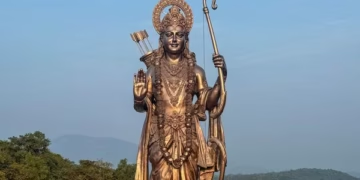


Today, Prime Minister Narendra Modi embarked on one of his most spiritually and politically significant tours this year: a visit to Karnataka–Goa. The two-state tour embodies development-focused outreach combined with a big cultural milestone: the unveiling of a grand 77-foot statue of Lord Ram in Goa. The events that unfolded today drew in huge crowds, vibrant public participation, and major attention from political observers who looked at this tour as a symbolic consolidation of cultural and infrastructural priorities ahead of an important election year.
A Warm Welcome in Udupi
It began with Modi offering prayers at a temple in Udupi, Karnataka, accompanied by a huge roadshow where thousands of supporters lined the streets. Floral showers, saffron flags, and slogans of “Modi, Modi!” dominated the atmosphere as the Prime Minister waved to citizens from his specially designed vehicle.
With its temples and rich spiritual heritage, Udupi has been a strategic location for outreach by PM Modi. A visit here is bound to serve the twin purposes of underlining a cultural bonding with the area and highlighting development programmes initiated in the last ten years. The Prime Minister also interacted with local leaders, youth groups, and religious representatives during his stop and gave recognition to Udupi’s unique contribution to Karnataka’s rich cultural heritage.
Emphasis on Development and Cultural Revival
The Prime Minister, ahead of his departure to Goa, spoke at a public function, reaffirming the commitment to infrastructure growth in Karnataka. He emphasized expanding coastal connectivity, development of fisheries and marine-based industries, and improvement in the tourism circuits along the Konkan belt. Modi also emphasized that this development must be aligned with cultural awareness, positioning India’s spiritual heritage as a tool for soft power on the global platform.
He said, “The progress of India must always be anchored in our civilizational ethos, and indeed, the inauguration in Goa today is part of that cultural resurgence movement taking place across the country.
Arrival in Goa: A Historic Cultural Event
After completing the Karnataka leg of his tour, PM Modi reached Goa, where preparations had been underway for weeks for the inauguration of the 77-foot statue of Lord Ram. The statue, created by leading sculptors and paid for through a mix of public contributions and state support, has been positioned as a landmark monument intended to boost religious tourism in the region.
The event was attended by top officials, religious heads, Goa Chief Minister, and thousands of devotees from all over the state and bordering districts. The site of the installation is beautifully landscaped and enriched with art panels depicting the Ramayana. It promises to become a major pilgrimage site soon.
Symbolism Behind the Statue
The 77-foot height of the statue is symbolic, representing the 77 years since India’s independence and the ideals of sacrifice, dharma, and national strength associated with Lord Ram. The statue is made of a high-grade alloy designed to withstand coastal weather conditions, ensuring longevity and structural resilience.
Modi, who has actively promoted big cultural projects-from the Ayodhya Ram Temple to Kedarnath redevelopment, to the Kashi Vishwanath corridor-emphasized during his speech that the statue represents “India’s unwavering respect for faith, history, and collective identity.”
It also included Vedic chants, traditional Goan performances, and a digital light show depicting key episodes of the Ramayana. The event reached its climax with the official inauguration by the Prime Minister, followed by his address in recognition of Goa’s pluralistic culture and its growing role in national tourism.
Political and Public Implications
Thus, the tour to Karnataka and Goa has both cultural and political undertones. As the country inches closer towards major national elections, spiritual symbolism-mixed promises of development by Modi serve to strengthen voter confidence, particularly in constituencies that are coastal and temple-rich.
Political analysts also say that the unveiling of the Lord Ram statue, just months after the grand Ram Temple inauguration in Ayodhya, gives momentum to the BJP’s narrative of cultural nationalism. Meanwhile, the massive turnout in both states underlines Modi’s personal popularity.
Tour expected to boost tourism & local economy
The Goan government is anticipating manifold increase in the arrival of visitors after the statue’s unveiling. Already, the site has been included in the new state tourism packages, besides proposals for better connectivity, guided tours, and cultural complexes in the vicinity.
Local businesses, including hotels and handicraft sellers, expect increased footfall at their establishments, particularly during festivals and holiday seasons. The statue is also set to become a major stop for interstate pilgrims traveling across Karnataka, Goa, and Maharashtra. Conclusion Development, faith, and national pride combined exquisitely as PM Narendra Modi completed his Karnataka–Goa tour with the unveiling of the colossal 77-foot Ram statue. For supporters, it reinforces India’s cultural revival; for political observers, it signals strategic outreach; and for the public, it stands as a new symbol of heritage and tourism. As thousands flock to be around this towering figure, Goa heralds a new chapter in its cultural and spiritual landscape—one destined to leave a lasting impact across India.


