


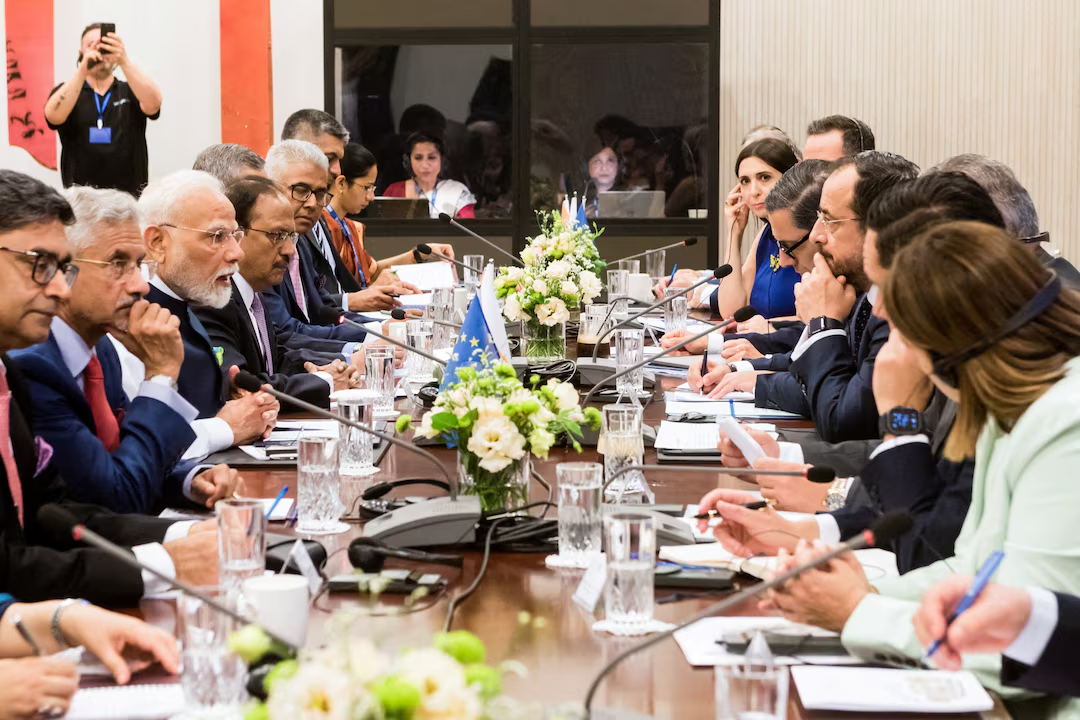
In a significant development in global trade diplomacy, India and the European Union have resumed negotiations on the long-pending Free Trade Agreement in Brussels-one of the most important steps toward strengthening economic ties between the two partners. The latest round of talks, beginning on Tuesday, aims at resolving the long-standing issues concerning market access and tariff structures, besides ways to govern digital trade and sustainable development. The officials from the Ministry of Commerce and Industry in India and the European Commission have voiced optimism that the renewed dialogue could push the agreement toward conclusion after years of delays.
Initially launched in 2007, the India-EU FTA-technically known as the Broad-based Trade and Investment Agreement-stalled in 2013 over sharp disagreements on main chapters like intellectual property rights, duty reductions, data protection norms, and labor standards. However, the changing global supply chains, pandemic-induced disruptions, and rising geopolitical complexities have brought renewed interest in these talks over the last couple of years. The agreement is also increasingly being seen by both sides as a strategic necessity, rather than purely an economic arrangement.
Fresh Energy and Strategic Intent
Trade experts and industry leaders around the world are closely monitoring this round of negotiations in Brussels. India wants increased market access for its medicines, agricultural produce, textiles, and engineering goods in the tightly regulated European economy. The EU is demanding significant tariff cuts on automobiles, wines, spirits, and luxury goods—items on which India levies one of the highest import duties in the world.
Officials familiar with the negotiations said that both sides were demonstrating “mature flexibility,” as negotiators try to work out creative trade mechanisms and phase-ins that could help ease the transition for sensitive sectors. The EU has also said that any agreement must include pledges on climate policy, labor protections, and collaboration on renewable energy—provisions it now deems non-negotiable in all modern trade deals.
Digital Trade: A Core Debate Area
Among the most sensitive chapters in negotiation is digital trade, over which the two sides have traditionally disagreed. The EU insists on rigid adherence to the General Data Protection Regulation while India wants policy space for data localization and indigenous digital innovation.
The EU seeks unrestricted data flows to support cross-border digital commerce, while India insists that sensitive financial and personal data must be stored within the country’s borders for security reasons. Experts suggest it could allow a hybrid model in the FTA for regulated cross-border data transfers with strong privacy safeguards, reflecting the ever-changing landscape of digital economies.
Intellectual Property and Pharma Exports
Other contentious issues include IPR. Europe has repeatedly pursued more stringent patent protection and data exclusivity for pharmaceutical products. India, known globally for being a big exporter of affordable generics, fears that the more strict regimes on IPR could drive up medicine costs and restrict access for millions of patients both at home and around the world.
A balanced formula that protects innovation while saving public health is reportedly being considered by both sides-a deal that will be important for India’s thriving generic pharmaceutical industry.
Emphasis on Green Trade and Sustainability
The sustainability chapters are becoming increasingly significant in the FTA discussion, given the renewed emphasis on the Green Deal by the EU. The EU wants firm commitments on reductions of carbon emissions, labor standards, and environmental protection. India responded that while committed to sustainability, it needs technology-sharing, green finance, and extended transition periods for compliance.
For India, access to European clean technology could accelerate its renewable energy goals, while the EU sees cooperation with India as vital for global climate ambitions.
Massive Economic Potential
The FTA between India and the EU has huge economic potential. For India, the EU is the second-biggest trading partner, while bilateral trade crossed US$165 billion in FY 2024–25. An agreement could significantly increase exports of Indian textiles, engineering goods, and chemicals, while making European automobiles, machineries, wines, and luxury products more affordable in India.
India also expects the FTA to increase investment flows from Europe, especially in manufacturing, green energy, and high-tech sectors. Meanwhile, European firms regard India as a critical alternative to China for supply-chain diversification.
Road Ahead While negotiators remain cautiously optimistic, they acknowledged that several chapters, particularly on digital trade, market access, and sustainability, require deeper discussion. Another round of talks is expected to be held in New Delhi early next year following the Brussels round. Officials are hoping a political-level breakthrough can be achieved by mid-2026. The resumption of talks testifies to strong political will on both sides. If successful, the India–EU FTA will create one of the world’s most significant trade partnerships, shaping global supply chains and opening new paths of cooperation in technology, sustainability, and economic growth.


