

Delhi Orders Private Offices to Switch to 50 Percent Work-from-Home as Air Quality Worsens
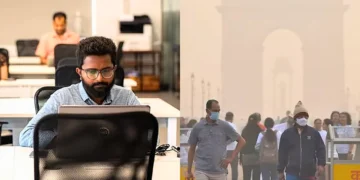
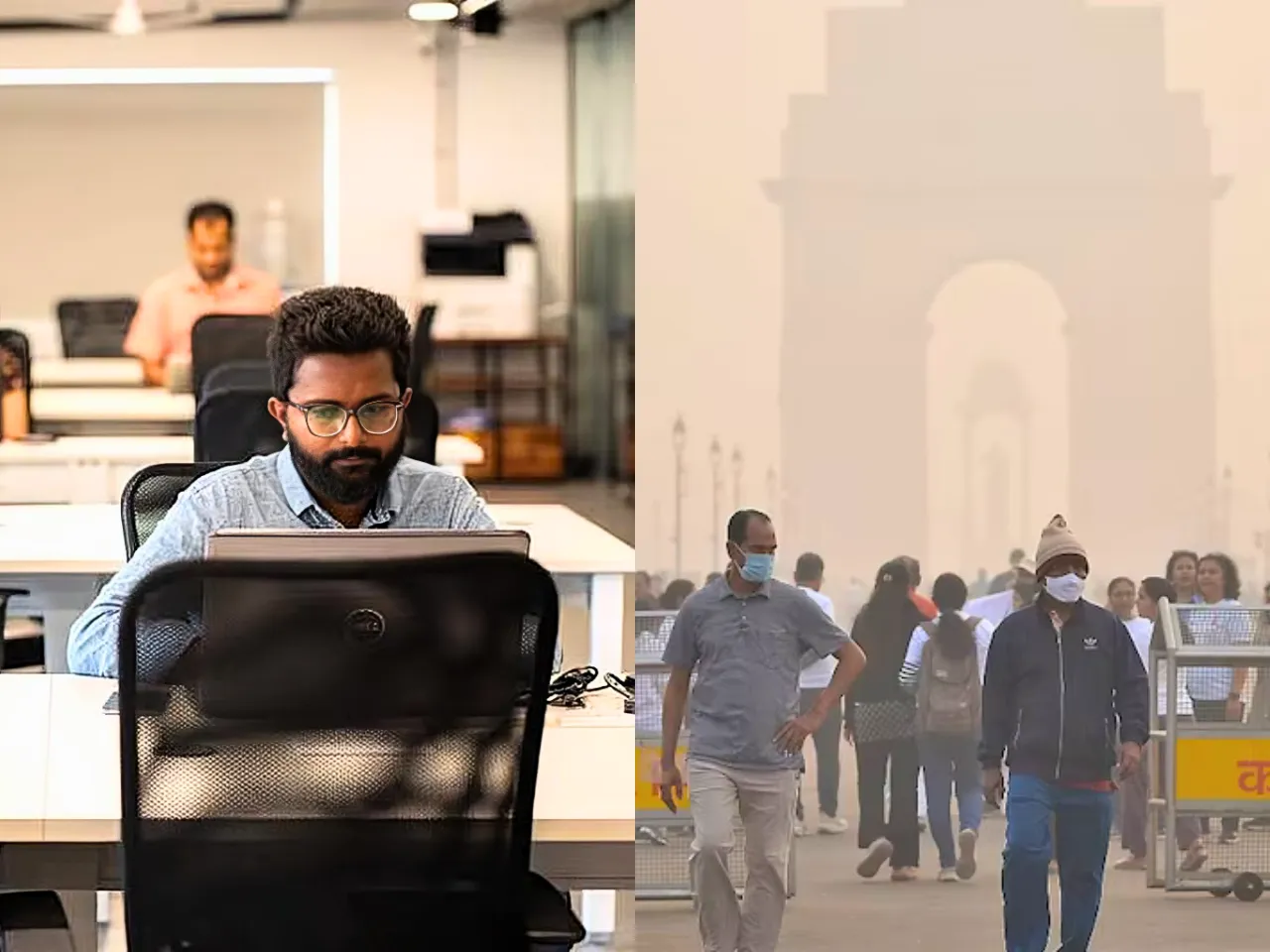
Delhi’s air quality crisis has deepened once again, forcing the government to implement stronger restrictions to protect public health. On Saturday, the city administration issued a fresh advisory asking all private offices across the capital to operate with only 50 percent staff on site, while the remaining employees must be allowed to work from home.
The mandatory advisory comes under Stage III of the Graded Response Action Plan (GRAP), which is activated when pollution levels become severely harmful. The order follows strict directions from the Commission for Air Quality Management as the capital continues to struggle under a thick layer of toxic smog.
AQI Remains in ‘Very Poor’ Zone for Ninth Straight Day
Delhi’s air quality has now remained in the “very poor” category for nine consecutive days. According to the Central Pollution Control Board, the city’s overall Air Quality Index stood at 370 on Saturday.
What’s more alarming is that eleven monitoring stations recorded AQI levels in the “severe” category, where pollutants can cause serious respiratory and cardiac risks.
Faced with these dangerous numbers, authorities had no choice but to tighten restrictions to safeguard residents—especially children, seniors and those with chronic health conditions.
What GRAP Stage III Means for Delhi
To understand why the government issued the 50 percent work-from-home advisory, it helps to break down what GRAP actually involves.
GRAP is a four-level response system
It activates progressively stricter measures based on the city’s pollution levels:
- Stage I: AQI 201–300
- Stage II: AQI 301–400
- Stage III: AQI 401–450
- Stage IV: AQI 451+
Delhi is currently under Stage III, which means the city’s pollution has crossed into extremely unsafe levels.
Why Stage III is serious
Stage III requires:
- Reduced vehicular movement
- Restrictions on construction activities
- Tighter monitoring of pollution hotspots
- Mandatory work-from-home advisories for private offices
The new order requiring 50 percent remote work is part of this intensified response.
Government Says Implementation Is at Full Force
Delhi Environment Minister Manjinder Singh Sirsa said that all GRAP Stage III measures are being executed with “full seriousness” and continuous monitoring.
According to Sirsa, the government is treating the pollution emergency with urgency and is deploying teams on the ground round the clock.
Staggered Timings Already in Effect
To reduce peak-hour traffic and ease congestion—a major contributor to emissions—the government earlier implemented staggered office timings for its departments and the Municipal Corporation of Delhi.
- MCD offices: 8:30 am to 5 pm
- Delhi government offices: 10 am to 6:30 pm
These timings will remain in place until February 2025. The move aims to cut down rush-hour vehicle load, which has a direct impact on the city’s AQI.
Enforcement Teams Crack Down on Violations
Sirsa said over 2,000 enforcement personnel from various departments are currently deployed across Delhi to ensure strict compliance with pollution-control norms.
Inspections and Penalties
- More than 1,200 inspections have been conducted at construction sites and industrial units.
- Over 200 show-cause notices have been issued.
- 50 closure orders have been passed against units violating pollution guidelines.
Construction dust and industrial emissions are among the biggest contributors to winter pollution in the NCR region. The government’s intensified checks aim to curb these sources as quickly as possible.
Government Urges Citizens to Do Their Part
In addition to official actions, the Delhi government has appealed to residents to stay mindful and responsible during this critical period.
Sirsa urged people to:
- Avoid open burning of biomass, leaves or waste
- Remain alert about dust pollution
- Report violations through the Green Delhi mobile app
Citizen participation is essential, he said, for any large-scale fight against pollution to succeed.
Why Delhi’s Air Quality Declines Every Winter
While the government rolls out emergency measures every year, Delhi’s winter pollution has deeper structural causes. A combination of weather patterns and man-made factors traps pollutants low in the atmosphere, turning the city into a hazardous gas chamber.
Major Contributors
- Vehicle emissions
- Construction dust
- Industrial pollution
- Stubble burning in neighbouring states
- Household waste burning
- Low wind speeds
- Temperature inversion that prevents dispersal of pollutants
Each winter, these factors mix to create a deadly cocktail of airborne toxins, prompting authorities to scramble with GRAP measures.
How the Work-from-Home Advisory Helps
The government’s decision to cap on-site office attendance at 50 percent is intended to drastically reduce daily road traffic.
Fewer cars on the road means:
- Lower emissions
- Reduced congestion
- Shorter idling time at signals
- Less dust kicked up from roads
Even a temporary dip in traffic during winter can significantly ease the pollution load.
This advisory also encourages large corporations and small enterprises alike to actively participate in managing the crisis, making it a shared responsibility rather than just a government mandate.
Will These Measures Be Enough?
Delhi’s pollution fight has always been challenging. While GRAP measures help slow down the surge, the root causes need long-term solutions.
Experts say that while the 50 percent work-from-home order may temporarily reduce emissions, the real progress will require:
- Cleaner public transport
- Comprehensive waste management
- Industrial regulation
- Green infrastructure
- Regional coordination with neighbouring states
For now, the immediate goal is to prevent short-term health damage as the city navigates yet another hazardous winter.
Delhi Acts Under Urgency as Air Quality Crisis Deepens
As the pollution emergency intensifies, Delhi is pushing an all-hands-on-deck approach. With more than 2,000 officials in the field, staggered office hours, crackdowns on violators and now a 50 percent work-from-home mandate for private offices, the government hopes to contain the crisis.
Sirsa summed up the situation simply: Delhi must act with urgency and responsibility.
The coming days will test how effective these measures are—and how ready the city is to fight its worst annual environmental challenge.


