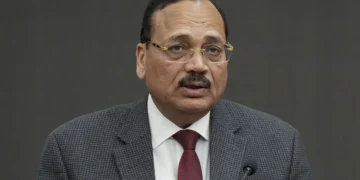


Justice Surya Kant To Take Oath as 53rd Chief Justice of India
Justice Surya Kant is set to take oath today as the 53rd Chief Justice of India (CJI), stepping into the highest judicial role in the country with a 14-month tenure ahead of him. President Droupadi Murmu will administer the oath, officially marking the transition of leadership from outgoing CJI Bhushan R. Gavai to Justice Kant.
This appointment follows the established tradition of elevating the senior-most Supreme Court judge to the chief justice’s post. CJI Gavai, who retired upon turning 65, recommended Justice Kant as his successor, and the President approved the appointment under Article 124(2) of the Constitution.
A Journey From Hisar to the Supreme Court
Early Life and Legal Beginnings
Born on February 10, 1962, in a middle-class Hindu family in Haryana, Justice Surya Kant’s rise in the judiciary has been marked by consistent growth, discipline, and a deep understanding of law. His legal career began in Hisar in 1984, where he handled a variety of cases and quickly built a reputation as a sharp and dependable lawyer.
He later moved to Chandigarh to practice before the Punjab and Haryana High Court. Over the years, he appeared in a wide range of constitutional, service, and civil matters. His clients included universities, corporations, state boards, banks, and even the High Court itself.
Advocate General and Judicial Appointments
Justice Kant’s early success led to several key appointments:
- Youngest Advocate General of Haryana in 2000
- Designated as Senior Advocate in 2001
- Elevated as a permanent judge of the Punjab and Haryana High Court in 2004
After serving at the High Court for more than a decade, he was appointed Chief Justice of the Himachal Pradesh High Court in 2018. His tenure there was marked by strong administrative reforms and progressive judgments.
In May 2019, he was elevated to the Supreme Court of India. Since November 2024, he has also been serving as the Chairman of the Supreme Court Legal Services Committee.
What Justice Surya Kant Plans to Focus On as CJI
Tackling Case Backlogs: His Top Priority
In his interaction with the media ahead of assuming office, Justice Surya Kant made it clear that his primary focus will be reducing the huge pendency of cases in the Indian judicial system.
As of July 21, official data from the National Judicial Data Grid shows:
- 5.29 crore total pending cases in Indian courts
- 4.65 crore pending in district and subordinate courts
- 63.3 lakh pending in High Courts
- 86,742 pending before the Supreme Court
Justice Kant acknowledged that this backlog is one of the biggest challenges facing the justice system and must be addressed urgently.
Strengthening District and Subordinate Courts
Justice Kant said his first major step would be to hold discussions with all High Courts to identify the specific problems obstructing the functioning of district and subordinate courts. These courts handle the bulk of India’s cases, and improving their efficiency will be critical in reducing nationwide pendency.
Constitution Benches Coming Soon
Justice Kant also announced that Constitution Benches comprising five, seven, and nine judges will be formed in the coming weeks. These benches will take up long-pending constitutional matters, many of which have significant national importance.
Expanding Use of Mediation
Recognizing the role of alternative dispute resolution, Justice Kant emphasized the need to strengthen mediation—both court-annexed and community-based.
He noted that mediation can help reduce millions of pending disputes and prevent minor conflicts from escalating into lengthy legal battles. He highlighted the importance of promoting mediation between:
- States and the central government
- State-to-state disputes
- Community-level conflicts
He said that the judiciary must help create a supportive environment where mediation becomes a reliable and widely used tool.
Cautious Approach to AI in Judiciary
Justice Kant also addressed questions about using artificial intelligence in the courts. While acknowledging the potential benefits of AI for procedural tasks, he stressed that judicial decisions must remain human-driven.
People, he said, want a judge—not an algorithm—to decide their cases. He recognized that while technology has advantages, there are also genuine concerns about its impact on fairness and trust.
A New Chapter for the Indian Judiciary
Justice Surya Kant takes office at a time when the Indian judiciary is facing unprecedented pressure due to massive case load, technological shifts, and an evolving legal landscape. His background, from Hisar’s district courts to India’s highest judicial seat, gives him a deep understanding of the challenges faced at every level of the justice system.
During his tenure, all eyes will be on the reforms he introduces, the cases he prioritizes, and the structural improvements he drives across courts. His leadership comes at a crucial moment—and the next 14 months will shape the long-term future of judicial administration in India.
Justice Surya Kant’s elevation as the 53rd Chief Justice of India marks a significant moment for the judiciary. His long legal journey, strong administrative experience, and clear focus on tackling pendency give rise to hope for a more efficient and responsive judicial system. With plans to strengthen lower courts, expand mediation, and take on important constitutional cases, his tenure promises to bring meaningful change.
As India enters a new phase of judicial evolution, Justice Surya Kant’s vision and leadership will play a key role in shaping how justice is delivered across the nation.


