


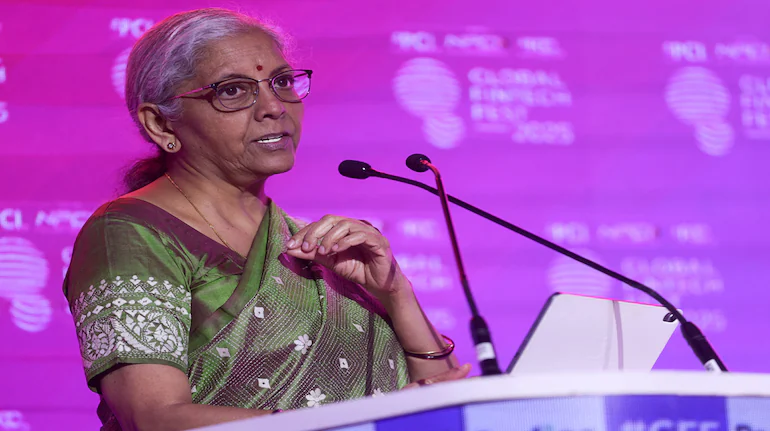
India’s banking sector is set for another round of consolidation, with the government showing interest in the merger of PSBs to form fewer but larger, globally competitive financial institutions. The Finance Minister, Nirmala Sitharaman, said recently at an industry event that talks continue over the next steps on bank mergers, following the mega restructuring effected in 2019-20. This time, the focus is not just on operational efficiency but also on strengthening India’s position in international finance.
An earlier round of consolidation had cut the number of PSBs from 27 to 12, including major mergers such as Canara Bank with Syndicate Bank, Union Bank with Andhra and Corporation Bank, and Punjab National Bank absorbing Oriental Bank of Commerce and United Bank of India. These moves aimed at balance sheet stability, reduction in fragmentation, and better capital planning. Government officials now indicate that the banking sector is stronger after those reforms, which makes it a suitable time to consider further consolidation.
One of the main catalysts is the recent move by the Reserve Bank of India to remove restrictions on bank financing of corporate acquisitions. Earlier, regulatory ceilings had restricted the role of banks in funding large-scale intersectoral M&A deals. With the removal of these curbs, banks are likely to play an increasingly proactive role in business expansion and restructuring of stressed assets as well as strategic consolidation. The regulatory shift also gels well with the government’s broader agenda of upgrading domestic financial systems to meet global competitive benchmarks.
The rationale for banking consolidation rests on considerations of scale and capability. Larger banks are better placed to handle sophisticated corporate lending, cross-border transactions, digital infrastructure investments, and fintech partnerships. They also tend to attract international investors more easily and can diversify risk across broader portfolios. India, which is vying to position itself as one of the top three economies in the world over the next few years, needs banking institutions that are globally credible, financially resilient, and technologically forward.
Yet, the concept of consolidation is not without its set of challenges. According to banking experts, mergers necessitate the judicious integration of technology systems, alignment of organizational cultures, and harmonization of HR and branch networks. Past mergers, although largely smooth, did involve temporary disruptions in service delivery, adjustments in workflows, and restructuring at managerial levels. Then there is the question of ensuring that regional banking access is not reduced in the process. Since public sector banks serve as key financial lifelines in rural and semi-urban India, consolidation needs to be planned in such a way that the process does not compromise financial inclusion.
Another factor that may influence the pace of consolidation is capital adequacy. Though PSBs have reported improved profits in recent quarters, on better recoveries, asset quality improvement, and tighter risk management, sustained capital infusion would be needed to make them achieve high credit growth projections. Larger consolidated entities may find it relatively easy to raise funds, including from equity markets and global funding channels. This assumes greater significance at a time when credit demand is seen picking up across infrastructure, manufacturing, and services sectors.
Industry stakeholders also point to increased private sector competition and the emergence of NBFCs and fintechs. These have pushed public sector banks to innovate fast, modernize their services, and take on digital-first approaches. Consolidation, if implemented effectively, could give PSBs a better capability to invest in new-age banking technologies, extend digital payments ecosystems, and partner with fintech startups in mutually beneficial ways.
The government has indicated that any decision on merger will be taken cautiously, with consultations across regulators, bank boards, and industry experts. Building a robust, diversified, and forward-looking banking sector will indeed support India’s aspiration for sustained economic growth and global financial leadership. Consolidation of the banking sector, thus, stands out as a strategic lever that can bolster financial institutions, create efficiency in capital, and ensure the resilience of the banking system to support the nation’s growth ambitions as India prepares to take its place among the world’s top economies.


