


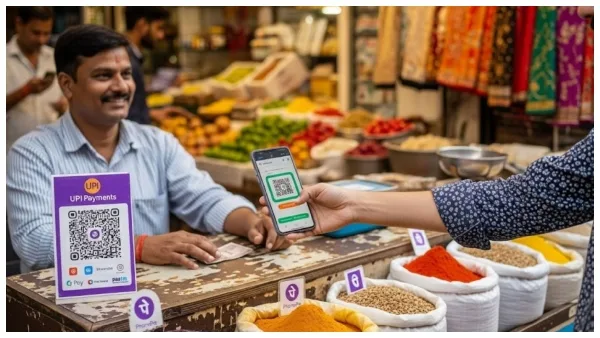
The digital revolution in India is only getting faster. According to the latest data released by the National Payments Corporation of India, Unified Payments Interface recorded an all-time high value of ₹27.3 lakh crore in October 2025 and marked a historic milestone in the growth story of Fintech in the country. The month saw over 20.7 billion transactions, up about 9.5% in value from September and nearly 16% on a year-over-year basis.
This remarkable surge underlines India’s emerging digital economy, where smartphones, internet access, and fintech innovation have transformed how people pay, transfer, and manage money. What started as a government-inspired initiative to further a less-cash economy has turned out to be one of the most efficient, secure, and widely used digital payment systems in the world.
Festive Season and Fintech Innovation Drive Growth
According to experts, the spike in October has been because of the festive season, which is usually associated with higher consumer spending. Consumers shopped for Diwali and other celebrations, and UPI emerged as a preferred mode of payment instead of cash and card transactions in most urban and semi-urban markets. E-commerce giants, local retailers, and even small vendors across Tier 2 and Tier 3 cities reported record UPI activity.
Meanwhile, fintech startups continued to innovate, making it easier and more rewarding to pay. From cashback campaigns to festive discounts, such platforms like PhonePe, Google Pay, Paytm, and Amazon Pay encouraged digital adoption even further. UPI now integrates with credit lines, mutual funds, and even cryptocurrency payment gateways, bringing much functionality beyond the concept of a transaction system.
Analysts say the seamless experience of UPI-instant money transfers with zero fees and interoperability between banks-has been a key driver in gaining both trust and convenience among users.
Small Businesses Lead the Digital Wave
The largest growth came not from metros, but from small businesses and rural consumers. Initiatives such as the Digital India Mission and PM Jan Dhan Yojana have empowered millions with access to bank accounts and mobile payments. QR-code-based transactions have now become commonplace even in the smallest shops, tea stalls, and street vendors.
A 2025 report by NPCI highlighted that over 60% of the new UPI users over the last year came from Tier 2 and Tier 3 cities. Such democratization of digital payments indicates that the digital divide is reducing faster than ever. Mobile penetration, affordable data plans, and regional language fintech applications are aiding in adding millions to the digital economy.
UPI as a Global Model
Indeed, India’s UPI is now being increasingly seen as a model for the rest of the world. Already, Singapore, France, and the UAE have integrated UPI into the local payment systems for cross-border transactions directly through Indian banks. The RBI and NIPL are in discussion with more than a dozen countries for the expansion of UPI across the globe.
This international push could soon make UPI not only India’s digital backbone but also a global standard for real-time payments. For Indian startups and businesses with international customers, this could mean greatly reduced transaction costs and much better remittance efficiency.
Security and Regulation: Keeping Pace with Growth
But with growth comes responsibility. The RBI has been quite proactive in enhancing cybersecurity and data protection standards for the safety of consumers. In fact, the innovative features-Offline Payments through UPI Lite and UPI Credit Line in linking digital credit facilities to the users’ accounts-demonstrate how well regulation is balancing the scales between innovation and security.
Success in the country’s ability to handle scale and integrity pertaining to digital payments is a key reason for investor confidence, experts say. Industry trackers estimate that all Indian fintech startups collectively handled over ₹150 lakh crore through various digital channels in 2025 alone — a figure unimaginable a decade ago.
The Road Forward
With India on the track to a $5 trillion economy, digital payments have been and will continue to play an enabling role in increasing transparency, financial inclusion, and tax compliance. UPI has not only revolutionized personal finance but has streamlined government transfers, subsidies, and business operations.
According to industry leaders, the next wave of growth in digital transactions will emerge along with AI-powered payment assistants, blockchain-based settlements, and biometric security layers that guarantee faster, safer, and more intelligent digital transactions.
Conclusion From metro malls to rural markets, India’s digital payment ecosystem has transformed the way the nation moves money. The record-breaking ₹27.3 lakh crore in UPI transactions this October is not just a statistic but a testament to India’s technological leadership and consumer trust in homegrown innovation. As cash becomes a thing of the past and digital wallets become the norm, India is leading the way globally on how fintech can achieve economic inclusion, empower small businesses, and change the face of finance.


