

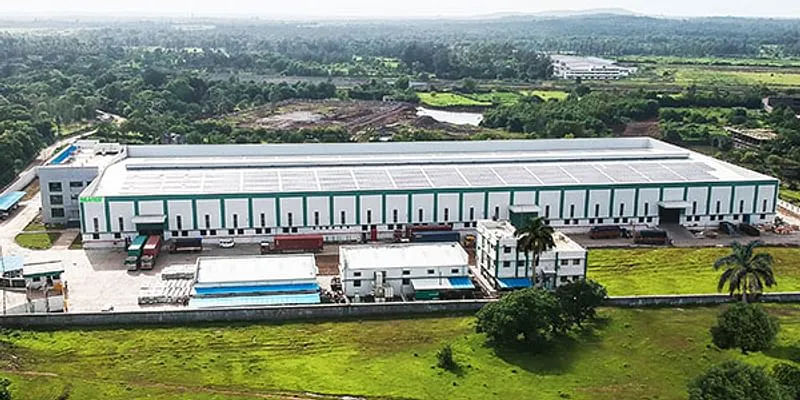
Waaree Energies Ltd, an Indian company and the largest solar module manufacturer, is overhauling its supply chain worldwide as a strategic decision in response to rising trade barriers that the United States has erected against solar imports. The company, which plays a crucial part in powering India’s renewable energy exports, will instead source vital solar cells from alternative markets where tariffs are low or nil in a bid to keep its dominance in the very competitive US solar market.
This development is happening against the backdrop of a steadily complex global trade environment where clean energy companies grapple with tariff wars, supply bottlenecks, and the pressure of sustaining cost efficiency. For Waaree, whose exports to the US form a significant portion of its international revenue, the restructuring is a calculated step to protect market share without compromising on delivery timelines or quality standards.
Navigating the Tariff Maze
The US, under its revised Section 201 tariff rules, has continued to impose duties on imports of solar modules and cells from several Asian countries, including India, China, and Vietnam. These tariffs are meant to encourage local manufacturing and help reduce dependence on imports. However, it has placed foreign suppliers under tremendous pressure, especially those such as Waaree that have built their export models around high-volume, cost-competitive modules.
By diversifying its procurement of solar cells – the basic building blocks of solar panels – from countries offering better trade terms, Waaree plans to avoid these duties while still complying with US regulations. According to industry analysts, this strategy might include leveraging manufacturing partnerships in Malaysia, Thailand, or South Korea, where the tariffs are relatively low.
A Calculated Global Realignment
Waaree’s move is not a tariffs workaround per se, but a broader reflection of how Indian manufacturers are adapting to global trade shifts. As the solar-energy industry has emerged as a key battleground for economic influence, companies are designing multination supply routes that meld efficiency with geopolitical prudence.
The company said in an official statement that the restructuring would not affect operations or supply commitments locally within India but would instead help Waaree expand its export footprint and stay competitive in the global market amid rising input costs and regulatory hurdles.
Analysts say this could set a precedent for other Indian clean energy firms to follow and move toward more flexible supply chain models. The agility in navigating the trade environment speaks to the growing maturity of India’s renewable manufacturing ecosystem.
Implications for India’s Solar Manufacturing Ecosystem
While the move may boost Waaree’s export revenues in the near term, it also brings into focus a rather more serious problem facing India’s solar industry-the need for domestic manufacturing of solar cells. India currently relies on imported cells and wafers, mainly from China, while the government has announced PLI schemes to deepen local manufacturing, scaling up is still a work in progress.
“Waaree’s strategy is a pragmatic response to global trade pressures,” said a senior energy analyst at Bridge to India. “However, over the long run, India’s solar sector needs to achieve vertical integration-from polysilicon to finished modules-to attain true global competitiveness.”
The company’s restructuring also coincides with India’s aggressive push to meet its renewable energy targets of 500 GW of non-fossil fuel capacity by 2030. In this quest, India wants not only to be a key consumer but also one of the top global suppliers of renewable technologies.
Balancing Compliance and Competitiveness
Critics say the reconfiguration of supply chains to avoid tariffs may raise questions over compliance and traceability, particularly in light of the increased scrutiny of solar imports in Western markets. But Waaree has said all operations will be fully compliant with all relevant global trade laws and sustainability standards.
Industry insiders say it may even open up new avenues for joint ventures and technology collaborations across Southeast Asia. With the demand for solar energy accelerating globally and nations racing to reach net-zero targets, Waaree’s strategic agility positions it as vital in the evolving clean energy landscape. Conclusion Realignment of the supply chain by Waaree Energies is at once a defensive and forward-looking move: providing insulation for its exports from tariff shocks and laying the foundation for higher resilience in international operations. With further capacity additions and international partnerships, the company is leading India’s charge from being a solar powerhouse-in-the-making to becoming a global renewable energy leader.


