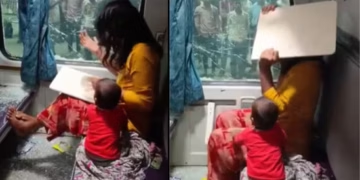


A viral video of a woman and a toddler breaking an AC coach window on a train from Indore to Delhi has sparked heated debate regarding passenger conduct, mental illness, and railway safety. The high-profile accident, which occurred a few days ago, was recorded by other passengers and quickly shared on social media, picking up millions of views and mixed reactions from stunned commuters and social media users.
Based on eyewitness testimony, the lady, who seemed visibly agitated, started screaming “Mera purse chahiye! ” (“I want my purse!”) incessantly before she smashed the coach window with a blunt object. The travellers inside the same compartment were said to be shocked at the outburst, with some moving away out of fear while others attempted to pacify her.
Railway Protection Force (RPF) officials and train staff were shortly notified and rushed to the area to control the situation. Initial reports indicate that the woman had lost her bag somewhere along the route, possibly containing her wallet and important papers. But her abrupt and belligerent response created doubts about her sanity. Authorities said the woman was eventually soothed and escorted to a different coach for security, while the train proceeded after a pause.
The child, who seemed not to be injured, was said to have been consoled by fellow passengers and rail operators. Footage of the incident reveals shards of glass covering part of the aisle as the woman continued to yell. There are people on board who can be heard screaming for help while others filmed the chaos on their cellphones. The video spread rapidly on social media, and people there shared a divided reaction, ranging from sympathy to anger.
Most felt sympathetic towards the woman, positing that she was possibly being overwhelmed by massive stress or experiencing a panic attack, while others condemned the absence of an instant presence of security personnel and wondered about the safety of other travelers.
Railway officials have since launched an internal inquiry into the matter. “We are looking into the incident to understand the sequence of events and the reason for such behaviour. While passenger safety remains our top priority, it is also essential to handle such situations with sensitivity,” said a spokesperson from Indian Railways. The RPF confirmed that no serious injuries were reported and that the woman was later handed over to her family after counselling.
The accident has once again sparked debate across several fronts — from awareness of mental health in public places to safety readiness in railways. The experts have cited that the railway system of India, while extensive and developing in terms of infrastructure, is still missing separate psychological first aid or crisis management procedures on board. Train personnel in most instances are not equipped with training to recognize or handle passengers in distress, and panic turns into suicidal or homicidal tendencies. Social media websites have also played an important role in influencing public opinion about the incident. While some people called for severe punishment to be awarded for causing damage to railway property, others called for empathy and understanding. “We must understand that every outburst is not about anger or vandalism. Sometimes it’s a cry for help,” one user posted on X (formerly Twitter).
Another commented, “Imagine how scared the child must have been — the railways need child safety policies for such situations too.”
Railway psychologists and safety officials have urged greater preparedness. Recommendations have been made that include bringing onboard counsellors on long-distance trains, integrating helplines with mental health services, and training RPF staff to catch signs of psychological distress early. The Indian Railways Helpline 139 already deals with passenger safety-related concerns, but there have been increasing demands for its scope of work to be extended to mental health-related emergencies as well.
The “Mera purse chahiye” episode, albeit a single incident, is a stark reminder of how easily vulnerable moments can spiral out of control in public spaces. It highlights the imperative of more empathetic, well-trained response systems that not only guarantee physical security but also respond to emotional and psychological crises in travel spaces. As the video keeps playing on the internet, the debate it has raised could compel the authorities to look beyond the immediate — to improved crisis handling, mental health understanding, and the complex interplay between security enforcement and compassion.


