


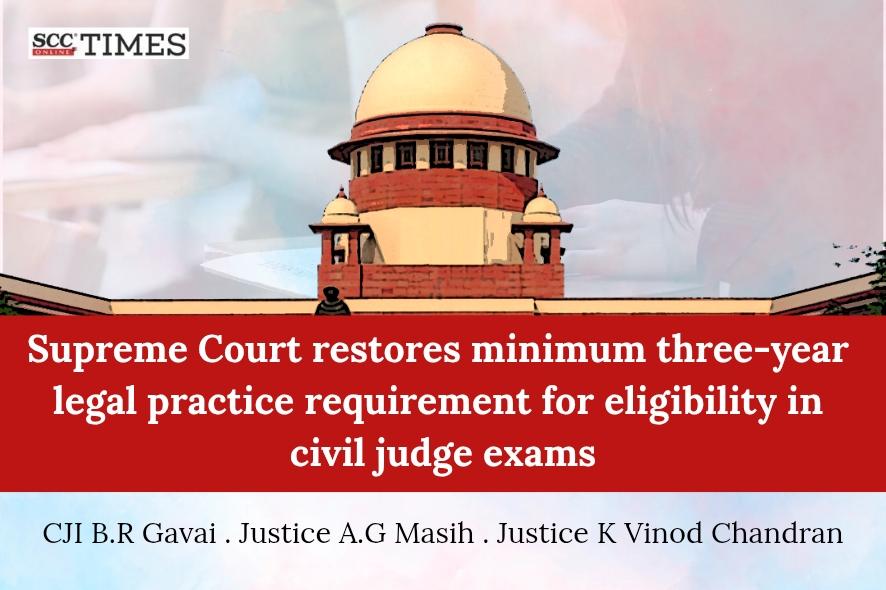
The Supreme Court of India has released a series of far-reaching guidelines to overhaul test systems nationwide, resolving long-standing issues related to student stress, mental well-being, and the integrity of testing. The guidelines, drafted following extensive deliberations with experts in education, seek to make exams more equitable, holistic, and student-centric, in tune with emerging demands of contemporary education.
A Step Towards Minimizing Student Stress
Over the last few years, student stress, anxiety, and burnout have emerged as major issues in India’s education system. High-stakes examinations, sharp competition, and inflexible evaluation mechanisms have been leading to diminishing mental well-being among students. The Supreme Court’s directives clearly address these pressures, highlighting the necessity of a balanced academic environment that encourages learning over rote memorization.
Chief Justice of India pointed out that examinations must be used as instruments to measure understanding and creativity, instead of being tools of mere ranking and selection. “The goal of education is to build knowledge, critical thinking, and innovation. Examinations should promote learning, not instill fear,” the Court said in its official release.
Major Recommendations of the Guidelines
The Supreme Court has suggested a range of revolutionary steps to overhaul examination systems:
Diversified Assessment Strategies: Multiple assessment strategies, such as project assessment, oral presentation, and internal assessment, in addition to traditional written exams, are encouraged in schools and universities.
Continuous and Comprehensive Evaluation (CCE): The guidelines also recommend incorporating continuous evaluation practices so that teachers can track students’ progress throughout the year instead of only through final exams.
Less Syllabus Burden: Education boards should scrutinize and rationalize syllabi with emphasis on conceptual understanding, critical thinking, and problem-solving abilities, minimizing non-essential memorization.
Psychological Counseling Support: The guidelines suggest that institutions offer psychological counseling and support services to assist students in coping with examination stress effectively.
Flexible Exam Timing: To prevent examination congestion, the guidelines suggest staggered timing and sufficient gaps between major examinations, allowing students enough time for preparation and recuperation.
Impact on Higher Education Institutions and Schools
The guidelines are set to impact school-level as well as higher education institutions such as state boards, the Central Board of Secondary Education (CBSE), and universities under the University Grants Commission (UGC). Through encouraging a more student-centered process, the reforms look to improve learning outcomes, lower drop rates, and bring forth a culture of curiosity and creativity among learners.
Education experts have welcomed the Supreme Court’s initiative, noting that such reforms could align India’s education system with global best practices. Dr. Anjali Mehta, an education policy analyst, stated, “India has long grappled with examination-induced stress. These guidelines are a positive step toward holistic education, prioritizing knowledge, skills, and well-being over rote memorization.”
Challenges in Implementation
Although the guidelines are liberalizing, specialists warn that implementation will be problematical, with potential resistance from conservative institutions, logistical problems, and a requirement for teacher training. Maintaining consistency within India’s varied school system will call for concerted effort from central and state education authorities, schools, and universities.
To ensure ease of implementation, the Supreme Court has suggested the establishment of special committees at state and institutional levels to monitor implementation of reforms and track effects. Feedback will also be given by them for on-going improvement of assessment systems.
Looking Ahead
The Supreme Court directives usher in a paradigm change in India’s strategy towards education and exams. With a focus on mental health, diversified assessment, and conceptual education, the reforms are looking to cultivate holistic students who are better poised to face higher education as well as the world of work.
With implementation already underway, teachers, policymakers, and parents together will have a vital role to play in ensuring these reforms yield tangible results, turning tests into sources of stress into instruments for learning, development, and empowerment.
India’s education is at the crossroads, and the Supreme Court’s directions on exam reforms present a way forward for a more humane, inclusive, and efficient system of assessment. Through putting the students first, promoting creativity, and facilitating wholistic learning, these reforms can redefine the destiny of India’s education, making exams instruments of knowledge, development, and opportunity, and not fear and panic.


