


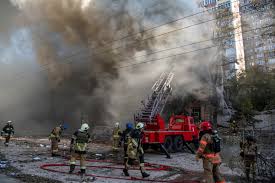
India has denounced the latest spree of Russian drone attacks that devastated much of Ukraine, causing civilian deaths and massive damage to vital infrastructure, in a sternly worded statement. The Indian Ministry of External Affairs (MEA) made an official statement highlighting that attacks on civilian populations and infrastructure are against international humanitarian law and detract from global stability.
The attacks, which happened over the weekend, hit several Ukrainian cities such as Kyiv, Odesa, and Lviv, reports said. Dozens of drones were launched overnight, with some being intercepted by air defense, Ukrainian officials said. The attacks resulted in massive power blackouts and causalities, including women and children.
India’s reprimand constitutes an important diplomatic position, as New Delhi has tended to pursue a middle ground in the war between Russia and Ukraine. The MEA reaffirmed India’s perpetual appeal for an “immediate cessation of hostilities” and a “return to dialogue and diplomacy” in order to end the crisis. The statement further included that “India stands firmly against violence and supports all efforts aimed at achieving lasting peace.”
Analysts see India’s commentary as a component of its overall effort to shore up its reputation as a responsible world player. Although India has had robust defense and commercial ties with Russia — including joint work in energy and military areas — it has also increased its dialogue with Western countries and has been an active participant in global humanitarian dialogue.
Foreign policy analysts observed that India’s response indicates increasing alarm over the length of the conflict as well as its worldwide implications, such as energy insecurity and interference with food supply chains. “India’s criticism, although tempered, indicates that it sees more general humanitarian and economic effects from ongoing violence,” commented Dr. Ananya Mehta, a senior analyst for the Centre for Strategic Affairs.
In the United Nations, India has repeatedly called for peace but abstained from directly voting against Russia in several resolutions. However, this latest statement comes amid increasing international pressure on nations to take clearer positions as civilian suffering intensifies. New Delhi’s recent outreach to both Moscow and Kyiv, including humanitarian assistance and medical aid, underlines its role as a potential mediator.
Ukraine has applauded India’s statement, hoping for more robust diplomatic interaction. “We welcome India’s principled stance and feel its voice can make a difference to meaningful negotiations,” remarked a Ukrainian Embassy spokesperson in New Delhi.
In turn, Russia has justified the strikes as having aimed at “strategic military facilities” rather than civilian targets. The Moscow statement blamed Western media for “distorting facts” and made claims that Kyiv had employed civilian infrastructure to hide military assets — claims hotly disputed among international observers.
India’s foreign policy establishment continues to tread a delicate line, seeking to balance historical ties with Moscow and growing partnerships with the U.S. and Europe. The condemnation, while carefully phrased, underscores New Delhi’s increasing discomfort with the humanitarian toll of the war.
The MEA’s release ended by reaffirming India’s willingness to “contribute constructively to all efforts for peace” and to cooperate with international partners to ensure the security and safety of all impacted civilians. With the war raging into its second year, India’s call for peace and diplomacy continues to be an indispensable part of forging the ever-changing international discourse on the Russia-Ukraine conflict.


