

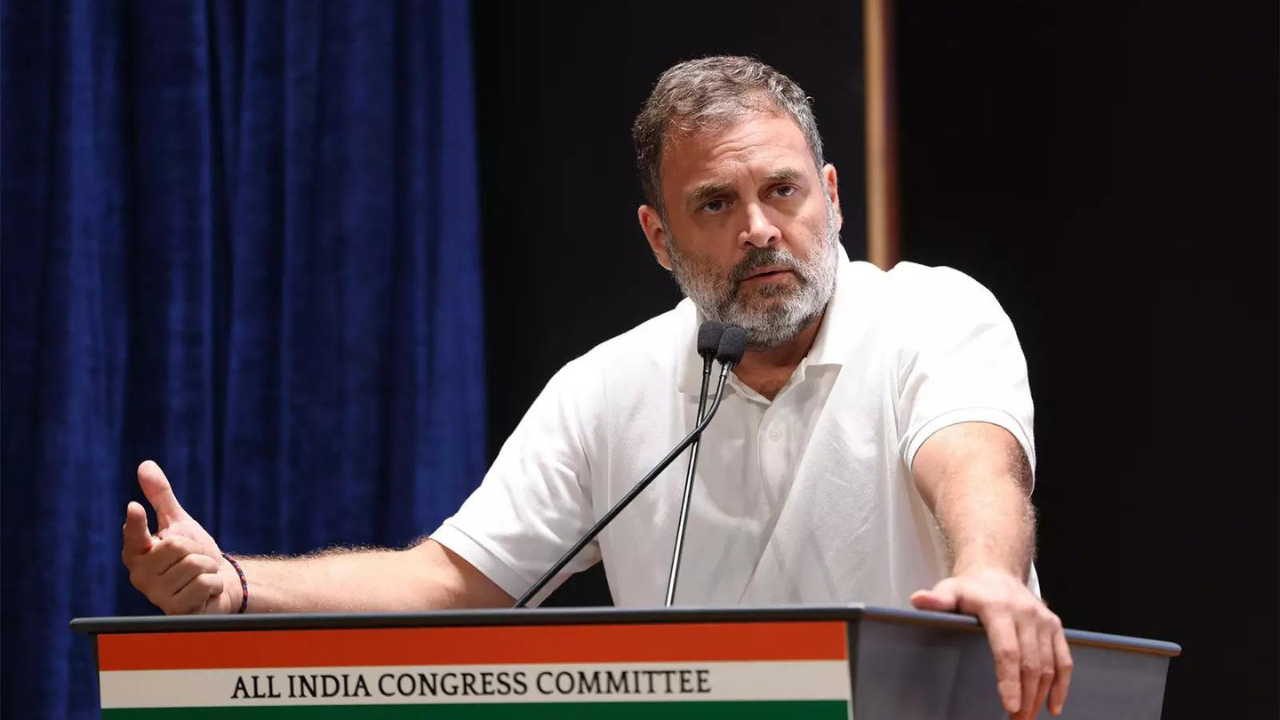
In a dramatic turn of events on September 28, 2025, Indian politics was shaken when Congress leader Rahul Gandhi found himself the target of an outright death threat during a live telecast debate. This incident took place on News18 Kerala when Printu Mahadev, a former Akhil Bharatiya Vidyarthi Parishad (ABVP) leader and self-proclaimed BJP spokesperson, gave the horrifying statement, “Rahul Gandhi will be shot in the chest.” This statement has invited outrage from across political spheres and raised serious issues regarding the security of public representatives and the tenor of political discourse in India.
The Congress Party responded quickly. General Secretary K.C. Venugopal penned a formal letter to Union Home Minister Amit Shah calling for swift and exemplary action against Mahadev. In the letter, Venugopal termed the threat as “chilling and heinous,” adding that any delay in taking action would amount to tacit approval or tolerance of such threats against a senior political leader. The Congress emphasized that the statement amounts to a serious breach of democratic norms and an explicit threat to the life of the Leader of Opposition in India.
Congress sources stated the party views this as not an isolated matter but as part of a broader pattern of intimidation of opposition leaders. Venugopal’s letter also underscored the risks of the normalization of violent speech in public political discourse, emphasizing that untrammeled threats can undermine democratic values and jeopardize public security. The Congress Party labeled the incident a “sinister conspiracy,” calling for an urgent probe into the motive behind the utterance and the role, if any, of political institutions in permitting such speech to spread.
The remark by Mahadev has been condemned from every part of the nation. Social networking sites were filled with tweets by political commentators, journalists, and citizens questioning the growing polarization and politics of using threatening words so casually. A number of senior leaders from various parties joined Congress in demanding swift action, pressing that no political person, whoever he may be, should receive such blatant threats within a democratic system.
Whereas Congress demanded immediate action, doubts still linger regarding the accountability framework for party spokespersons who use inflammatory language. The Home Ministry has been asked to order a criminal probe against Mahadev under appropriate sections of the Indian Penal Code, including those related to threatening life and endangering public safety. Legal professionals observe that publicly threatening a political leader may have grave repercussions, such as incarceration and penalties, and calls for immediate legal intervention to protect elected officials.
The episode has also charged the already charged political atmosphere in India. It occurs amid the country’s preludes to critical state elections, and political discussions have become more aggressive. Experts indicate that instances of intimidation are especially perilous in the context of election periods, as they may shape public opinion, silence opposing voices, and leave behind a climate of fear. The Congress Party has restated that defending opposition leaders is vital not just for personal security but also for the preservation of the democratic process as well.
In addition, the scandal has raised concerns regarding the roles of media platforms broadcasting live debates. Even the role of broadcasters in intervening or moderating the debate has been questioned when rhetoric mounts to volatile threats of violence. While freedom of speech remains a beacon of democratic discourse, there is a pressing need to set limits to prevent threats and promote civil exchanges. The incident is a rude reminder that political differences have to be addressed through debate and dialogue, not intimidation.
In response to the outrage, Congress has assured that it will follow up on the complaint and keep an eye closely on the government’s actions. The party has also rallied its members to raise public awareness regarding the incident, highlighting accountability and democracy values protection. Congress legal teams are said to be gearing up for further action in case proper steps are not taken promptly against the person who made the threat.
In conclusion, the death threat against Rahul Gandhi during the live debate is a grave incident that exposes the dark side of political polarization in India. The swift response from Congress underscores the urgent need for accountability and the reinforcement of democratic norms. As India navigates its complex political landscape, it becomes imperative for all stakeholders—including political parties, law enforcement agencies, and media houses—to ensure that political disagreements are resolved through debate and dialogue, not intimidation and threats. Failure to address such incidents decisively risks normalizing violence and undermining the foundations of India’s democracy.


