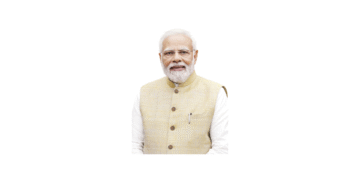


In a key diplomatic move, Prime Minister Narendra Modi chose to bypass the Sharm el-Sheikh Peace Summit in Egypt, a high-level meeting intended to discuss the evergreen Gaza conflict. Co-chaired by US President Donald Trump and Egyptian President Abdel Fattah el-Sisi, the summit drew more than 20 global leaders, including UK Prime Minister Keir Starmer and French President Emmanuel Macron. Not having received a personal invite, Modi’s absence has led to controversy among India’s political class.
Shashi Tharoor’s Criticism
Congress MP Shashi Tharoor, a retired diplomat, questioned the choice of sending Minister of State for External Affairs Kirti Vardhan Singh instead of the Prime Minister. Tharoor posted his outrage on X (formerly Twitter), saying,
India’s attendance at the Sharm el-Sheikh Gaza peace summit at the level of a Minister of State is in striking contrast to the leaders of state assembled there. Strategic restraint or lost opportunity?” Business Today
He made it clear that his comments were not a criticism of Singh’s performance but on the representation level. Tharoor stressed that India’s voice at the summit on reconstruction and regional issues may not be as important because of the lower-level representation. He also added that in a region where so much is changing, India’s relative silence was “puzzling.”
India’s Position at the Summit
While Modi’s absence was notable, India was not entirely absent from the summit. Minister of State for External Affairs Kirti Vardhan Singh represented India at the event. The Indian government has stated that due to the short notice, neither Modi nor External Affairs Minister S. Jaishankar could attend. The decision to send Singh was made to ensure India’s participation in the discussions.
Implications of India’s Representation
The choice of sending a junior minister in the place of the Prime Minister has questioned India’s foreign policy strategy. Tharoor’s criticism is evidence of concern that the lower-ranking representation may be indicative of the desire for strategic distance, which India’s words do not reflect. The emphasis at the summit on the reconstruction of Gaza and stability in the region was a moment where India could assert its role in a strategically vital area. There are some who feel that Modi’s presence would have added strength and dignity to India’s position and stature in the negotiations.
Prime Minister Modi’s skipping the Sharm el-Sheikh Peace Summit has sparked controversy regarding India’s foreign policy approach. Though the government insists that the move was in response to logistical complications, people like Shashi Tharoor doubt if it has been a case of strategic restraint or a lost chance for India to assert itself in a fundamental regional cause. With world attention still riveted on Gaza, India’s participation in the peace process remains an area of great interest and criticism.


