


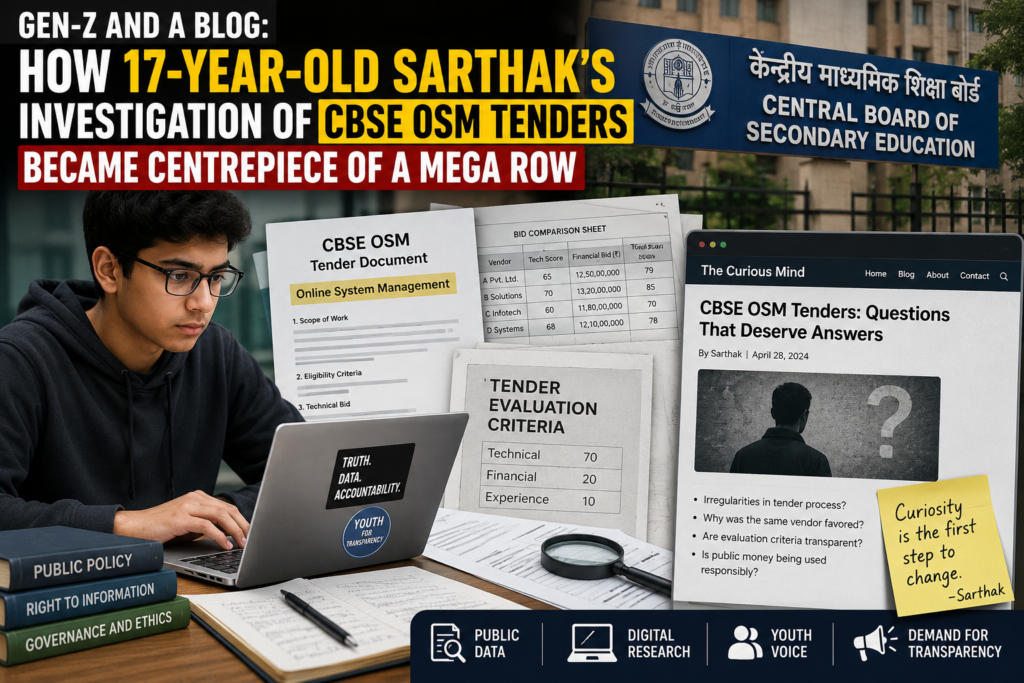
A 17-year- students blog has become the center of a big controversy about some tenders linked to the Central Board of Secondary Education (CBSE). This has got a lot of attention over the country and has shown how young people who investigate things online can help make the government more accountable.
The teenager, Sarthak started looking at available documents related to CBSEs OSM (Online System Management) tenders because he was curious and interested in public policy and education technology. What started as a research project soon turned into a detailed online investigation that raised questions about how the tenders were being handled who was being chosen to do the work and how transparent the process was.
Sarthak used government procurement portals, tender documents and public records to compile a series of blog posts that highlighted some inconsistencies and patterns he thought needed examination. His analysis quickly became popular among educators, technology professionals, policy observers and social media users who shared and debated his findings.
The controversy got bigger when parts of the blog were shared on platforms and people started demanding more clarity about the tendering process. As the discussion went on questions emerged about how the contracts were being evaluated how people were bidding on them. How they were being implemented.
Many people have noted that this episode shows how the way we get information has changed. Now independent researchers and citizen journalists can use available data to investigate things that used to be examined by professional media organizations. The accessibility of records combined with analytical tools and online publishing platforms has made it easier for people to do investigative work.
Some people support Sarthak. Argue that his efforts show the value of transparency and public participation in governance. They believe that raising questions based on accessible documents is an important part of democratic oversight and can encourage institutions to improve accountability and communication.
However experts also caution that investigations involving procurement processes can be highly complex. They stress that tender evaluations often involve financial and operational considerations that may not be immediately apparent from public documents alone. As a result they emphasize the importance of verification and context when interpreting procurement records.
The controversy has also sparked discussion about the growing influence of people like those in Generation Z in shaping public discourse. Many young people today have the skills needed to analyze datasets review documents and publish findings to large audiences almost instantly. Social media further accelerates the reach and impact of investigations.
The education sector has taken an interest in the case seeing it as an example of how students are increasingly engaging with civic issues beyond classrooms. Teachers and policy experts have highlighted the importance of encouraging thinking, research skills and responsible use of information among young citizens.
As the debate over the CBSE OSM tenders continues Sarthaks blog remains at the center of the discussion. Regardless of the conclusions reached by authorities or stakeholders the episode has underscored the growing power of digital research, open data and youth participation, in contemporary public discourse.
The case serves as a reminder that in todays world meaningful investigations can emerge from unexpected places—including the blog of a determined teenager armed with curiosity, internet access and a willingness to examine public records closely.


