


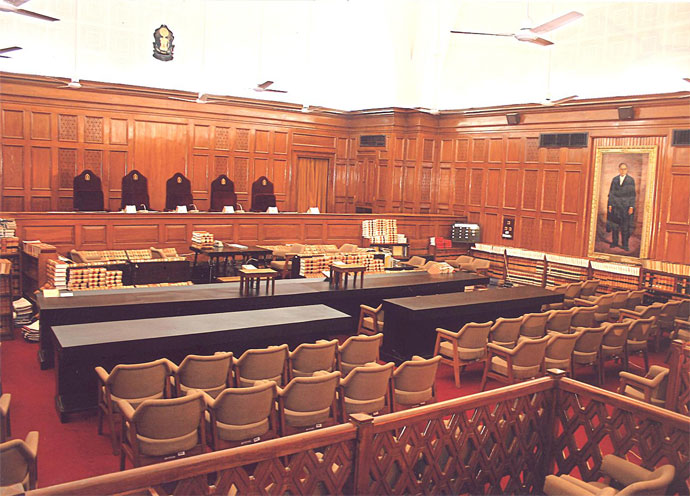
The Supreme Court of India has demanded a comprehensive status report from the Centre and state governments regarding the operation and pendency of cases in the Fast-Track courts across the country. The action comes against the backdrop of growing worries about delays in the justice delivery system, especially with cases related to grave offenses, offenses against women and children, and cases pending for a long time, which could easily be disposed of through Fast-Track courts.
The hearing was joined by the observations of the apex court that the Fast-Track courts were established with the sole aim of providing speedy justice, but the delay in some states has resulted in the nullification of the aim of such courts. It was noted that although the Fast-Track courts have risen, the pending cases are still high.
The Supreme Court has sought data on the number of fast-track courts that are functional, the type of cases that are being disposed of, as well as the average time taken for the disposal of such cases. It should be noted that the status report is also likely to include information with regard to the vacancies of the judges, prosecutors, as well as the support infrastructure that is available.
Fast-track courts were conceptualized to handle cases that require speedy disposal such as sexual offenses, offenses under special laws, and old criminal cases. However, as observed by the court in this matter, in some areas, the fast-track courts are operating with minimal resources, and this has resulted in congestion similar to the regular courts. In some states, fast-track courts are paper courts, while in others, judges take additional cases without support.
The court also showed concern over the uneven pace of disposal of cases. While some states experience improvement in the disposal of cases, others find it difficult due to a lack of judges and cooperation among investigating agencies and prosecutors. In some cases, the court identified delays in the filing of charges, frequent adjournment of cases, and the unavailability of witnesses as some of the constraints in the fast-track courts.
The senior advocates assisting the Supreme Court noted that fast track courts cannot work in isolation and in needs many changes in the system. These include proper appointments, constant monitoring, application of technology in judicial management, and improvement in coordination with the police and forensic science departments. The Supreme Court was informed that delays in forensic science reports and poor protection for witnesses also create problems even in fast track courts.
The court stated that the right to speedy justice is a basic right under the Constitution, and delays weaken the faith of the citizenry in the judicial system. The court emphasized the need for accountability instruments to induce result delivery within prescribed time frames even in fast track courts. The court also advised state-level reviews periodically to monitor performance and make way clear of bottlenecks.
The Centre has been asked to explain how funding for fast-track courts will be arranged as well as whether funding support to states is being effectively utilized. The states have also been asked to detail how they will improve the performance of these courts through staffing development and improvement in court infrastructure.
Lawyers have hailed the entry of the Supreme Court in this matter as a timely measure that could help revive the objective of fast track courts. There are hopes that an open scrutiny of pendency as well as performance could persuade the states to give importance to judicial reform. The issue will be taken up again later when the status reports are submitted. The Supreme Court has clearly stated that the issue will continue to be closely watched by them so that the intended aim of the fast track courts is achieved.


