

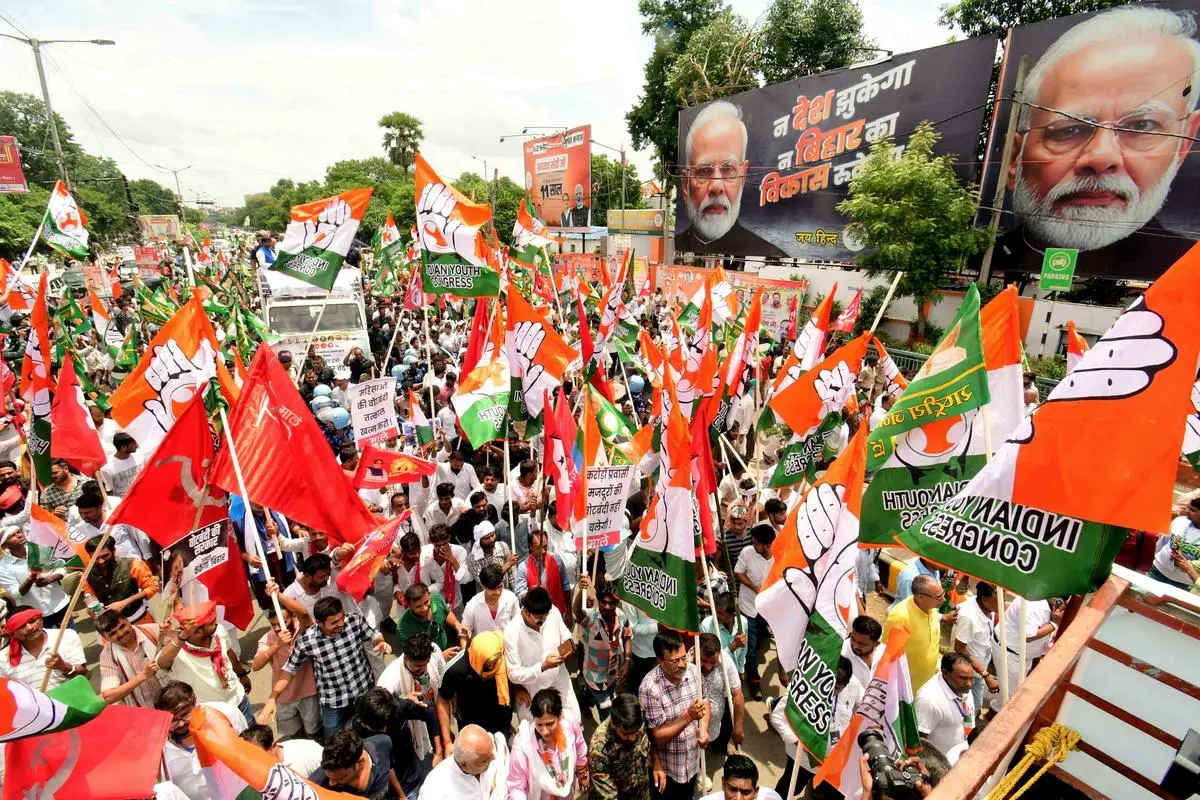
India is bracing for widespread industrial unrest next week as ten major national trade unions have announced a coordinated protest against the Centre’s four new labour codes, terming them “deceptive fraud” that undermine workers’ rights. The nationwide demonstrations-expected to span manufacturing hubs, transport networks, public sector units, and service industries-signal a fresh confrontation between organised labor groups and the government at a time when economic stability and foreign investment are big policy priorities.
The four consolidated labour codes-on wages, industrial relations, social security, and occupational safety-have sought to cut through India’s complex web of 29 labour laws. The government has argued that the reforms modernize outdated legislation, reduce compliance burdens, and make India a more attractive destination for global investors. However, trade unions maintain that the new laws tilt overwhelmingly in favour of corporate interests, weaken job security, and reduce workers’ bargaining power across both the formal and informal sectors.
According to the leadership, the most controversial provisions are part of the Industrial Relations Code, which increases the threshold for layoffs and retrenchment without prior government approval from establishments with 100 workers to 300. This, they say, gives employers unchecked authority and could trigger mass contractualisation of the workforce. The proposed allowance for fixed-term employment across sectors has also come in for criticism, with unions maintaining that it institutionalises precarity and erodes long-term job stability.
The Social Security Code, meant to extend the safety net to gig workers and informal labour, is also highly contentious, as it has remained fuzzy about the precise mechanisms and contribution patterns. Unions contend that the language of the code is not clear with regard to enforcement, making the promise of universal coverage more aspirational than actionable. They also warn that certain provisions could lessen employer liability and shift the burden of welfare contributions onto workers.
Sectors that could see high mobilisation on the day of protest include transport, banking, steel, coal, construction, logistics and port. Confirmations have come from a large number of state-level federations, while several industry associations are concerned about disruptions to supply chains and services. While essential services are not expected to be badly disrupted, delays and partial shutdowns in public transport, delivery networks and manufacturing output could be witnessed.
Government officials, however, have defended the reforms, saying that the codes strengthen India’s competitiveness and make compliance easier for small and medium enterprises. They maintain that flexible hiring norms are required to stimulate growth and generate jobs in labour-intensive industries related to textiles, manufacturing, and logistics. It is also pointed out by the officials that the formulation of the codes was preceded by widespread stakeholder consultations, including multiple rounds with trade unions.
However, union representatives dispute the extent of that consultation, claiming that their core objections were bypassed. They contend that the government’s model prioritises ease of doing business without ensuring “ease of living” for workers. While labour reforms are often debated as essential for boosting India’s manufacturing capabilities and meeting its ambitions for higher global integration, the tension between flexibility and security remains at the heart of the dispute.
Economists and policy analysts remain sharply divided. Some argue that India’s rigid labour regulations have historically deterred large-scale industrial investment, and the new codes strike a necessary balance between growth and worker protections. Others caution that moving away from longstanding safeguards without adequate social protections could widen inequality, depress wages, and weaken India’s informal sector—still the backbone of the country’s workforce. As India aims to set itself up as a global manufacturing hub under the “Make in India” and Production-Linked Incentive schemes, the success of labour reforms would require not only legislation but also trust-building between the government, industries, and labour groups. The protests next week will be a critical indicator of the level of resistance these reforms are going to face on the ground. The face-off, for now, continues. With the unions preparing to show strength and the government adamant on its reformist agenda, India is heading into a decisive moment that could shape the future of its labour landscape for years to come.


